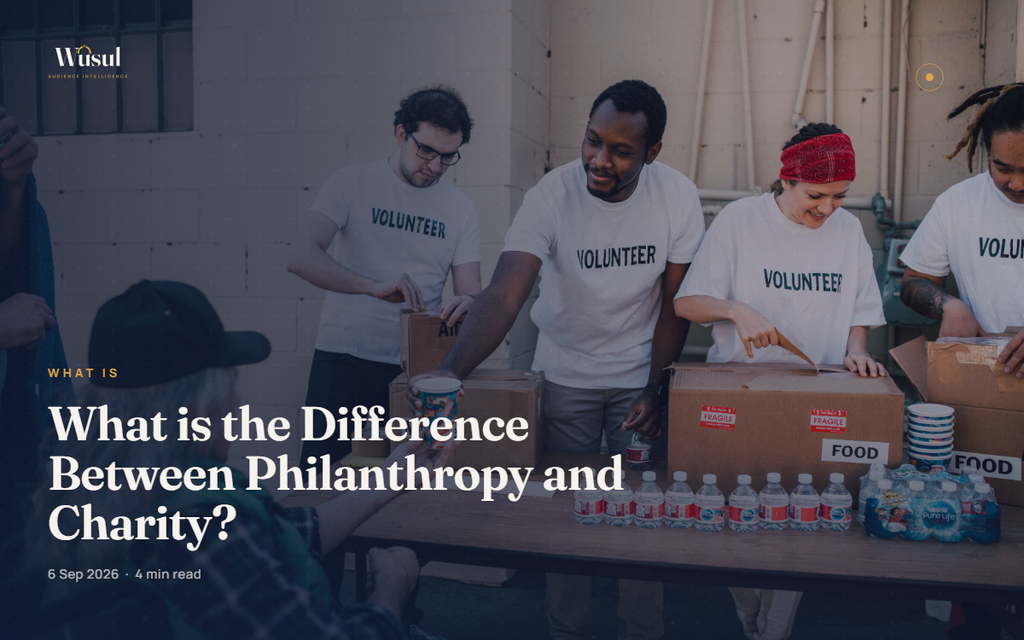
The terms "charity" and "philanthropy" are often used interchangeably, yet they represent distinctly different approaches to doing good. While both are essential and valuable, understanding the difference between philanthropy and charity is crucial for organizations and individuals seeking to make a meaningful impact, particularly within the context of Islamic giving traditions.
What is charity? What is philanthropy?
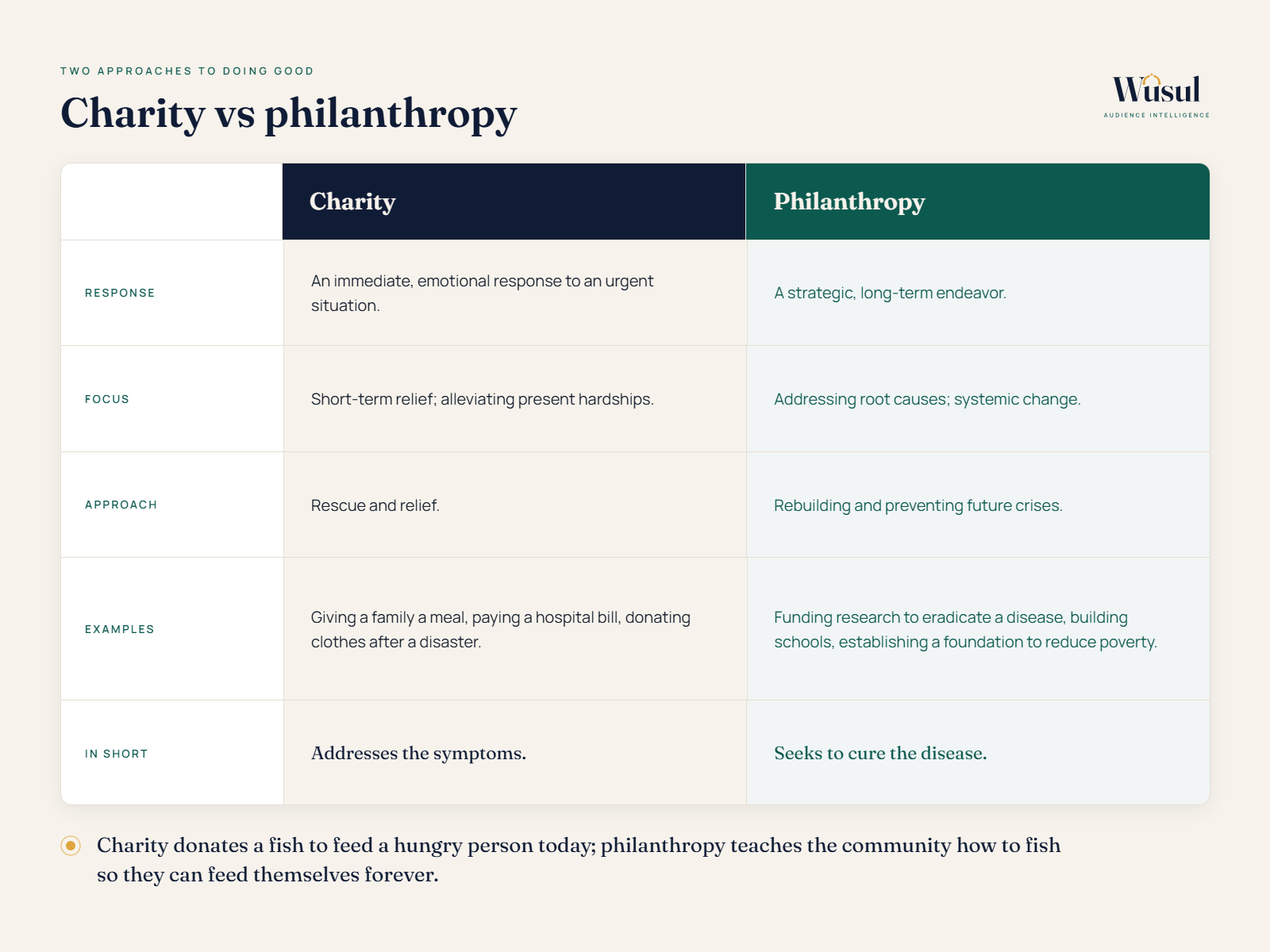
Charity is an immediate, emotional response to an urgent situation. It involves the direct, voluntary giving of help (money, goods, or time) to those in need, often as a humanitarian act. The impulse behind charity is a natural, compassionate reaction to an immediate crisis or individual suffering. Its focus is primarily on providing short-term relief and alleviating present hardships.
Philanthropy, on the other hand, is a more strategic and long-term endeavor. Derived from the Greek for "love of mankind," it consists of private initiatives for the public good focused on improving quality of life for all, but particularly for the disadvantaged. The core of philanthropy is about addressing the root cause of social issues and implementing systemic change.
Philanthropy vs charity: the key differences
The fundamental distinction lies in their scope, duration, and ultimate goals.
I. Timeframe and approach: Charity is typically a short-term, immediate response to an emergency or individual need; what is often described as an act of rescue or relief. Philanthropy, conversely, is a long-term commitment involving a strategic approach aimed at rebuilding, addressing root causes, and preventing future crises. Charity addresses the symptoms, while philanthropy seeks to cure the disease.
II. Scope and implementation: Charity often involves direct, personal acts of compassion; giving a family in need a meal, paying a hospital bill for an individual, or donating clothes to a community after a disaster. It can be an incredibly powerful and immediate response to a crisis. Philanthropy is more comprehensive and structural. It might involve funding research to eradicate a disease, building schools to serve generations of children, or establishing a foundation to create systems that reduce poverty.
III. The "Fisfishanalogy: A well-known adage perfectly encapsulates the difference: charity donates a fish to feed a hungry person today, while philanthropy invests in building a school of fish and teaching the community how to fish so they can feed themselves forever.
Charity and Philanthropy in the Context of Islamic Giving:
Islamic traditions beautifully illustrate these concepts through their own forms of giving, which align with both the emergency response of charity and the systemic, long-term vision of philanthropy. These practices are often seen as a vital pillar of humanitarian response.
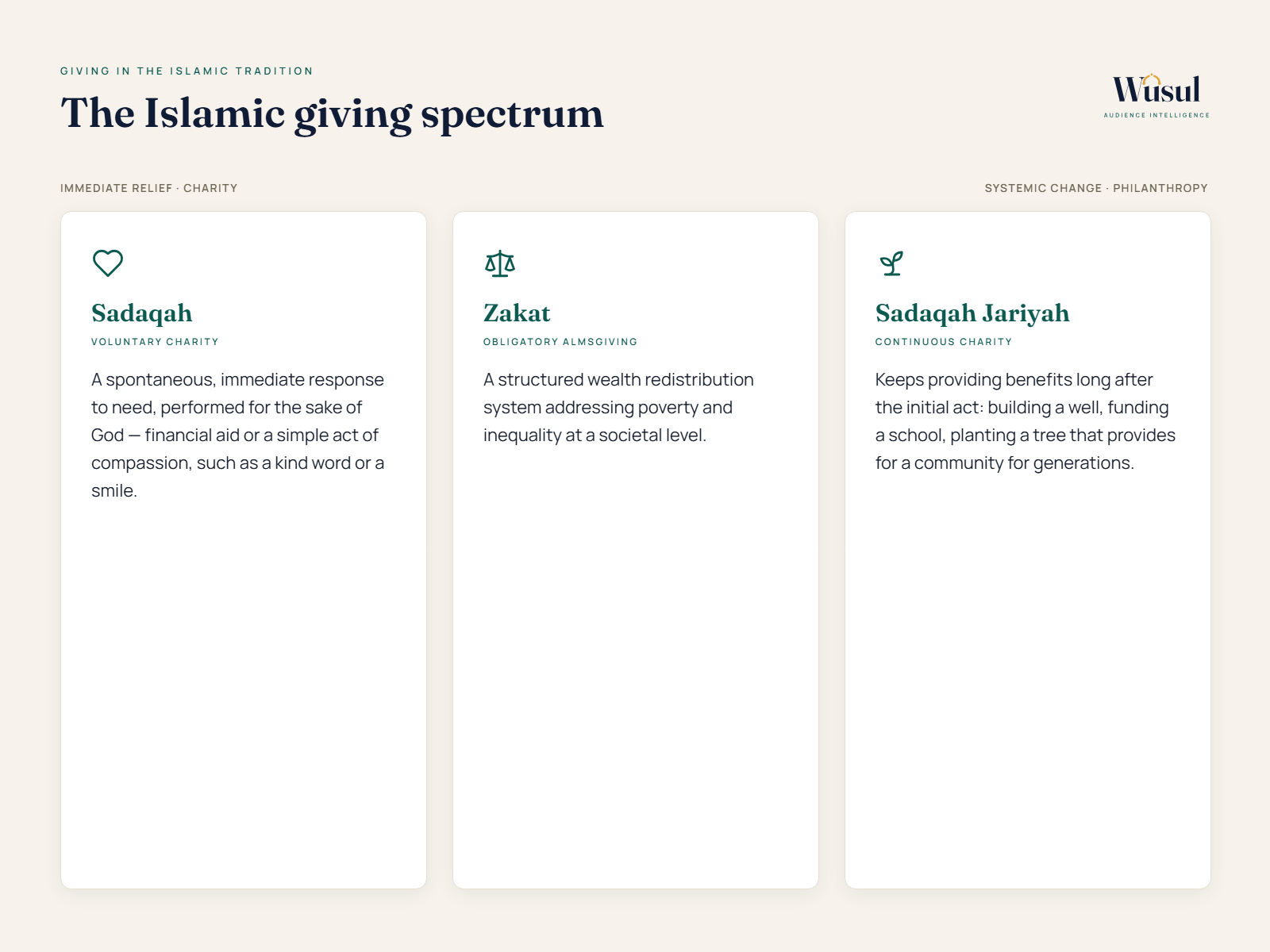
Sadaqah (charity): Sadaqah is a voluntary act of kindness or charity performed for the sake of God, often as a spontaneous and immediate response to need. It can be financial aid, but it can also be a simple act of compassion, such as a kind word or a smile. This closely mirrors the definition of charity as a direct, personal, and often emotional response to an immediate situation.
Zakat (obligatory charity): Zakat is a form of almsgiving treated in Islam as a religious obligation. This can be seen as a structured and systemic form of philanthropy, as it is a wealth redistribution system with the specific goal of addressing poverty and inequality at a societal level.
Sadaqah Jariyah (continuous charity): This is perhaps the clearest parallel to philanthropy's long-term, strategic goal. Sadaqah Jariyah is a continuous charity that keeps providing benefits long after the initial act. For example, building a well, funding a school, or planting a tree that provides for a community for generations. This act addresses the root causes of hardship and provides a sustainable, long-term solution, much like the goals of modern philanthropy.
The importance of both in social progress
Charity and philanthropy are not rivals; they are complementary forces essential for comprehensive social progress. The world needs both. Charity saves lives, provides immediate comfort, and addresses the urgent needs of the most vulnerable.
However, as the UNHCR's Islamic Philanthropy Report highlights, sustained change requires a different kind of investment. While charity provides essential aid, long-term empowerment and solutions require the systemic approach of philanthropy. In times of crisis, charity is vital to save lives, but building futures, empowering women, or supporting education requires the root-cause focus that philanthropy provides. Effective social change often sees charity and philanthropy working in tandem: charity responds to the immediate crisis, while philanthropy works to prevent the next one.
At Wusul, we understand that meaningful engagement with Muslim communities requires appreciating the full spectrum of giving. By understanding the distinctions between Sadaqah, Zakat, and Sadaqah Jariyah, organizations can communicate with donors in a way that honors their intentions and maximizes their impact.