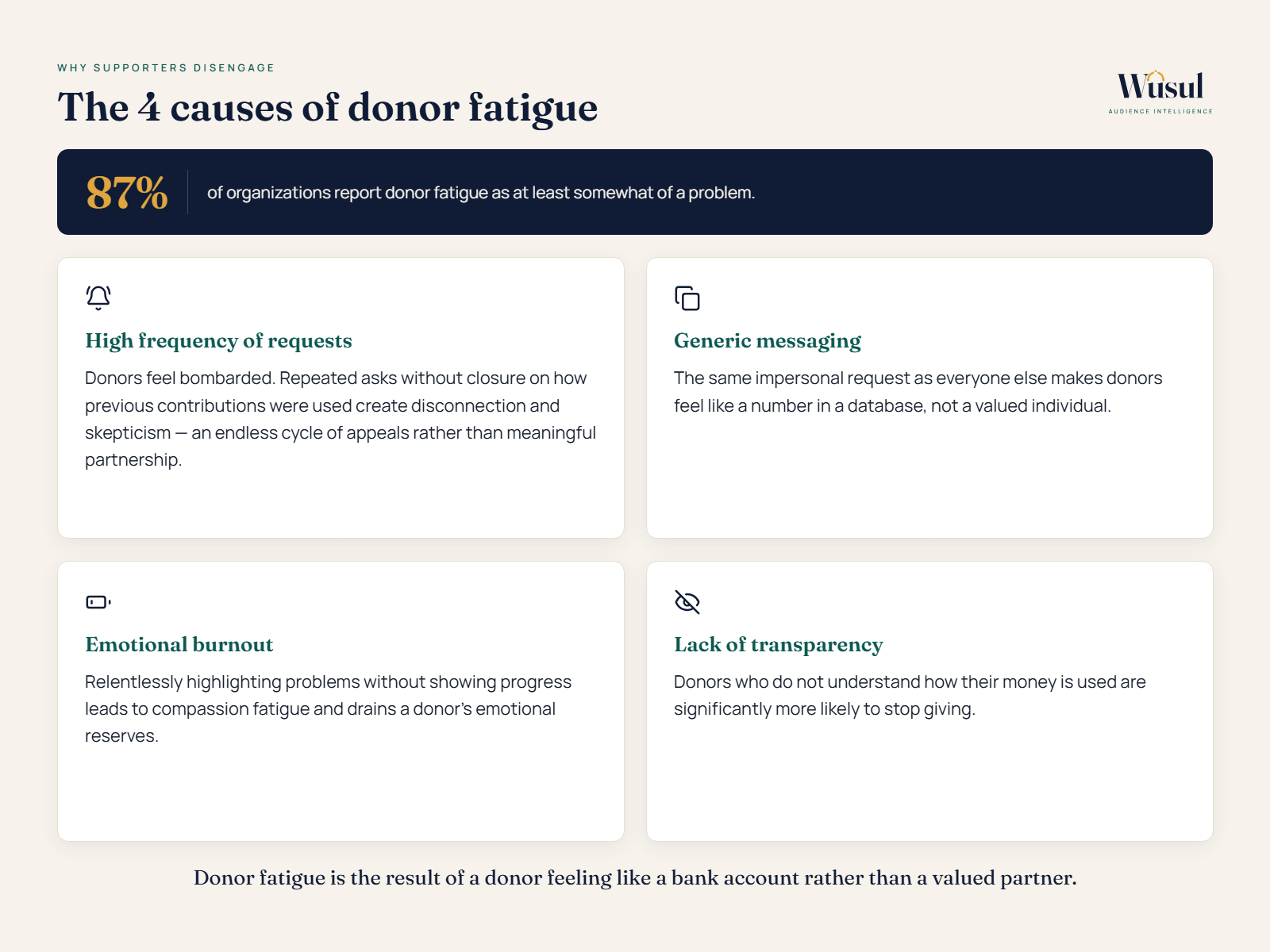
Donor fatigue has become a defining challenge in the nonprofit sector in recent years. It describes a state where supporters become overwhelmed by fundraising appeals, emotionally drained by constant requests, and increasingly disengaged from causes they once cared about deeply. A staggering 87% of organizations have reported it as at least somewhat of a problem in their operations
What is donor fatigue? Meaning and definition
Donor fatigue is the point at which a previously engaged supporter stops responding or stops giving. It is not a sudden dislike of your cause; rather, it is the result of a donor feeling like a bank account rather than a valued partner. When a donor opens an email and thinks, "Not another ask," rather than "How can I help?" that is donor fatigue in action.
Primary causes
Understanding the root causes of donor fatigue is the first step toward addressing it.
1. High frequency of requests
Donors become fatigued when they feel bombarded. An excessive number of messages, especially over short periods, can make supporters feel overwhelmed, and so declines and/or and reduces gift levels . When nonprofits repeatedly ask donors for donations without providing closure on how previous contributions were used or offering clear proof of impact, it creates a sense of disconnection and skepticism. Donors begin to feel like they're part of an endless cycle of fundraising appeals rather than meaningful partners in a cause, leading them to question whether their money is making a difference.
2. Generic Messaging
When donors receive the same impersonal request as everyone else on your list, they feel like just another number in a database rather than a valued individual. Mass-produced communications fail to recognize the unique relationship between the donor and the mission.
3. Emotional Burnout
Relentlessly highlighting problems without showing progress can lead to compassion fatigue. Constant exposure to heartbreaking crises can drain a donor's emotional reserves. Historically, this has been a concern in international aid, where a rapid succession of disasters has led some donors to feel a sense of helplessness and cynicism.
4. Lack of Transparency
Donors who do not understand how their money is used are significantly more likely to stop giving. This is a consistent finding across nonprofit-sector research, though the precise figures vary by study, we'd recommend citing a specific, named source for any statistic used externally rather than a general industry consensus figure.
Is Donor Fatigue Inevitable? Perspectives from the Islamic Sector
Interestingly, some leaders in Muslim philanthropy challenge the inevitability of donor fatigue. Tufail Hussain, UK Director of Islamic Relief Worldwide, has spoken about this directly. As he told Civil Society News, he has "never seen donor fatigue" in the community he works with, attributing the consistent generosity he's witnessed to the strength of faith-based motivation, even during difficult economic periods (Tufail Hussain, interviewed by Civil Society News).
This resilience appears to be connected to the dual structure of Islamic giving. Zakat is an obligatory, fixed annual contribution, while Sadaqah is entirely voluntary and can be given at any time, in any amount. Hussain's framing suggests something important: donors in this community appear to be motivated by voluntary generosity as much as by religious obligation, though we'd want to verify any specific giving ratio directly with Islamic Relief before citing a precise figure externally.
Addressing donor fatigue: a new approach
A useful reframing in the sector is that donor fatigue can often be a symptom of poor relationship management rather than donor disinterest. When an organisation balances its contact by informing, surveying, and thanking its donors, donors are more likely to experience the relationship as a genuine partnership.
It's also worth questioning the term itself. "Donor fatigue" can read as though it unfairly blames the donor for disengaging. In reality, the responsibility to sustain the relationship lies largely with the organisation. When donors are nurtured with fresh ideas, personalised contact, and authentic gratitude, they tend to remain engaged.
Practical strategies for Islamic charities
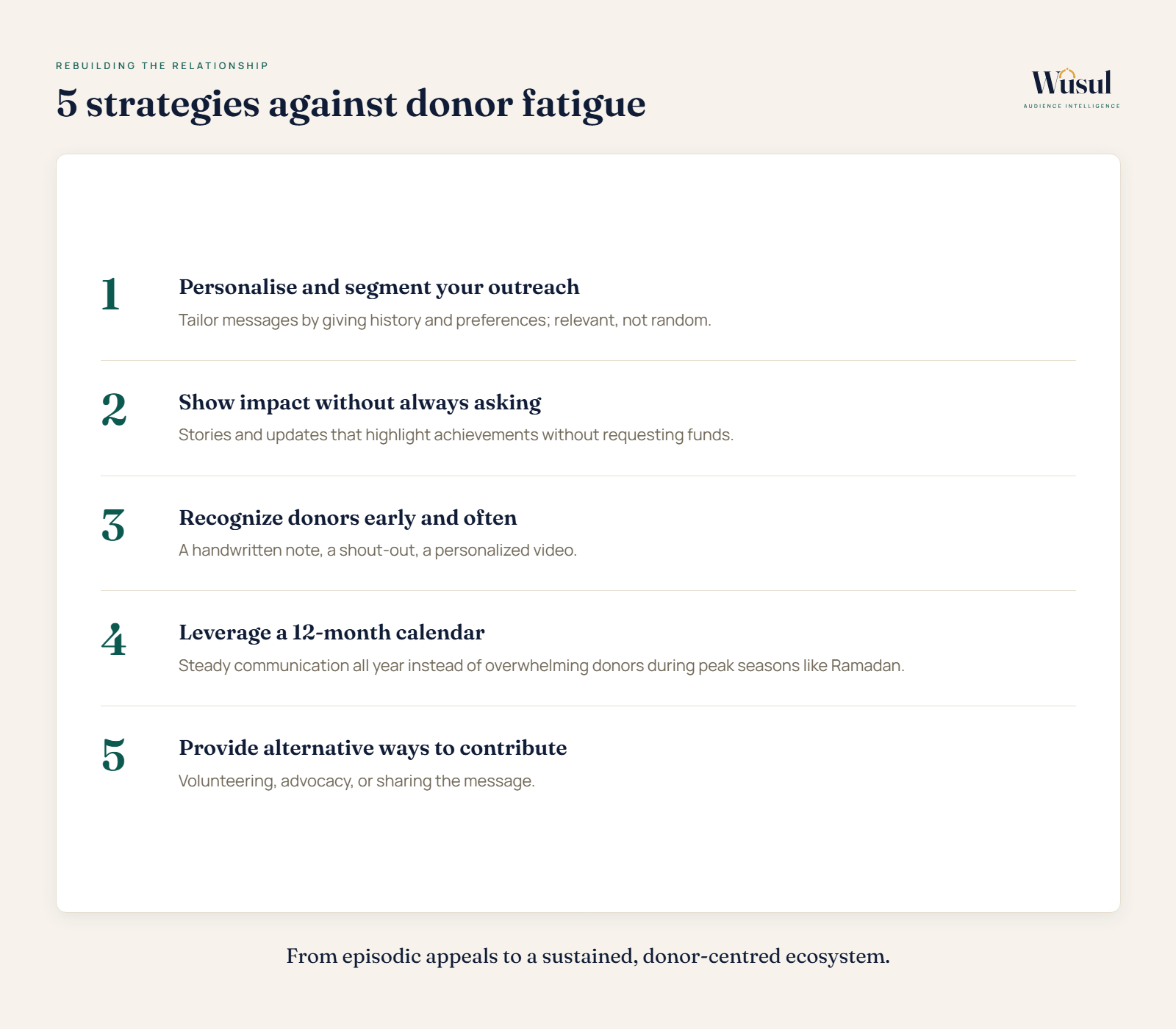
1. Personalise and Segment Your Outreach
Donors are less likely to experience fatigue when they receive messages tailored to their interests. Segment your audience based on giving history and preferences to ensure your communications are relevant, not random.
2. Show Impact Without Always Asking
Combat burnout by sharing stories, photos, and updates that highlight achievements without immediately requesting additional funds. A simple message showing a donor what they made possible can reinforce trust and build loyalty.
3. Recognize Donors Early and Often
Moving beyond generic thank-you letters is essential. A handwritten note, a social media shout-out, or a personalized video can reaffirm a donor's sense of partnership and connection to the cause.
4. Leverage a 12-Month Calendar
Avoid overwhelming donors during peak seasons like Ramadan by maintaining a steady communication schedule throughout the year. This prevents the emotional and financial fatigue that can come from concentrated giving periods.
5. Provide Alternative Ways to Contribute
If a donor cannot give financially, offer them other ways to engage, volunteering, advocacy, or sharing your message. This keeps them connected to the cause without the pressure of financial giving.
Donor fatigue is a real and growing challenge, but it is not inevitable. For Islamic charities, addressing it requires shifting from episodic appeals to a sustained, donor-centred ecosystem.
At Wusul, we believe cultural intelligence is the key to solving donor fatigue. Understanding the motivations behind an audience's behaviour allows you to communicate with precision and build trust. By treating donors as partners rather than ATMs, you can build a loyal base of support that ensures your mission remains viable for years to come.