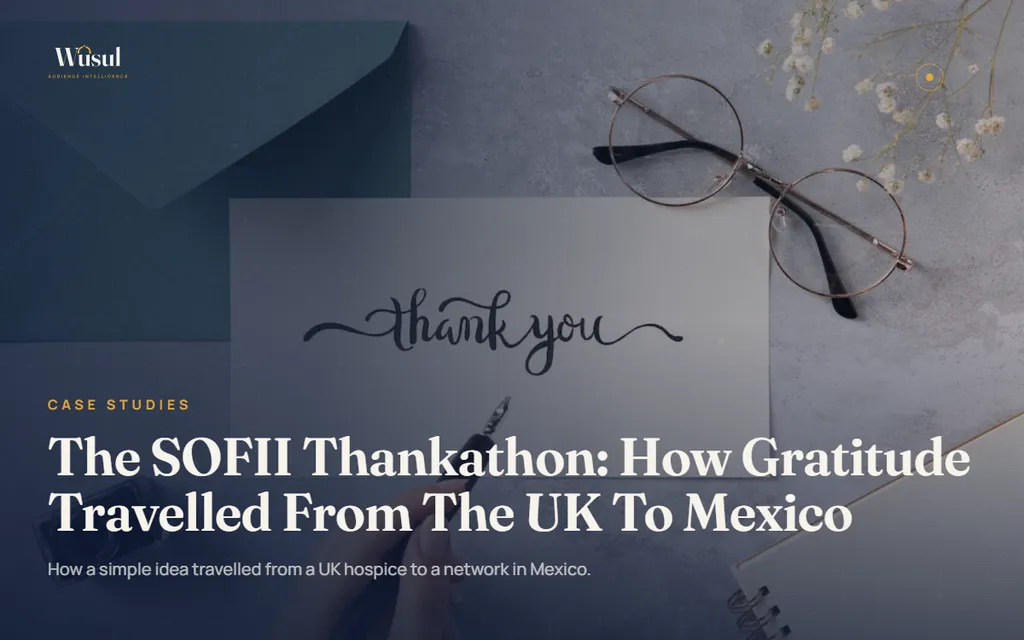
Most charities spend months planning their next big ask. They test the subject line and chase the donation. But a small idea shared on a free fundraising archive suggested something different: what if you stopped asking for a moment, and just said thank you? That idea is the Thankathon, and its journey from a UK hospice charity to a network of nonprofits in Mexico shows how powerful simple supporter care can be. We can take a further look at where the Thankathon came from, how it spread, and what it actually achieved.
Where the idea came from
The Thankathon entered the spotlight through SOFII, the Showcase of Fundraising Innovation and Inspiration. SOFII is a UK registered charity created by fundraisers, for fundraisers. It runs a free, open archive of the best fundraising creativity from around the world, so people in the sector can learn from real campaigns rather than theory.
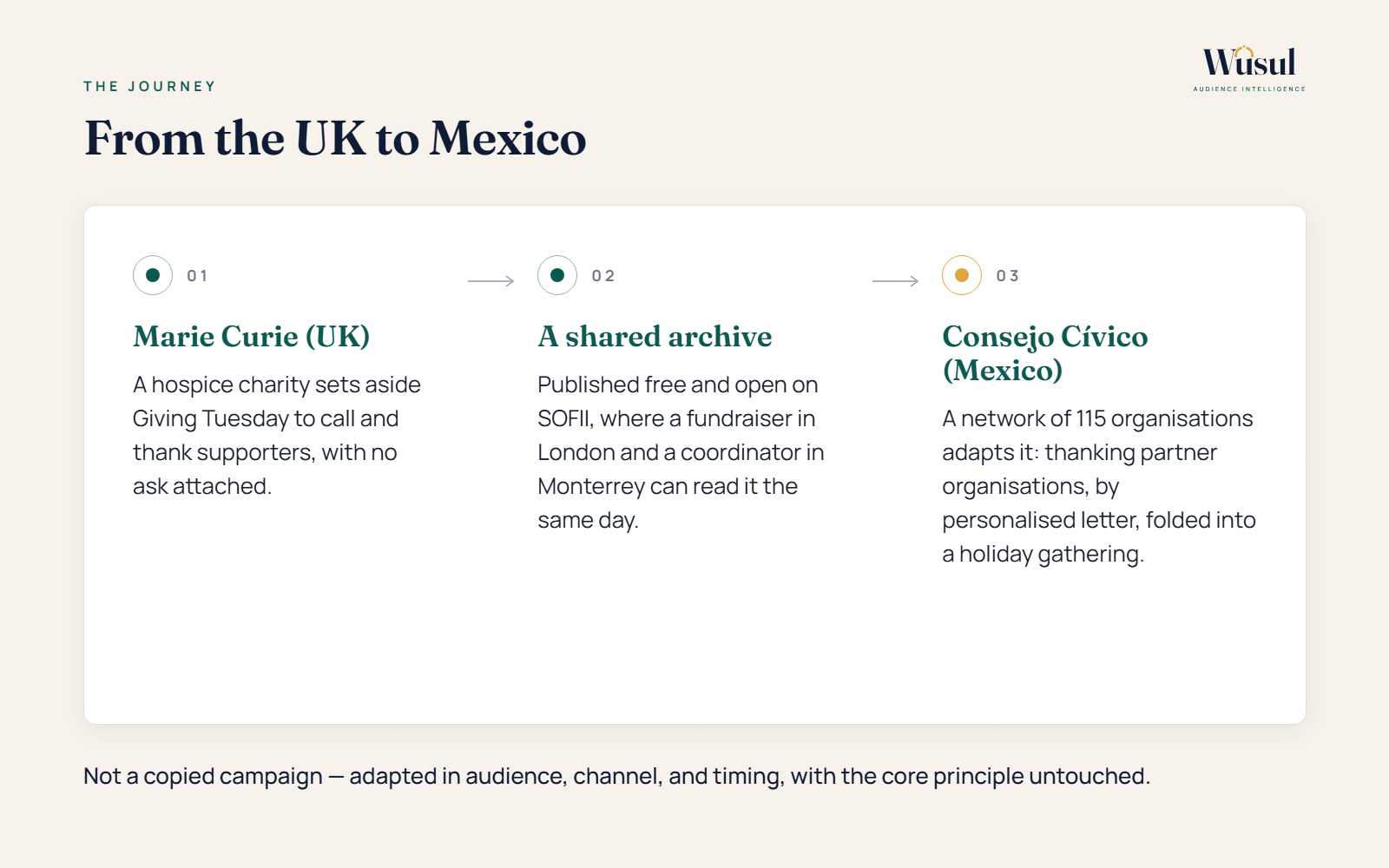
The original Thankathon example that caught people's attention came from Marie Curie UK, a hospice and end-of-life care charity. As part of Giving Tuesday, Marie Curie set aside time to call and thank its supporters, with no donation ask attached. Meredith Niles, who at the time led Marie Curie's fundraising innovation work before becoming executive director of fundraising and engagement, shared the idea in a SOFII webinar for Giving Tuesday UK in 2022.
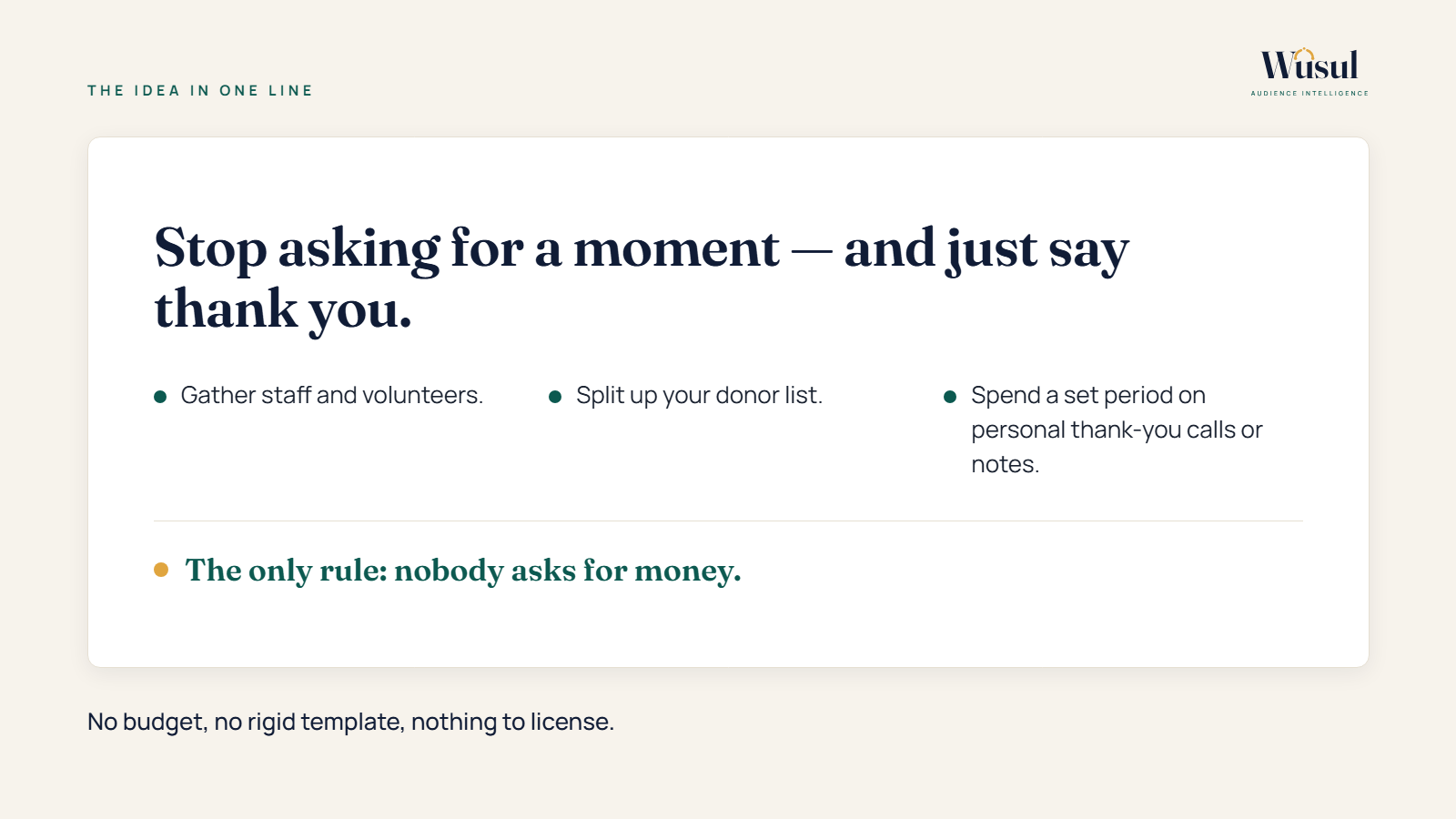
The concept is simple: gather staff and volunteers, split up your donor list, and spend a set period making personal thank-you calls or sending thank-you notes. The only rule is that nobody asks for money.
How it spread to Mexico
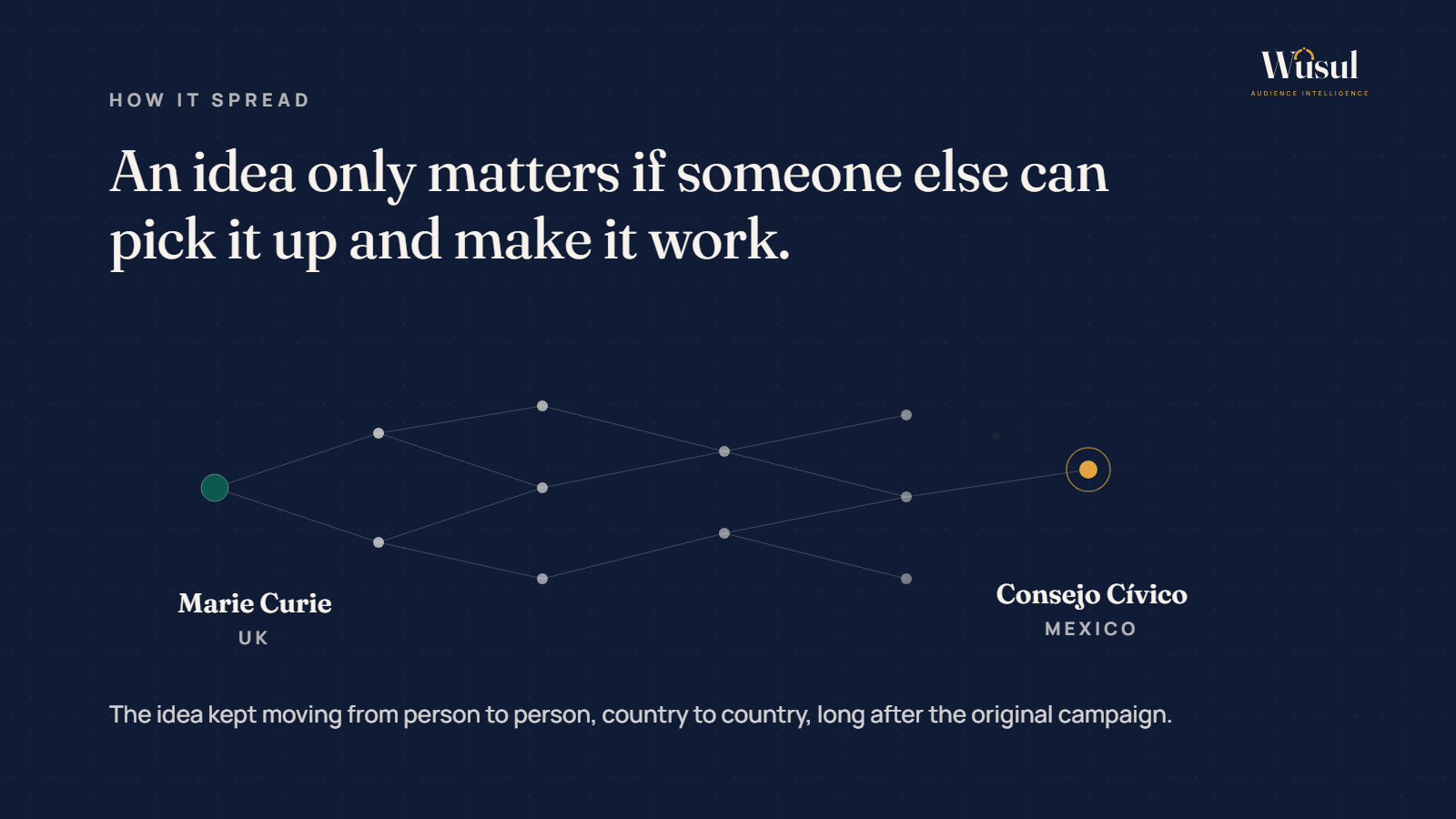
An idea only matters if someone else can pick it up and make it work. That is what happened next.
Anita Gallagher, a SOFII reader based in the US, saw the Marie Curie Thankathon on the site and started using it as an example in her own presentations.
Through Anita, the idea reached Consejo Cívico, a nonprofit network in Monterrey, in the north of Mexico, that works with 115 affiliated civil society organisations. When the team heard about the Thankathon concept, they felt it was a perfect fit for their Giving Tuesday participation.
When the team heard about the Thankathon concept, they felt it was a perfect fit for their Giving Tuesday participation. On Tuesday, 3 December 2024, Consejo Cívico displayed personalized thank-you letters at its holiday gathering with associates. Each letter was different. Some thanked people for collaborating on a specific project, others acknowledged the general work partners do. Yareli Sepúlveda Sáenz from the organization described it as "such an emotional moment for everyone," saying it created a chance to connect not just among employees, but with the people they work with.
What makes this replication notable is that it wasn't a copied version of a UK campaign. Consejo Cívico adapted the format to its own color, thanking partner organizations rather than individual donors, and folded it into an existing event rather than building something from scratch.
Why this idea travelled so far?
Part of the Thankathon's success comes down to how SOFII shares ideas in the first place. Unlike closed or unseen reports, SOFII's archive is free and open to anyone, which means a fundraiser in London and a coordinator in Monterrey can read the same case study on the same day. That openness matters more than it might seem. The Thankathon had no budget, no rigid template, and nothing to license. Anyone could read it, understand it in five minutes, and try it the following week. That low barrier is a big reason the idea kept moving from person to person, country to country, long after the original campaign.
Why it matters: the retention angle
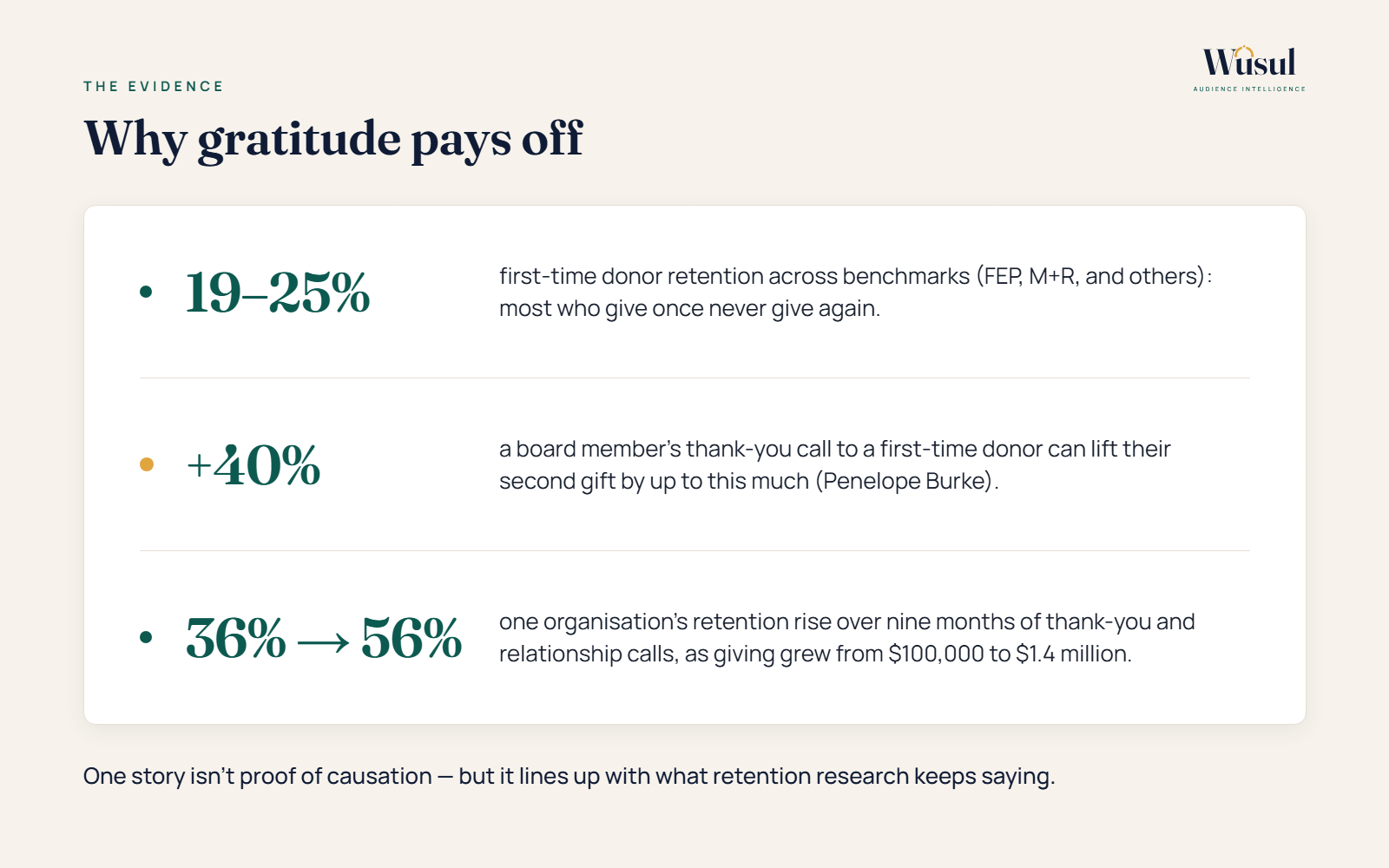
The Thankathon lands on a real problem in the sector. First-time donor retention is only around 23-25%, meaning most people who give once never give again. Other benchmarks agree: the Fundraising Effectiveness Project puts new donor retention at 19.4%, and M+R's 2026 study shows 24% for new online donors.
The data suggests personal thank-you contact moves that number. When a board member makes a thank-you call to a first-time donor, research cited by Penelope Burke shows their second gift can be up to 40% higher, and two years later most of those donors are still giving.
One chief advancement officer reported making 900 thank-you and relationship calls over nine months, during which giving grew from $100,000 to $1.4 million and donor retention rose from 36% to 56%. While one story isn't proof of causation, it lines up with what retention research keeps saying: how you treat donors between asks decides whether they stay.
What to take from this?
For any charity thinking about making an event like the Thankathon, the case offers a useful reminder: you don't need to replicate the format exactly. For example: Consejo Cívico changed the audience (partners donors instead of individual donors), the channel (personalized letters instead of phone calls), and the timing (a holiday gathering rather than a standalone day). Yet the core principle stayed untouched, which is the genuine gratitude with no ask attached. That flexibility is the real lesson. The Thankathon isn't a rigid template. It's a mindset you can fit to fit your own schedules, your team size, and your cultureز
Gaining trust, gaining people
Three takeaways to put the whole idea on the right track:
First, the Thankathon costs almost nothing. What it needed is a phone list, some volunteers, and a few hours of brainstorming and focus.
Second, it works across cultures and organization sizes, as the Mexico replication shows.
Third, gratitude is repeatable. DonorPerfect lists the thank-a-thon as a standard stewardship technique, recommending organizations set aside a specific day or week where every donor receives a personal expression of gratitude.
At Wusul, we believe that cultural intelligence means understanding not just what donors give, but why; and thus designing engagement that honors the values, faith, and dignity of the communities we serve.