The Riz Test is a framework designed to measure and critique the portrayal of Muslims in film and television. Created in 2018 by Shaf Choudry, Isobel Ingham-Barrow, and Dr. Sadia Habib, it was inspired by actor Riz Ahmed's 2017 speech at the UK House of Commons on diversity and representation, as well as the well-known Bechdel Test which measures the representation of women in media.
The Riz Test was created to challenge harmful stereotypes and spark conversations about the need for fair and complex representation of Muslims on screen. This test does not judge a film's artistic quality but opens a discussion on hidden biases.
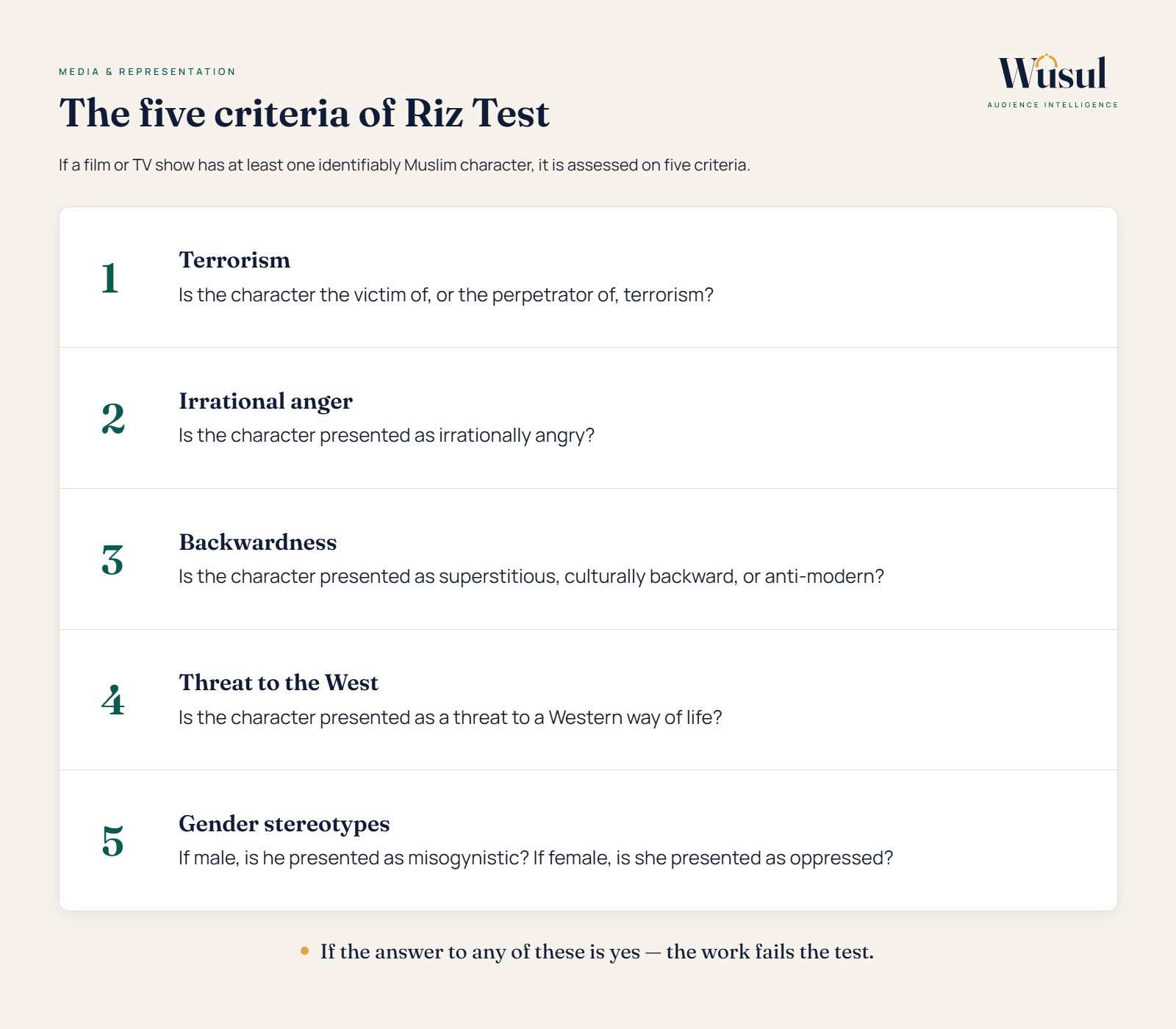
The Riz Test criteria
If a film or TV show has at least one identifiably Muslim character (by ethnicity, language, or clothing), it is assessed on five criteria:
1. Terrorism: Is the character talking about the victim of, or the perpetrator of terrorism?
2. Irrational Anger: Is the character presented as irrationally angry?
3. Backwardness: Is the character presented as superstitious, culturally backward, or anti-modern?
4. Threat to the West: Is the character presented as a threat to a Western way of life?
5. Gender Stereotypes: If the character is male, is he presented as misogynistic? Or if female, is she presented as oppressed by her male counterparts?
If the answer to any of these questions is yes, the work is deemed to have failed the test.
Why the Riz Test matters for Muslim representation in film
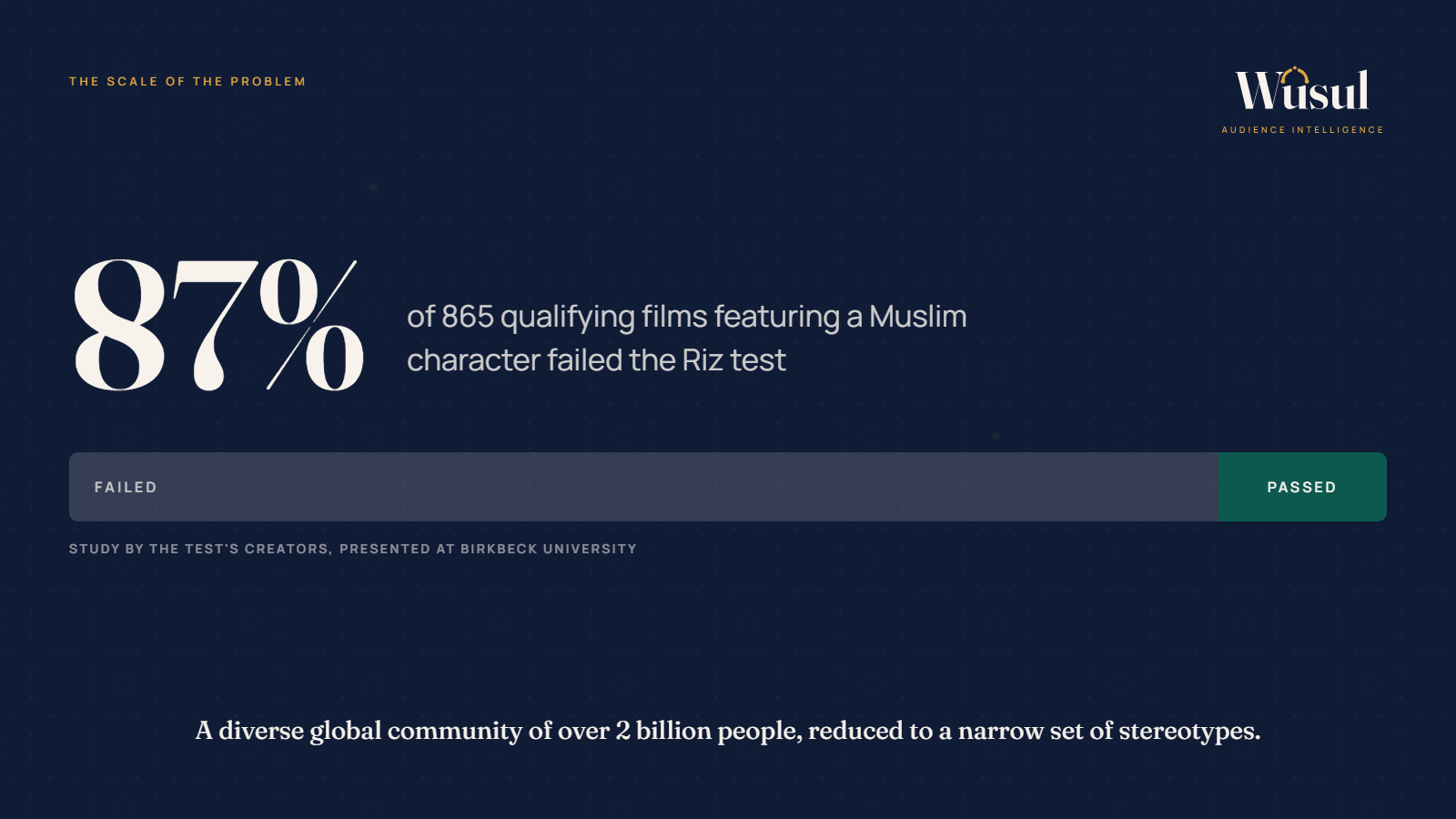
The test addresses the problem of one-dimensional Muslim characters being shown as 'baddies' or victims without the complexity and humanity afforded to other groups. The creators expressed concern over how common these tropes are, and data suggests the issue is widespread. A study conducted by the test's creators found that 87% of the 865 qualifying films featuring a Muslim character failed the test (presented at a Birkbeck University event). Actor Riz Ahmed has also argued that this lack of representation can have serious consequences, as people may "retreat to other fringe narratives, which is sometimes very dangerous."
What it does NOT do
It is important to clarify what the Riz Test does not argue. The test does not suggest that stories about terrorism, conflict, or oppression should never be told. These are real issues that affect Muslim communities, and they deserve serious cinematic treatment.
Rather, the test argues that these narratives have become disproportionately dominant in portrayals of Muslims. A diverse global community of over 2 billion people is too often reduced to a narrow set of stereotypes centered on violence, backwardness, or victimhood. This imbalance matters because it shapes public perception, reinforces prejudice, and denies Muslim audiences the full range of human stories that everyone else receives; romance, comedy, everyday struggle, triumph, and ordinary life.
The test encourages creators to portray Muslims as multidimensional people with ordinary lives, diverse personalities, and complex identities beyond their religion. It is not a prohibition on difficult subject matter; it is a call for balance, nuance, and the full humanity that all characters deserve.
How to use the Riz Test
The Riz Test can be a practical tool for critique. For example, the popular BBC thriller Bodyguard failed all five criteria within the first 12 minutes of its first episode. The test also serves as a creative benchmark, inspiring writers and studios to create more nuanced and authentic characters. Series like the German comedy Habibi Baba Boom, for example, actively use the criteria to subvert and expose stereotypes.
The test has also gained traction in academic and industry discussions. One scholarly analysis noted that Ramy, the Hulu series created by Ramy Youssef, passes the Riz Test by consistently challenging stereotypes through its focus on "everydayness" and religious complexity rather than violent or threatening tropes.
The bigger picture
The Riz Test is more than a checklist; it is a lens to examine through which who gets to be complex and who is flattened into a symbol. It challenges the entertainment industry to move beyond the limited, often damaging narratives that have dominated Muslim representation for decades.
For cultural intelligence practitioners, the Riz Test is a valuable tool for understanding the narratives that shape public perception of Muslims. It reminds us that representation matters not only because it reflects reality but because it helps create it. By demanding multidimensional, human portrayals of Muslims, the Riz Test contributes to a world where Muslims are seen not as threats or victims, but as people; with all the complexity, humor, love, and struggle that entails.
At Wusul, we believe that media representation is a powerful form of cultural intelligence. Understanding tools like the Riz Test allows organizations to critically assess the narratives they engage with and create, fostering a more authentic and respectful connection with Muslim audiences.