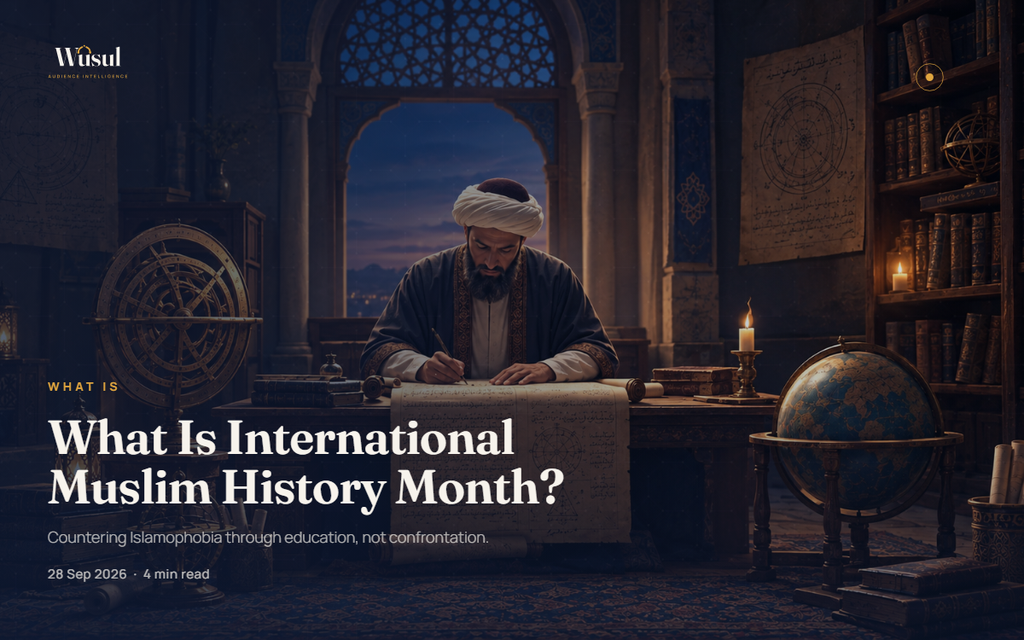
For charities, brands, and cultural intelligence practitioners seeking to engage authentically with Muslim communities, understanding the why and what behind International Muslim History Month, that is celebrated every May, is an opportunity to demonstrate genuine cultural awareness, not just performative recognition.
The origins: a response to Islamophobia
International Muslim History Month was founded in 2021 by the World Hijab Day Organization, a New York-based nonprofit led by Nazma Khan. It was born from a pressing need. Growing up in New York, Khan observed what she described as "minimal to no inclusion of Muslim-Islamic history across the general school curriculum." In the post-9/11 era, Muslims were overwhelmingly portrayed through a narrow and damaging lens. As the organization explained: "In the last 25 years, especially after 9/11, people seem to have forgotten about all the good things Muslims have done. Instead, they unfairly stereotype Muslims as terrorists."
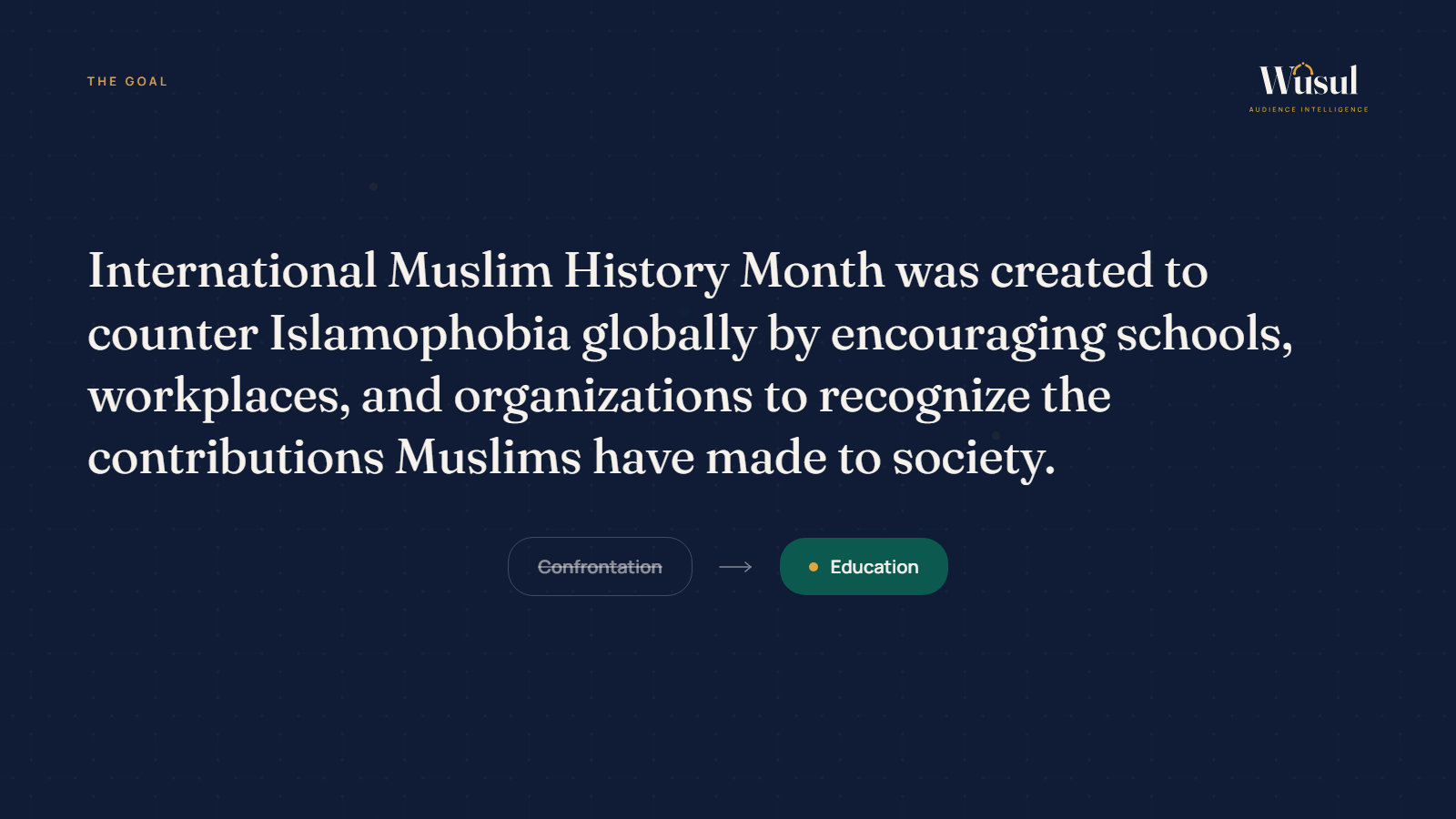
The month was created to directly counter this narrative; not through confrontation, but through education. The goal is to "actively counter Islamophobia on a global scale by encouraging students, educational institutions, workplaces, businesses and organizations to recognize, appreciate and celebrate the valuable contributions to society made by Muslims." More than 26 countries participated in the inaugural IMHM in 2021, and the number has grown significantly each year, with social media engagement quadrupling within the first year.
Education and celebration
International Muslim History Month is designed to highlight the achievements and contributions of Muslim men and women throughout the ages. It is not a religious celebration in the sense of Eid or Ramadan; rather, it is a historical and cultural commemoration that invites participation from people of all ethnicities and religious affiliations. A New York State Senate resolution described the initiative as seeking to "educate Muslims of New York and around the world of authentic Islamic history, the events, the personalities, and the contributions which changed society, in the hope all Muslims can bridge their relationship with their non-Muslim neighbors through education and understanding."
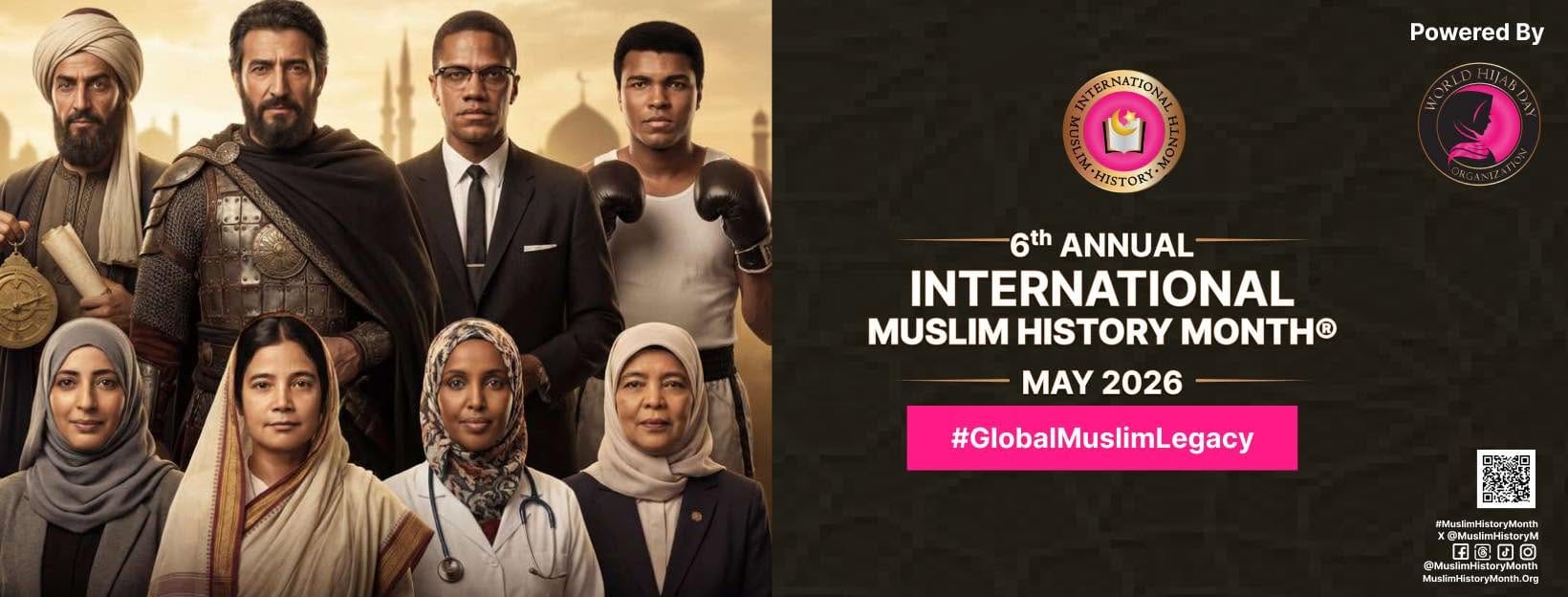
Muslim scientists and pioneers, from the Islamic Golden Age to today
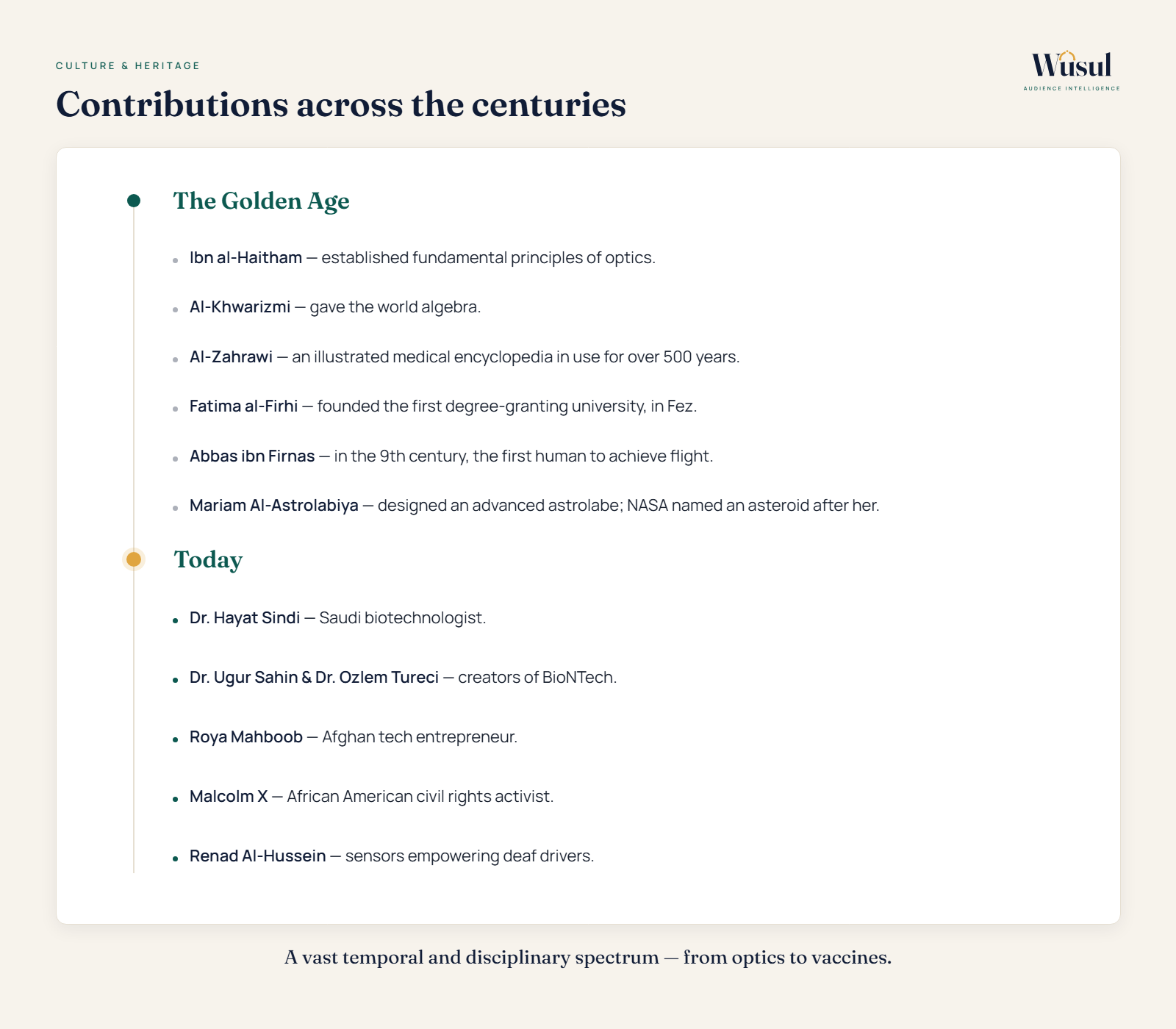
The month's programming showcases Muslim contributions across a vast temporal and disciplinary spectrum. It highlights figures from the Islamic Golden Age, including Ibn al-Haitham, whose scholarship established fundamental principles of optics; Al-Khwarizmi, whose work gave the world algebra; Al-Zahrawi, whose illustrated medical encyclopedia was in wide use for over 500 years; Fatima al-Fihri, who founded al-Qarawiyyin in Fez, Morocco, often described as the world's oldest degree-granting university; Abbas ibn Firnas, who in the 9th century is credited with one of the earliest recorded attempts at human flight; and Mariam Al-Astrolabiya, a 10th-century Muslim woman who designed an advanced astrolabe, essentially a medieval GPS, with an asteroid, 7060 Al-'Ijliya, named after her in 1990.
The event also spotlights contemporary Muslim change-makers, including Dr. Hayat Sindi, Saudi biotechnologist; Dr. Ugur Sahin and Dr. Ozlem Tureci, creators of BioNTech, which developed a COVID-19 vaccine; Roya Mahboob, Afghan tech entrepreneur; Malcolm X, the late African American civil rights activist; and Renad Al-Hussein, whose invention of sensors empowering deaf drivers has been recognized for its contribution to technology and safety.
The push for global recognition of IMHM
Since its founding, the World Hijab Day Organization has actively pursued official recognition for IMHM at multiple levels of government. On May 4, 2021, New York State adopted a resolution to recognize the month, "to pay tribute to those who foster ethnic pride and enhance the profile of cultural diversity which strengthens the fabrics of the communities of the New York State," as Governor Andrew Cuomo stated at the time. The recognition has been renewed annually. In January 2025, the New York State Senate passed Resolution No. 257, calling on the Governor to proclaim May 2025 as Muslim History Month in New York, championed by Senator Robert Jackson.
The organization has stated its goal is for IMHM to be federally recognized nationwide within the US. This campaign involves petitioning legislators, engaging educational institutions, and building public awareness through social media and community events.
Internationally, the World Hijab Day Organization is advocating for IMHM to be recognized by the United Nations, helping to tackle Islamophobia on a global scale. The organization is calling on individuals, institutions, and governments worldwide to support this effort. There is precedent for this type of initiative achieving UN recognition through the process of institutional translation; adapting a culturally specific proposal into the universalist language of UN resolutions while preserving its core meaning. A norm originally articulated by a particular cultural perspective can successfully acquire an open hermeneutic margin that allows it to be interpreted by various states based on their own cultural and ethical perspectives, as happened with the UN's designation of 2001 as the United Nations Year of Dialogue among Civilizations.
Why it matters
International Muslim History Month offers a tangible opportunity for organizations to demonstrate cultural intelligence. For Islamic charities and values-driven organizations, the month provides educational opportunities to educate staff and supporters about the rich heritage of the communities they serve, building internal cultural competence and external trust. It also creates partnership potential; organizations can partner with local mosques, schools, or the World Hijab Day Organization to co-host events, demonstrating genuine community engagement. The month provides a natural editorial hook for blogs, newsletters, and social media content highlighting Muslim contributions.
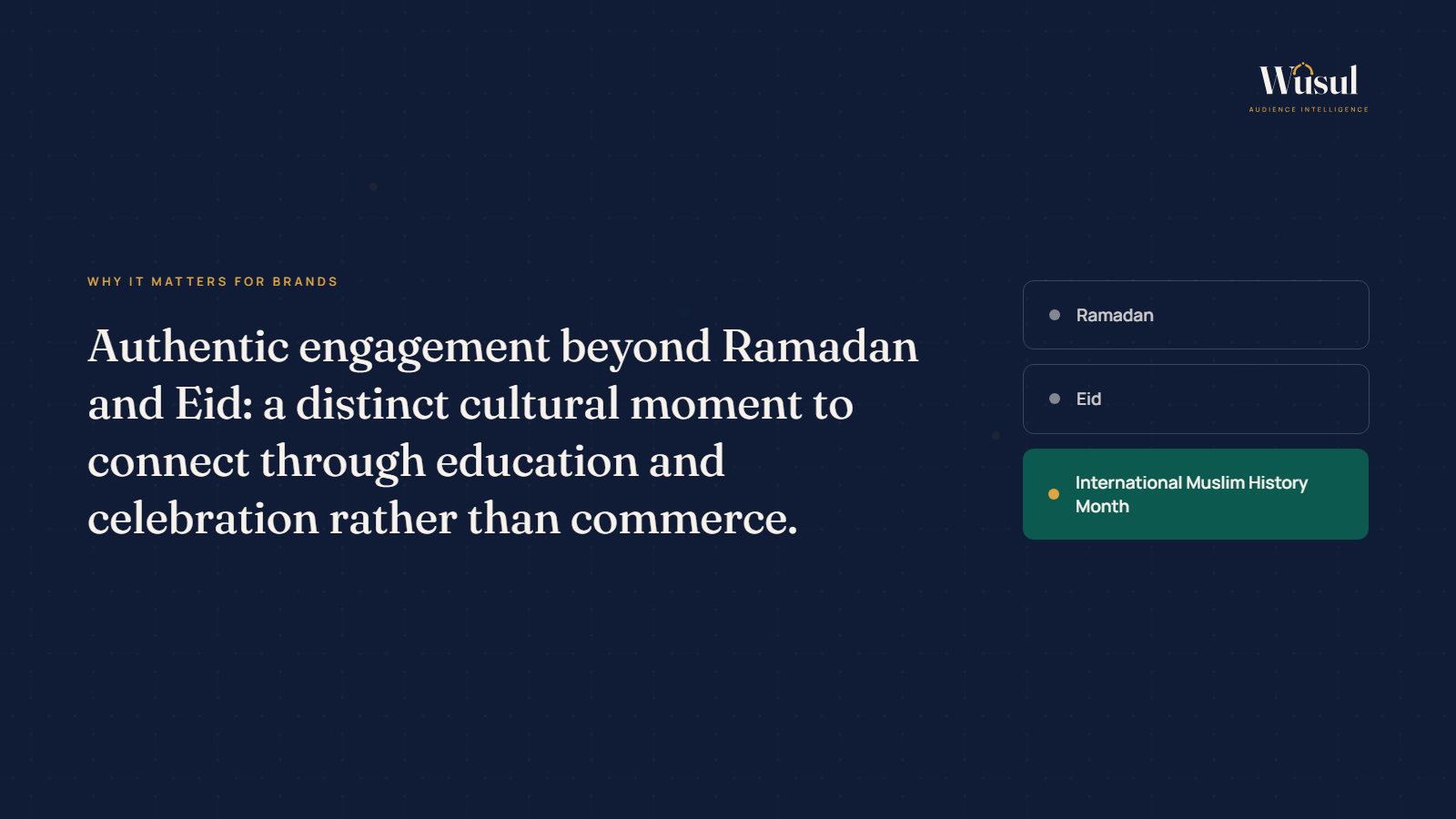
For halal brands, IMHM offers authentic engagement beyond Ramadan and Eid; a distinct cultural moment to connect with Muslim audiences through education and celebration rather than commerce. Supporting IMHM events through sponsorship or collaboration signals genuine commitment to the community. The month also provides an opportunity for internal education, helping non-Muslim staff understand the history and contributions of the communities they serve.
For cultural intelligence practitioners, the month provides a living case study in how to counter prejudice through education rather than confrontation. The initiative's focus on dismantling Islamophobia globally through knowledge, not guilt, is instructive for any organization seeking to build cross-cultural understanding.
At Wusul, we believe that true connection begins with understanding. International Muslim History Month is a powerful reminder of why organizations serving Muslim communities must invest in cultural intelligence; not just as a compliance exercise, but as a genuine commitment to appreciating the rich heritage of the communities they serve.
Frequently asked questions
What is International Muslim History Month?
International Muslim History Month is a global initiative founded in 2021 by the World Hijab Day Organization. It serves as a historical and cultural commemoration designed to counter Islamophobia by educating the public about the achievements and societal contributions of Muslim men and women throughout history, rather than being a religious celebration.
How to celebrate Muslim History Month?
Individuals, educational institutions, workplaces, and organizations can celebrate by recognizing and appreciating the contributions of Muslims to society. Participation involves engaging in educational activities, hosting events, or partnering with local mosques and schools. The goal is to foster understanding and bridge relationships between Muslims and their non-Muslim neighbors through learning about authentic history.
What did Fatima al Fihri do?
Fatima al-Fihri is recognized for founding al-Qarawiyyin in Fez, Morocco. This institution is often described as the world's oldest degree-granting university. Her contribution is highlighted during International Muslim History Month as an example of the significant historical achievements made by Muslim women in the field of education.
Sources
- New York State Senate, Resolution J257 (2025), Muslim History Month
- World Hijab Day Organization, founder of International Muslim History Month
- Wikipedia, Al-ʻIjliyyah (Mariam al-Astrulabi) and asteroid 7060
- Wikipedia, Abbas ibn Firnas and the historical record of his flight attempt