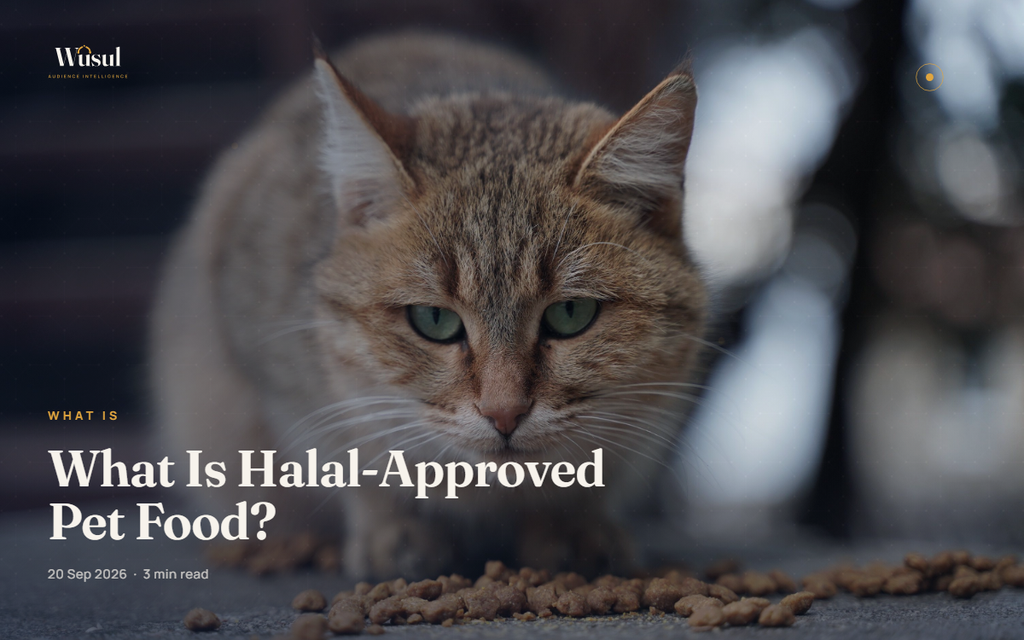
If you want a sign on how deep religious intentionality runs in a household's purchasing decisions, the pet food aisle is a good place to look. It's a category with no direct human consumption stakes, no obvious commercial pressure to comply with anything, and yet it has generated enough demand that certification bodies, specialty retailers, and even national regulators have had to engage with it seriously. Whether it is halal cat food or halal dog food, the question is the same: does the household’s religious intentionality extend even here?
That's the kind of signal the Cultural Intelligence Gap is built to catch. Organizations that treat "the Muslim market" as a fixed, food-and-fashion-shaped category consistently miss how far observance-driven preference extends; into pet care, into household hygiene practices, into purchasing decisions most consumer research never thinks to measure. Halal-approved pet food is a small, yet concrete example of a much bigger pattern: intentionality (niyyah) as a purchasing lens doesn't stop where one might assume it does.
What is halal pet food?
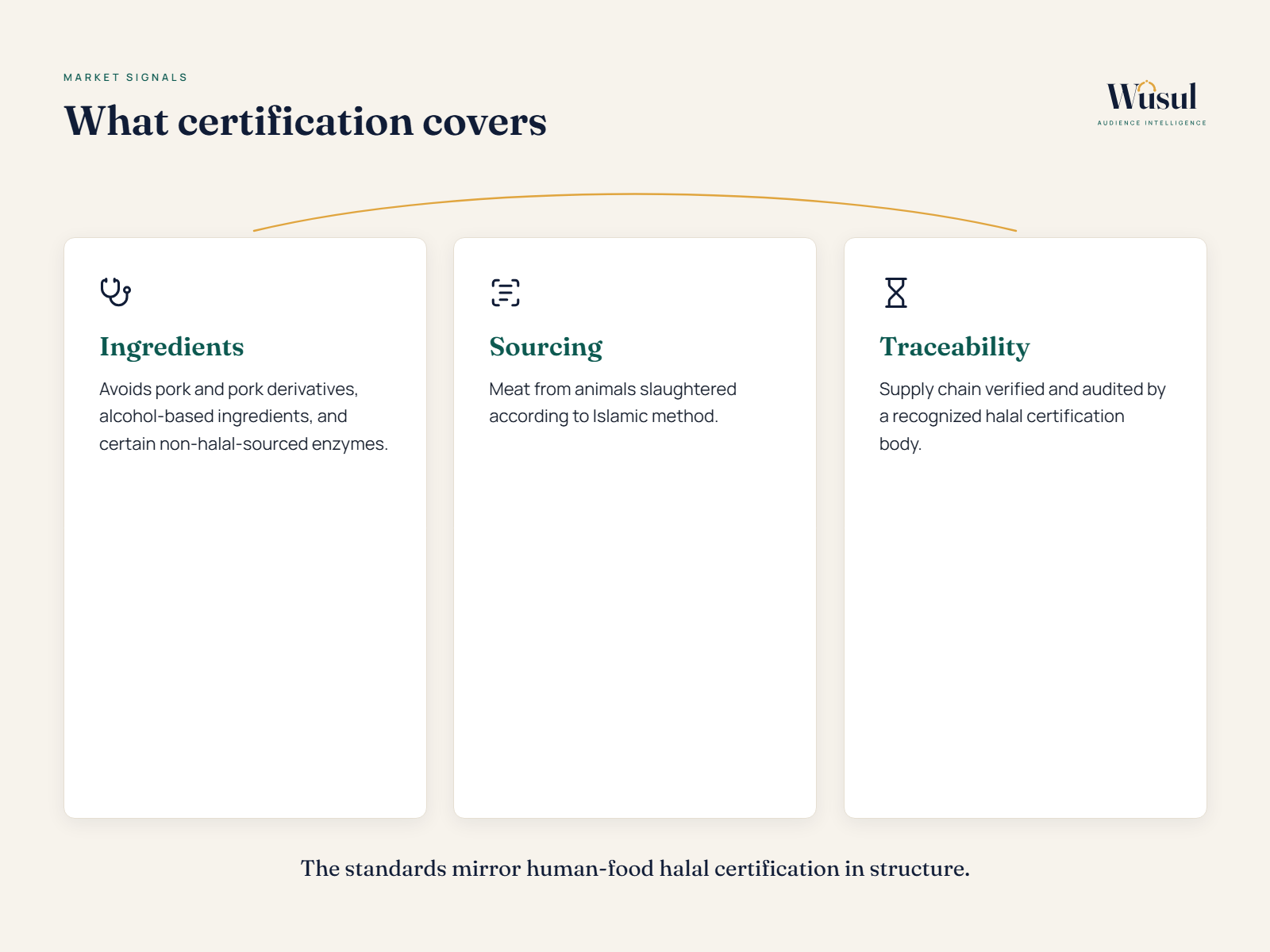
Halal-approved pet food itself is exactly what it sounds like: pet food, typically for cats and dogs, produced, sourced, and certified according to halal standards, meaning it avoids pork and pork derivatives, alcohol-based ingredients, and meat from animals not slaughtered according to Islamic method, with the supply chain verified by a recognized halal certification body.
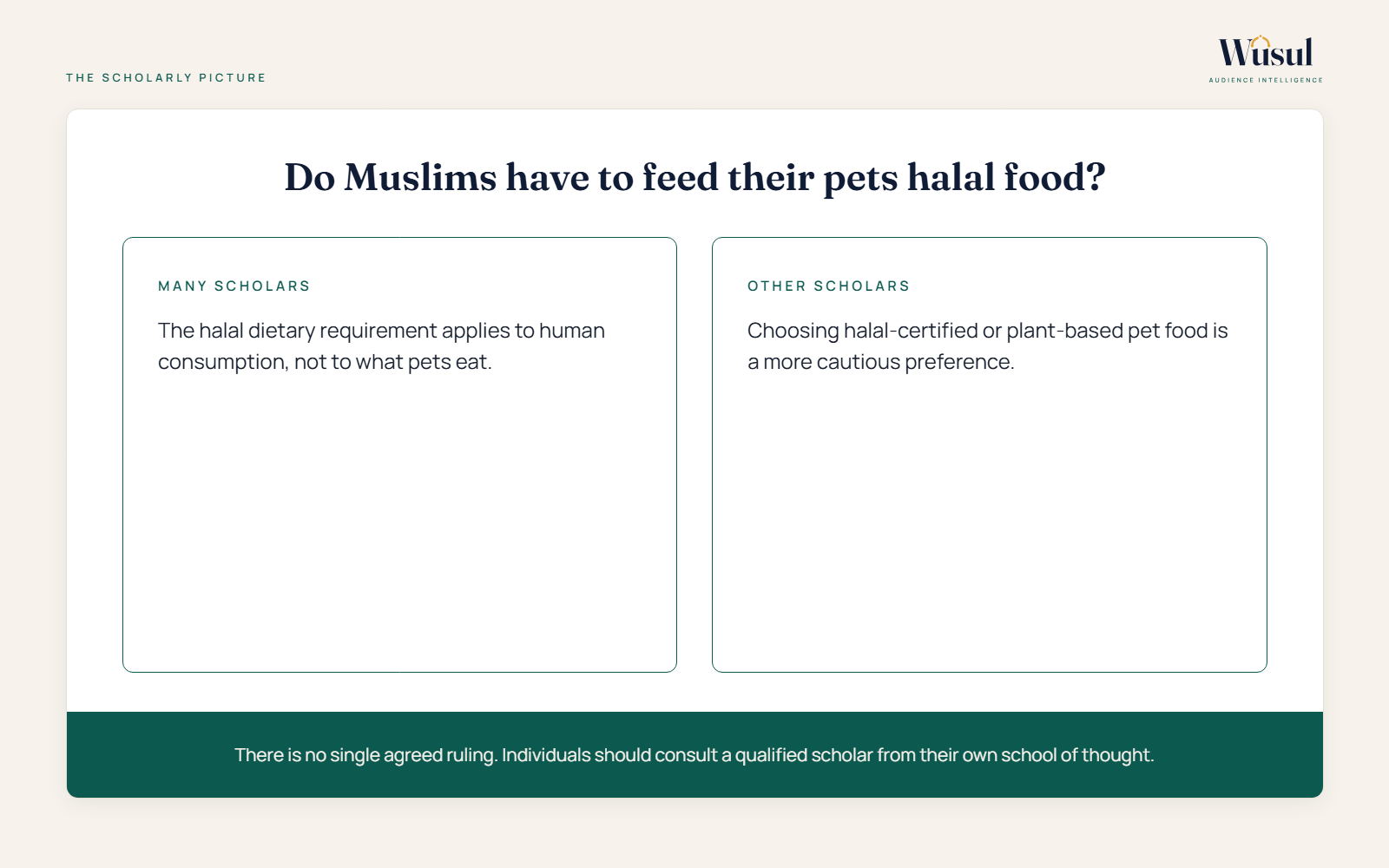
Do Muslims have to feed their pets halal food?
There is no single agreed ruling. Many scholars hold that the halal dietary requirement applies to human consumption, not to what pets eat, since animals are not subject to the same dietary law. Other scholars advise choosing halal-certified or plant-based pet food as a more cautious preference. Individuals should consult a qualified scholar from their own school of thought for personal guidance.
What halal pet food certification covers
Where certification bodies do operate in this space, the standards mirror human-food halal certification in structure: avoidance of pork and pork derivatives, exclusion of alcohol and certain non-halal-sourced enzymes, and verified sourcing from animals slaughtered according to Islamic method, with supply-chain traceability audited by the certifying body (American Halal Foundation, halal animal feed certification standards).
It's worth noting that certification coverage is inconsistent by country. In Singapore, for example, the Islamic Religious Council (MUIS) certifies food intended for human consumption, but pet products are typically not covered by MUIS certification; meaning Muslim pet owners there are advised to check ingredient lists directly or rely on credible foreign halal marks on imported products rather than assume local certification applies (Hisar Travel, MUIS certification scope).
Where the halal pet food market is growing
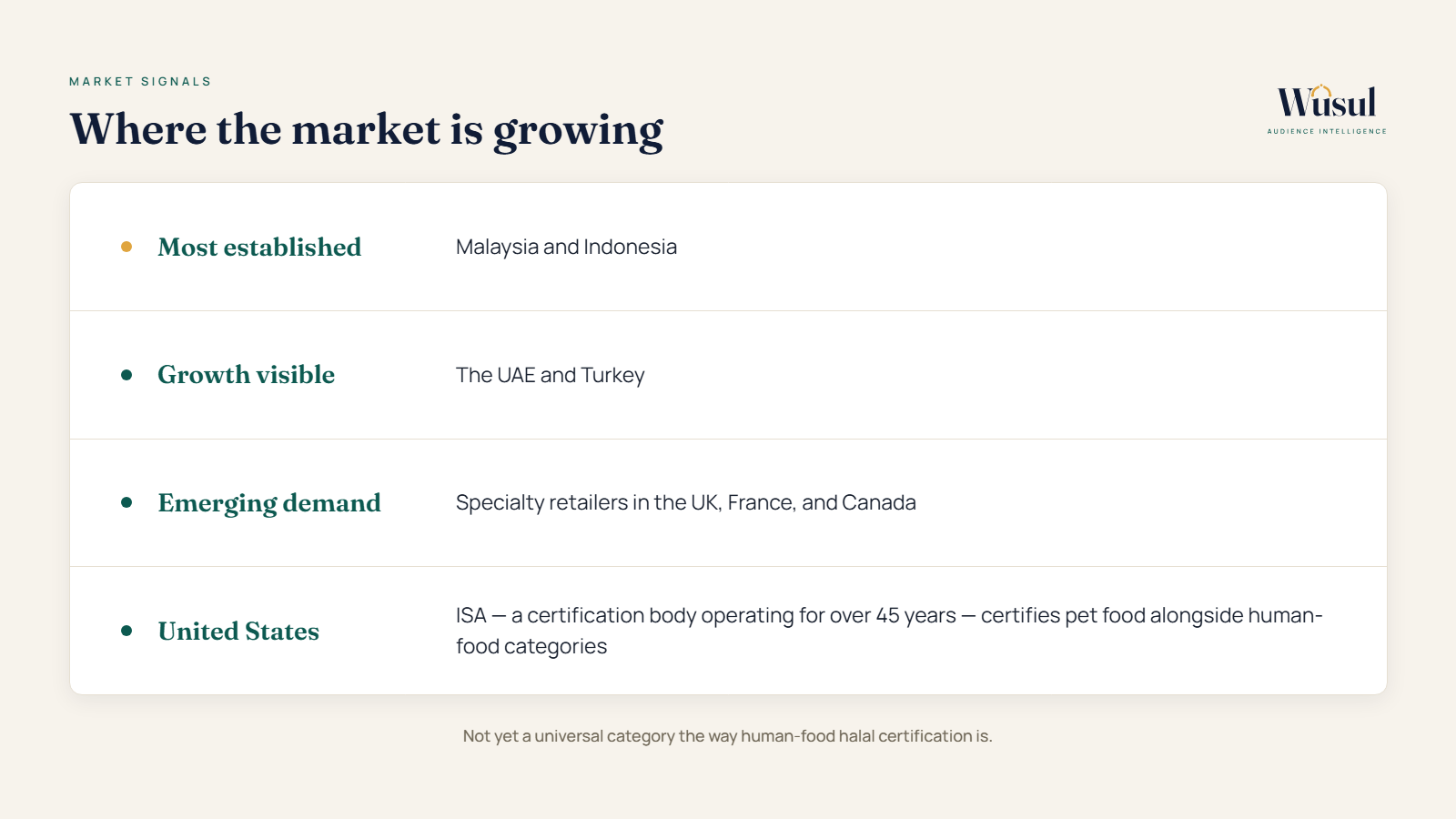
Reporting describes the halal pet food market as most established in Malaysia and Indonesia, with growth also visible in the UAE and Turkey. Demand has also emerged in Western markets; specialty pet retailers and online sellers in the UK, France, and Canada have begun stocking halal-certified pet food to serve Muslim communities there (Halal Watch World). In the United States, Islamic Services of America (ISA), a certification body operating for over 45 years, certifies pet food products alongside human-food categories (Islamic Services of America).
What halal pet food means for your organization
For halal-certified brands: entering the pet food category is not a settled, low-risk extension of an existing halal food brand. Be transparent that scholarly views differ, and avoid marketing language that implies pet halal certification is a religious requirement rather than a preference some observant consumers hold.
For researchers and media: this is a genuinely interesting test case for how far halal as a commercial identity marker extends beyond areas of religious consensus; worth covering as an open question, not a settled consumer trend.
For charities and community organizations: if fielding questions from Muslim pet owners, the most honest answer is that multiple scholarly views exist, and individuals should consult a qualified local scholar for guidance specific to their school of thought and circumstances.
Does halal pet food certification exist in the UK and US?
Yes. Certification bodies including Islamic Services of America (ISA) in the US certify pet food products. Coverage and prevalence vary by country and retailer; it is not yet a universal category the way human-food halal certification is.