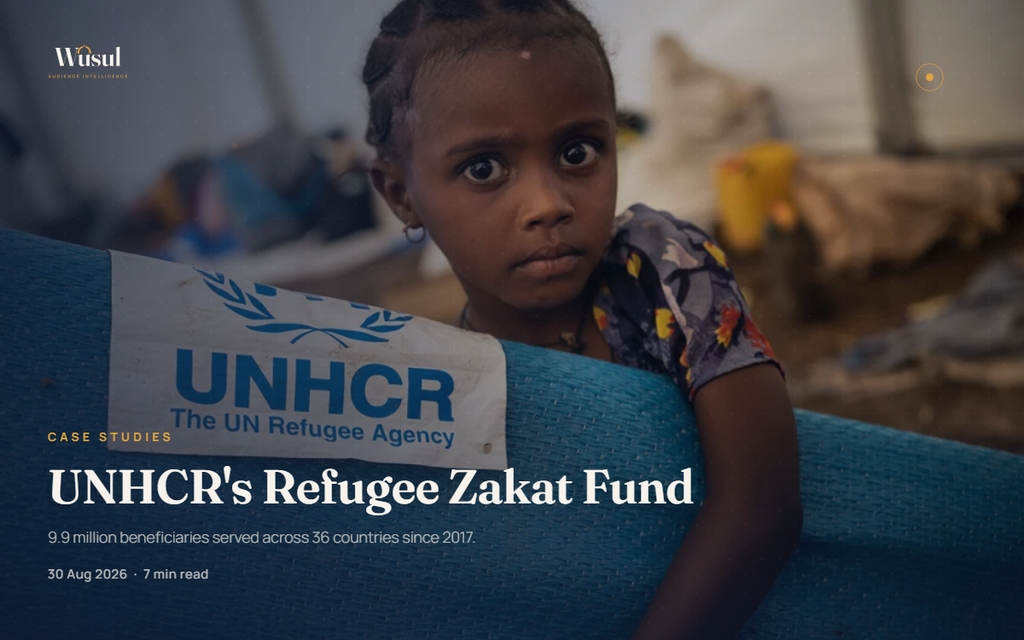
In 2017, the United Nations High Commissioner for Refugees (UNHCR) piloted an initiative that would transform how Islamic philanthropy addresses one of the world's most pressing humanitarian crises. The Refugee Zakat Fund was created in direct response to a growing desire from Zakat donors and institutions to channel their Zakat specifically to refugees; nearly more than 50% of whom originate from Organization of Islamic Cooperation (OIC) countries.
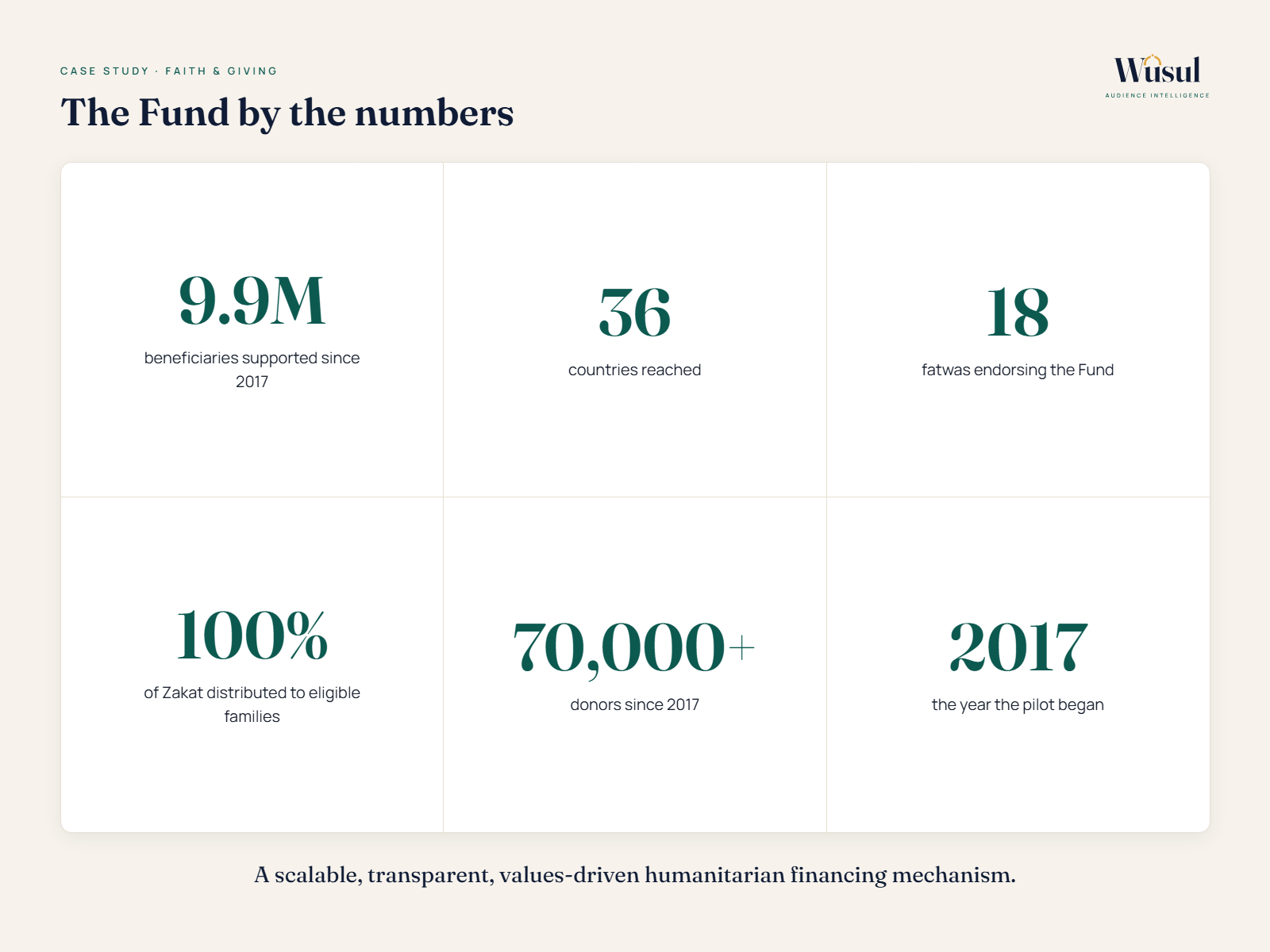
What began as a pilot in 2017 has since grown into a trusted, Sharia-compliant channel for Islamic philanthropy, translating the generosity of institutional partners and individual donors into timely and dignified assistance for refugees, internally displaced persons (IDPs), and vulnerable host communities. The results have been remarkable. Since its inception, the Fund has supported more than 9.9 million people across 36 countries, serving as a scalable, transparent, and values-driven humanitarian financing mechanism grounded in Islamic philanthropic principles.
This case study examines how UNHCR built a trusted, Shariah-compliant Zakat distribution model; and what Islamic charities and halal brands can learn from its approach to governance, transparency, and cultural intelligence.
The problem: a humanitarian crisis without a funding mechanism
The Arab Spring revolutions and the resultant conflicts created an acute displacement crisis throughout the Middle East and North Africa. Millions of predominantly Muslim refugees found themselves in need of humanitarian assistance, overwhelming national structures and conventional aid systems.
The crisis created a critical gap: local Zakat organizations, often fragmented or incapacitated by the very conflicts that generated the need, were unable to fill the administrative vacuum. International humanitarian agencies had the operational capacity but lacked a mechanism to tap into the vast potential of Islamic philanthropy.
Islamic philanthropy (particularly Zakat and Sadaqah) represents a significant and underutilized resource. The Quran explicitly defines eight categories of eligible Zakat recipients, including the poor, the needy, and those in bondage or stranded travelers (ibn al-sabil). Refugees and forcibly displaced people qualify under at least four of these eight categories: the poor, the needy, the debtors, and the wayfarers. UNHCR recognized the opportunity: if they could create a mechanism that was both operationally effective and religiously compliant, they could unlock a powerful new funding stream for refugee assistance.
The solution: the UNHCR Zakat fund, Shariah-compliant by design
UNHCR established the Refugee Zakat Fund in 2019, following a successful pilot in 2017 and 2018. The Fund operates on a foundation of rigorous governance designed to ensure both operational effectiveness and religious compliance. It positions UNHCR as a trusted, compliant distributor that maximizes the impact of Zakat and Sadaqah on refugee lives while adhering to Islamic philanthropy principles.
Scholarly endorsement: The foundation of trust
Scholarly endorsement stands as a cornerstone of the Fund's credibility. The Fund is endorsed by 18 fatwas from prominent scholars and institutions globally, including the Muslim World League, the Organization of Islamic Cooperation's (OIC) International Islamic Fiqh Academy (IIFA), and Al-Azhar's Islamic Research Academy. This endorsement addresses a critical donor concern: many Muslims delay giving Zakat because they want to be sure it is done correctly. The Refugee Zakat Fund ensures that every donation is handled with full Sharia compliance from those who receive Zakat to how it is delivered.
Many donors look to these endorsements when validating Zakat compliance. As one analysis notes, the Fund is "backed by 18 fatwas from leading Muslim scholars and institutions," which affirms the validity of the Refugee Zakat Fund and provides donors with the confidence that their religious obligation is being fulfilled correctly. An independent Zakat Board oversees the Fund, ensuring that Sharia compliance is maintained at every step.
100% Zakat distribution
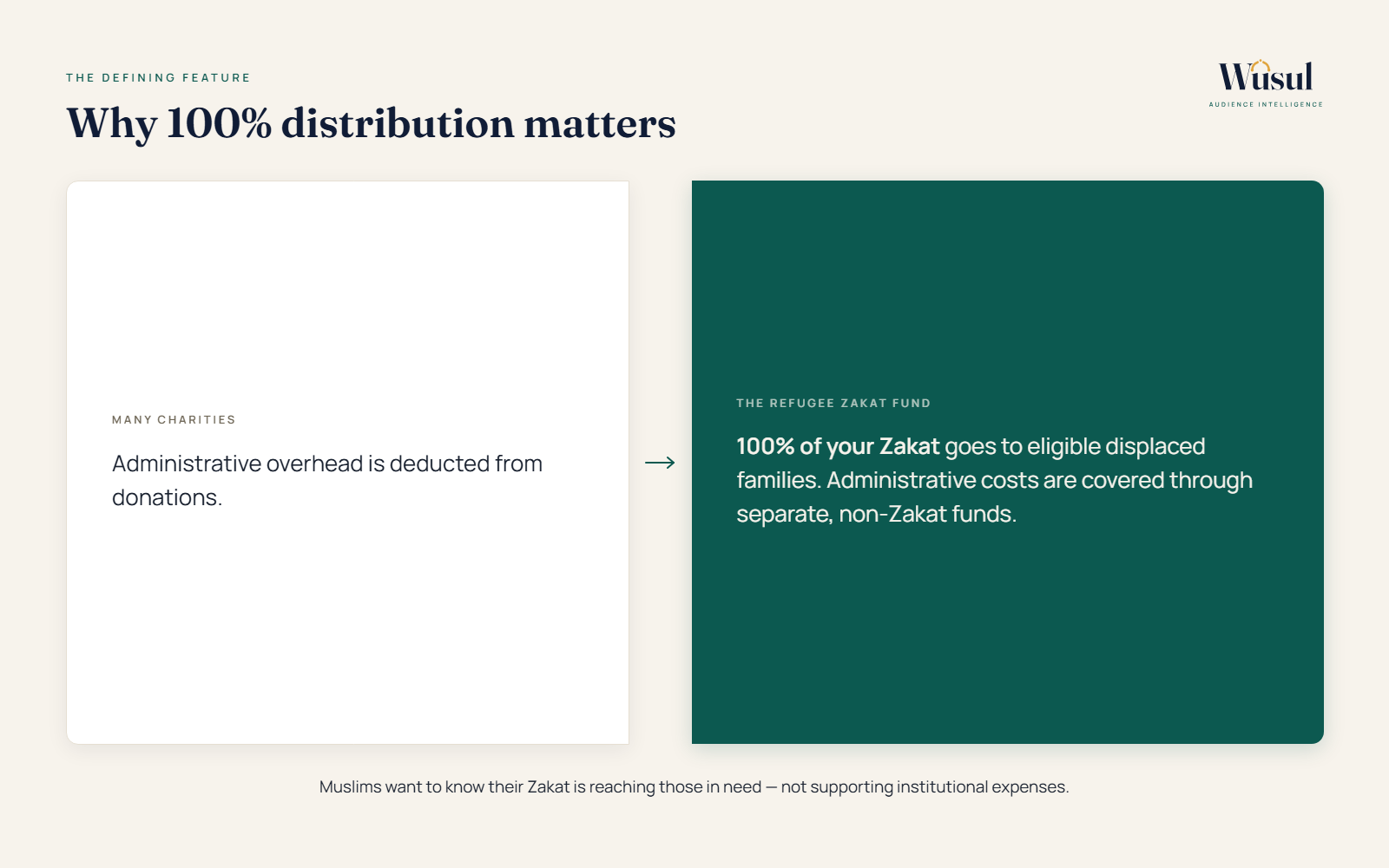
A defining feature of the Fund is its 100% Zakat distribution policy. UNHCR ensures that every dollar of Zakat donated is distributed to eligible refugee and displaced families, including those in hard-to-reach areas. These charitable donations are not used to cover administrative costs such as salaries.
UNHCR covers overhead and operational costs from non-Zakat sources. This is a critical differentiator from many charitable organizations that deduct administrative overhead from donations. As UNHCR states: "With this fund, 100% of your Zakat goes to eligible displaced families. Administrative costs are covered through separate, non-Zakat funds." This commitment serves both an operational and a rhetorical purpose: operationally, it ensures Zakat funds go directly to eligible recipients; strategically, it enhances institutional credibility and builds donor trust.
Financial governance and traceability
The Fund follows rigorous financial governance to ensure transparency and accountability at every stage. Funds are held in a dedicated interest-free bank account in Geneva, ensuring segregation and Sharia-aligned financial management.
- Traceability is built into the Fund's operations. Zakat funds are strictly dedicated to Zakat-compliant distribution activities in identified countries with growing humanitarian needs. This ensures that donors know exactly where their Zakat is going and that it reaches only eligible recipients.
- Transparency is maintained through regular reporting. UNHCR publishes annual and bi-annual Islamic Philanthropy reports, and partners are provided with customized reports based on where they wanted their funds to be utilized. The program emphasizes transparency via regular Islamic Philanthropy reports and partner-specific reporting. Since 2017, more than 70,000 donors have entrusted UNHCR with their Zakat, reflecting sustained donor confidence in UNHCR's governance and delivery model.
The impact: over 9.9 million beneficiaries
The Refugee Zakat Fund has delivered life-saving assistance on an extraordinary scale. Since its piloting in 2017, the Fund has supported more than 9.9 million people across 36 countries, underscoring its role as a scalable, transparent, and value-driven humanitarian financing mechanism.
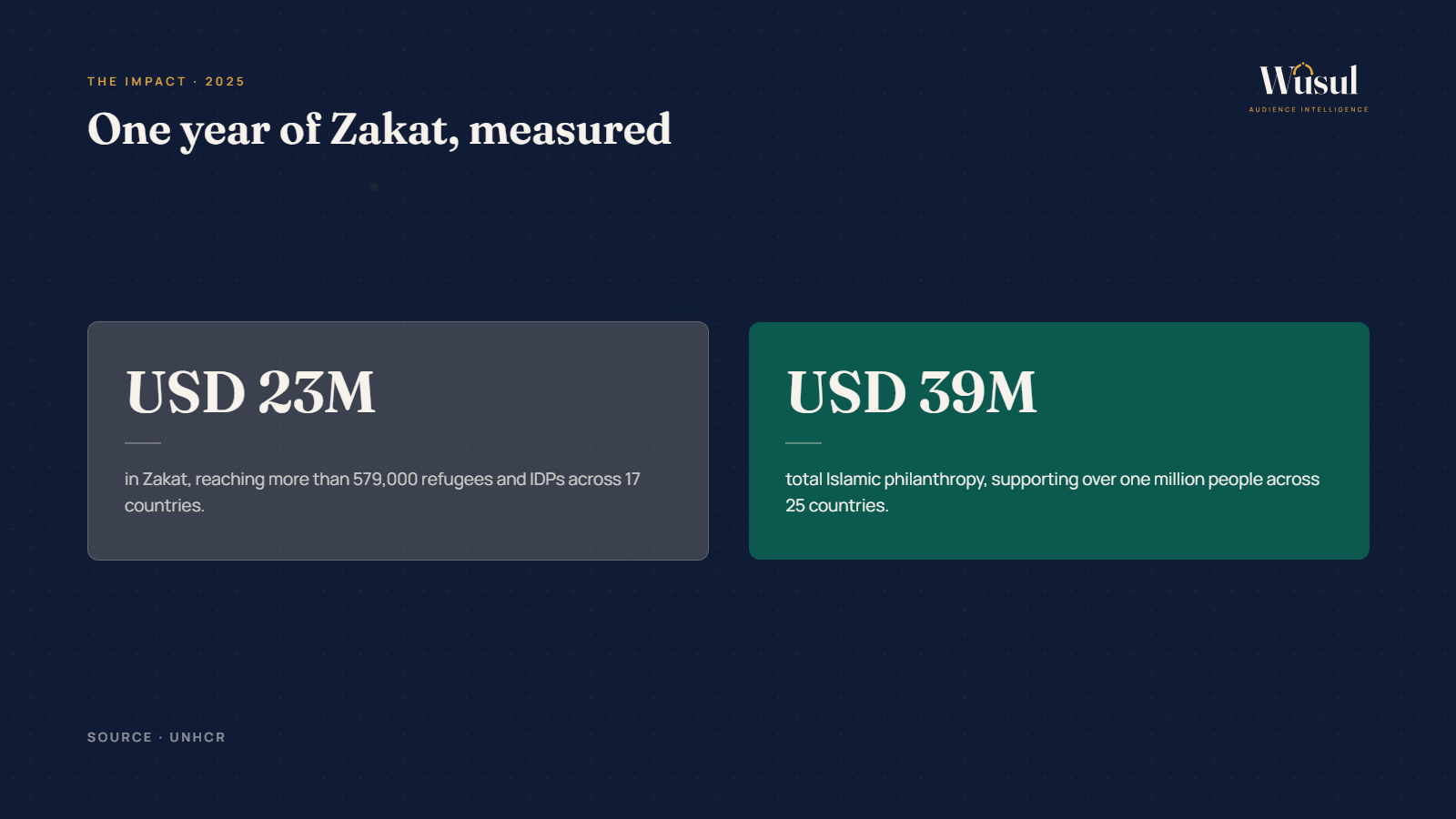
In 2025 alone, the Refugee Zakat Fund received over USD 23 million in Zakat contributions, to be distributed in full in line with UNHCR's 100% Zakat distribution policy. Zakat assistance reached more than 579,000 Zakat-eligible refugees and IDPs across 17 countries, including Afghanistan, Jordan, Sudan, and Chad. Through UNHCR's partnerships, global campaigns, and the Refugee Zakat Fund mobile application, total Islamic philanthropy contributions reached USD 39 million, enabling UNHCR to support more than one million displaced people across 25 countries.
Nearly 60 per cent of donations came from MENA-based donors, reflecting the region's leadership in faith-based giving. The Fund also expanded into new operations in Africa and South America, supporting displaced families in Botswana, education for vulnerable children in the Central African Republic, and deploying Zakat or Sadaqah resources in Brazil and Colombia.
Zakat and Sadaqah: delivering dignified assistance
Zakat funds are strictly used for Zakat-compliant distribution activities: primarily cash assistance and in-kind aid to eligible refugees and IDP families. Cash assistance is the primary distribution mechanism, ensuring families can prioritize and meet their immediate needs; whether food, rent, medicine, or school supplies. This approach empowers families to manage their own finances while addressing their most pressing needs.
The use of technology in distribution increases efficiency and minimizes fraud and duplication. UNHCR uses IRIS scanning at ATMs, mobile wallets, and other technologies to ensure cash is distributed among eligible recipients. This technology-driven approach has enabled distribution to hard-to-reach areas and ensured that assistance reaches the most vulnerable.
In-kind assistance includes core relief items such as shelter, clothing, and basic needs. The impact is tangible: for a displaced family, Zakat can mean food when cupboards are empty, rent so they are not forced onto the streets, warm clothes and blankets in winter, and medicine for a sick child.
The cultural intelligence analysis
What UNHCR got right reflects deep cultural intelligence across multiple dimensions.
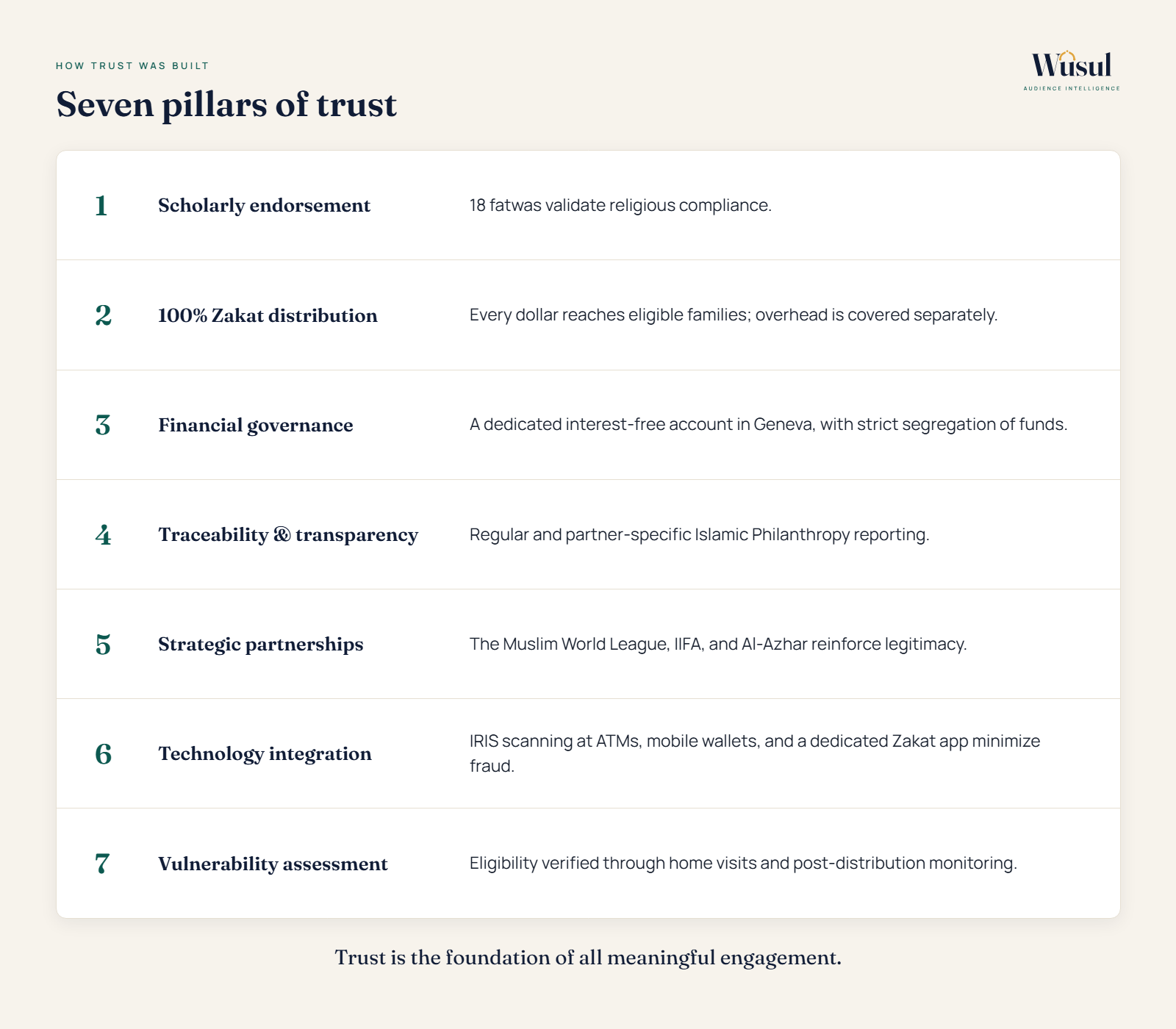
1- Scholarly endorsement from 18 fatwas validates religious compliance; donors trust the religious legitimacy. This addresses a critical donor concern: many Muslims delay giving Zakat because they want to be sure it is done correctly. The Fund ensures that every donation is handled with full Sharia compliance.
2- 100% Zakat distribution addresses donor concern that Zakat might be "wasted" on overhead. This commitment demonstrates an understanding of donor psychology: Muslims want to know their Zakat is reaching those in need, not supporting institutional expenses.
3- Financial Governance through a dedicated interest-free bank account and strict segregation of Zakat funds ensures Sharia-aligned financial management.
4- Traceability and Transparency through regular reporting and partner-specific reporting ensures donors know exactly where their Zakat is going and that it reaches only eligible recipients.
5- Strategic Partnerships with organizations such as the Muslim World League, OIC's International Islamic Fiqh Academy, and Al-Azhar's Islamic Research Academy reinforce legitimacy.
6- Technology Integration ensures efficiency and fraud prevention. The use of IRIS scanning at ATMs, mobile wallets, and other technologies ensures cash is distributed among eligible recipients. The Refugee Zakat Fund App, the first and only Zakat-dedicated app launched by a UN organization, enables donors to calculate and channel their Zakat through a fully Sharia-compliant platform.
7- Vulnerability Assessment involves a framework to identify eligible recipients, updated on a yearly basis. UNHCR staff verify the eligibility of beneficiaries through home visits and post-distribution monitoring, ensuring Zakat reaches the most deserving.
Final Reflection
UNHCR's Refugee Zakat Fund represents a landmark achievement in Islamic social finance. By combining operational excellence with religious compliance, the agency has unlocked a new funding stream that has delivered life-saving assistance to millions of displaced Muslims.
The Fund's success is built on a foundation of governance, transparency, and cultural intelligence. Governance is upheld through rigorous systems for compliance, monitoring, and accountability. Transparency is maintained through annual reports, third-party audits, and traceability. Cultural intelligence is demonstrated through understanding donor psychology, religious requirements, and community expectations.
At Wusul, we believe that trust is the foundation of all meaningful engagement with Muslim communities. UNHCR's Refugee Zakat Fund demonstrates that when organizations invest in governance, transparency, and cultural intelligence, they can build lasting relationships with donors and deliver transformative impact. The lesson is clear: cultural intelligence is not a nice-to-have; it is essential to earning the trust that makes giving possible.