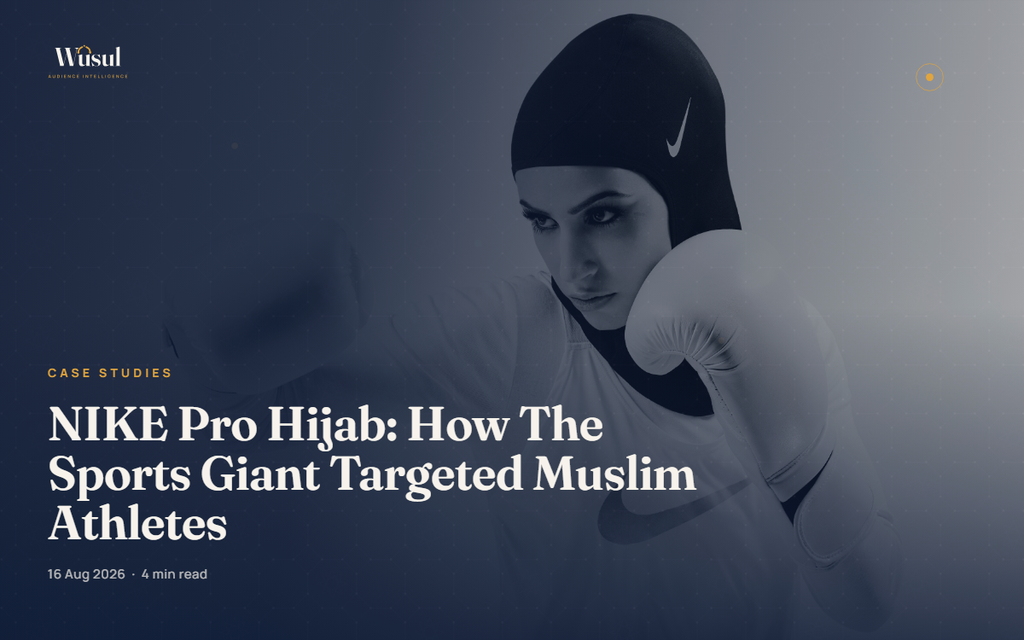
In December 2017, Nike did something that seemed entirely unexpected for a Western athletic powerhouse. The global sportswear giant launched the Nike Pro Hijab, a performance sports hijab designed specifically for Muslim female athletes. The collection would become one of the most significant examples of a global brand engaging Muslim consumers with cultural intelligence, recognizing a massive gap in the market rather than just rolling out a performative marketing campaign.
What made Nike's approach different from brands that simply use "diverse casting" without changing their actual merchandise? The answer lies in the brand's commitment to solving real physical constraints and designing alongside a community rather than at them.
The partnership: Insider-led perspectives
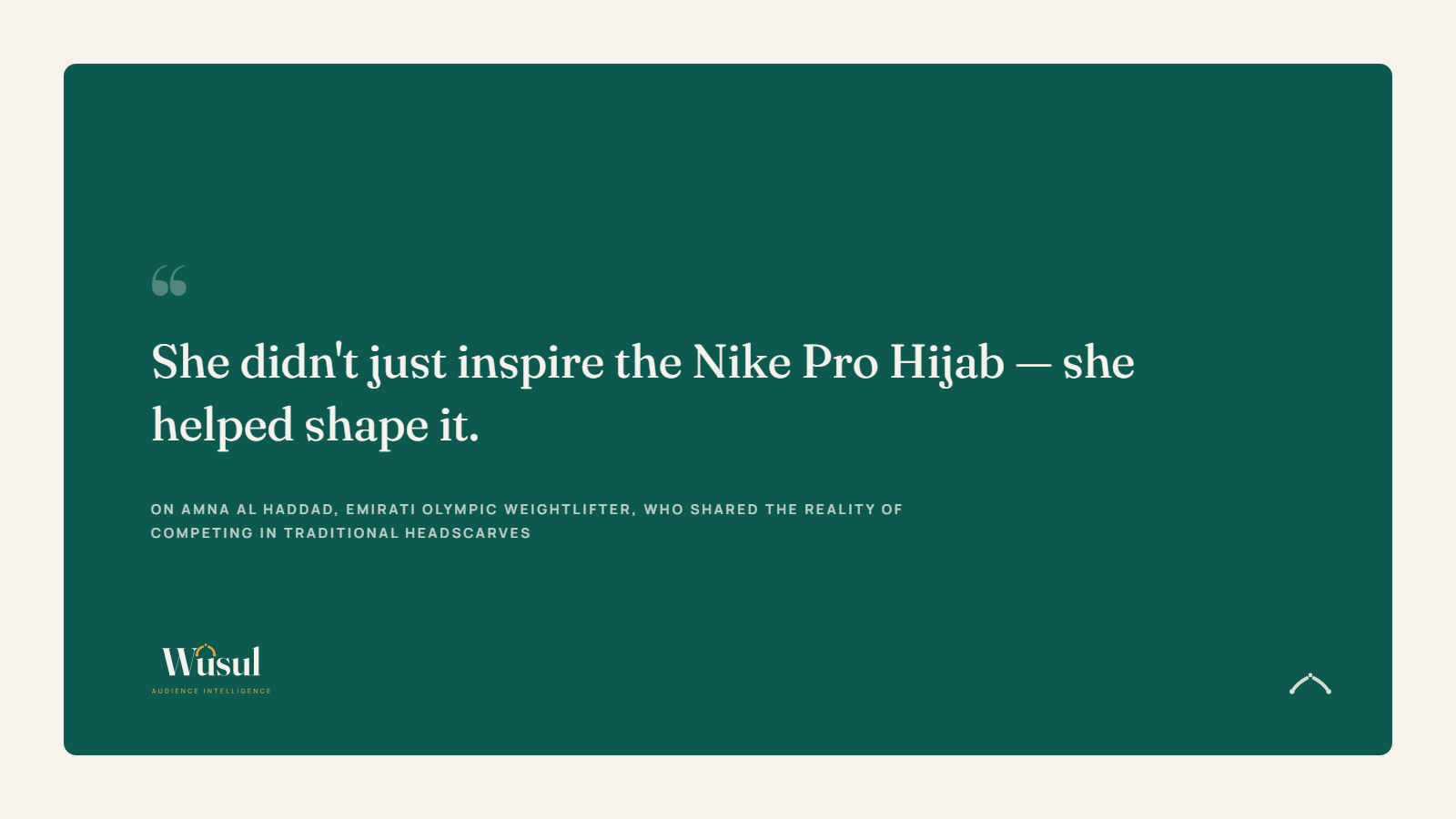
Nike's Pro Hijab was not the product of an isolated design committee. It was the result of sustained conversations with top female Muslim athletes who illuminated the physical and performance barriers of traditional hijabs. To level the playing field, Nike worked closely with a panel of professionals, including Emirati figure skater Zahra Lari, and everyday runners like Manal Rostom. These Muslim women became the core beta-testers, assessing prototypes in their respective sports and ensuring the final garment was shaped by the exact athletes who needed it most. And when it comes to the Emirati Olympic weightlifter Amna Al Haddad; she didn't just inspire the Nike Pro Hijab, she helped shape it. Visiting Nike’s research lab, she shared the exhausting reality of competing in traditional headscarves: they were heavy, trapped heat, and constantly slipped mid-lift. She even had to hand-wash her only reliable hijab in a sink every single night. This raw, real-world feedback gave Nike the exact blueprint they needed to build a game-changing solution: a secure, ultra-lightweight, and deeply breathable hijab designed for peak performance.
Beyond the headscarf: engineering a performance sports hijab
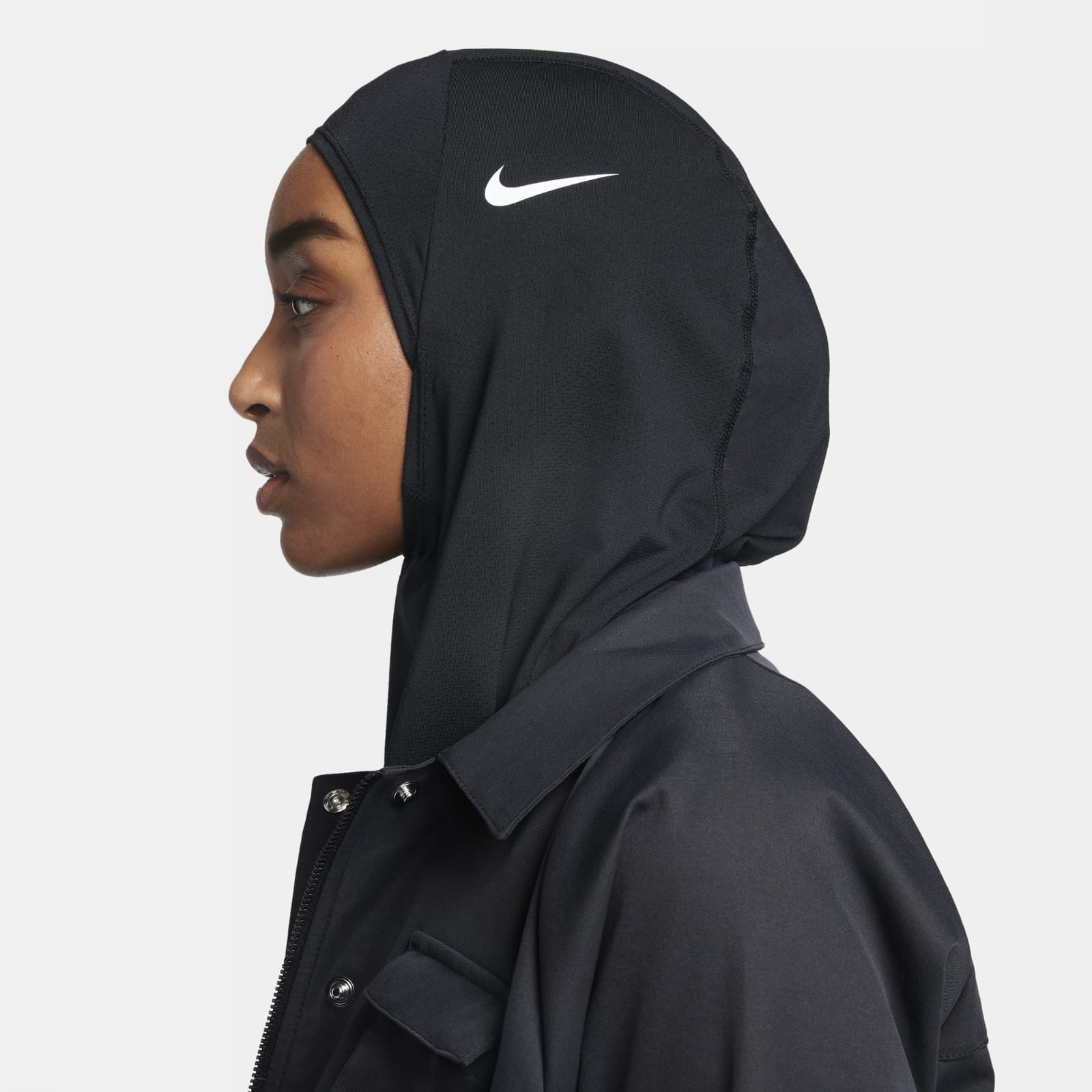
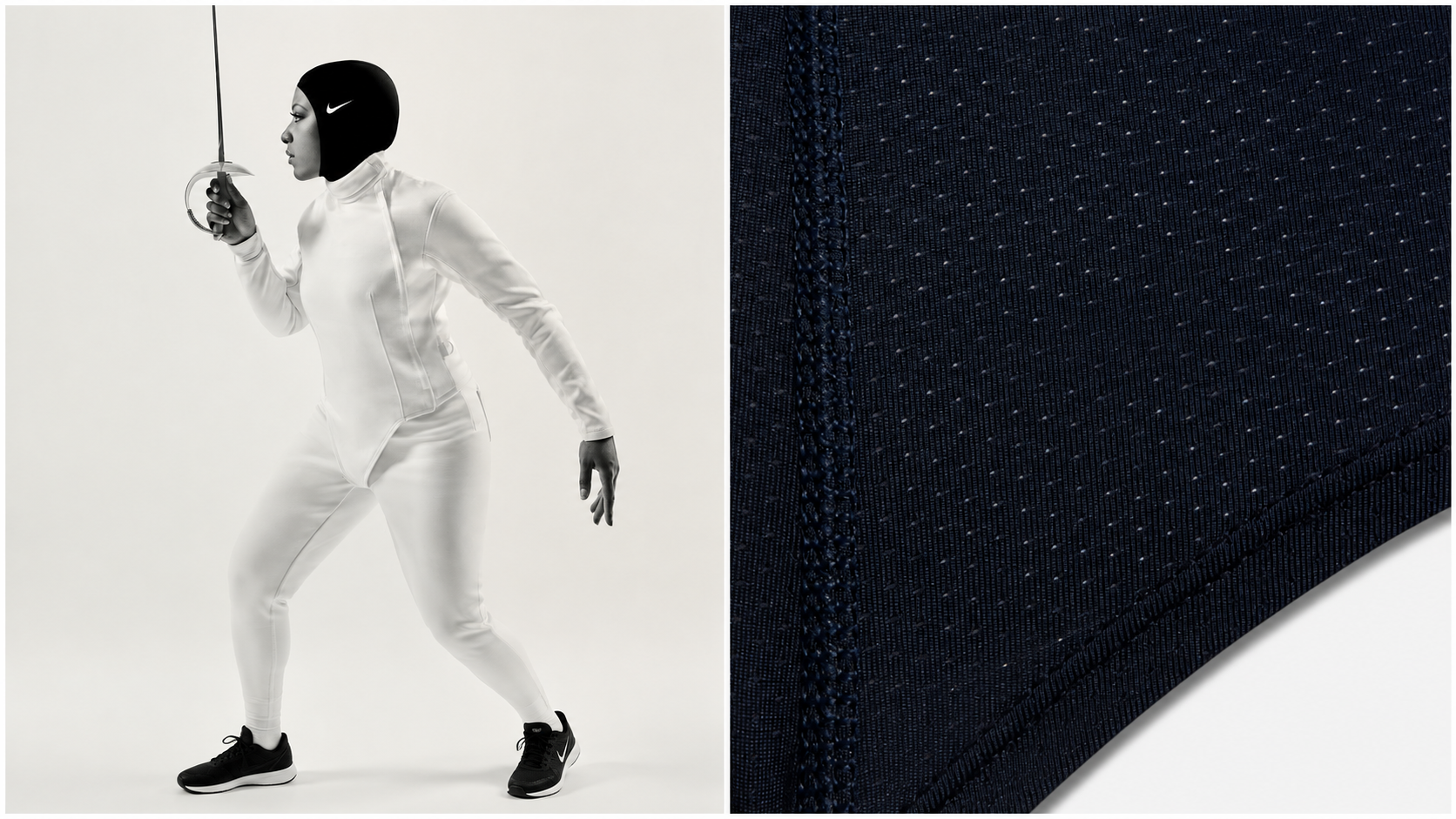
The Nike Pro Hijab was never just a symbolic gesture; it was a technical athletic solution. Traditional hijabs were not built for rigorous movement, often lacking breathability, shifting constantly, and holding onto moisture. Nike's design team crafted the final product using single-layer Nike Pro cool mesh, one of the company's most breathable, lightweight, and opaque fabrics. The collection's design language was entirely functional yet culturally sensitive. Featuring a pull-on design and an elongated back to prevent untucking, it eliminated the need for pins and constant adjustments. It was offered in versatile sizes to comfortably accommodate a wide range of head sizes and face shapes without adding bulk.
Nike Pro Hijab 2.0 Following the groundbreaking release of the original Nike Pro Hijab in 2017, the athletic line underwent key evolutionary changes to further optimize performance, leading to the Nike Pro Hijab 2.0. The first iteration revolutionized modest activewear by utilizing a pull-on design made from a single layer of Nike Pro power mesh a stretchy, breathable polyester To better accommodate extreme athletic movement, Nike refined the garment for its second generation. The Nike Pro Hijab 2.0 introduced an upgraded sweat-wicking mesh for even greater breathability and featured a new interior strap designed to lock the hijab securely in place during intense physical activities
Why the Nike hijab matters
Nike's entry into modest sportswear was a catalyst for a broader shift in the global athletic industry. Muslim women have long faced barriers to sports, ranging from federation hijab bans to a simple lack of appropriate clothing. By introducing a high-performance hijab, Nike supported the Muslim women in the public sporting sphere, countering restrictive narratives.
The move resonated powerfully with a younger, brand-conscious demographic of Muslims who value inclusivity and expect brands to back their messaging with action. Nike mainstreamed what was often unfairly marginalized, proving that true inclusivity in sports means ensuring everyone has the gear they need to compete comfortably.
Cultural intelligence analysis: what Nike got right
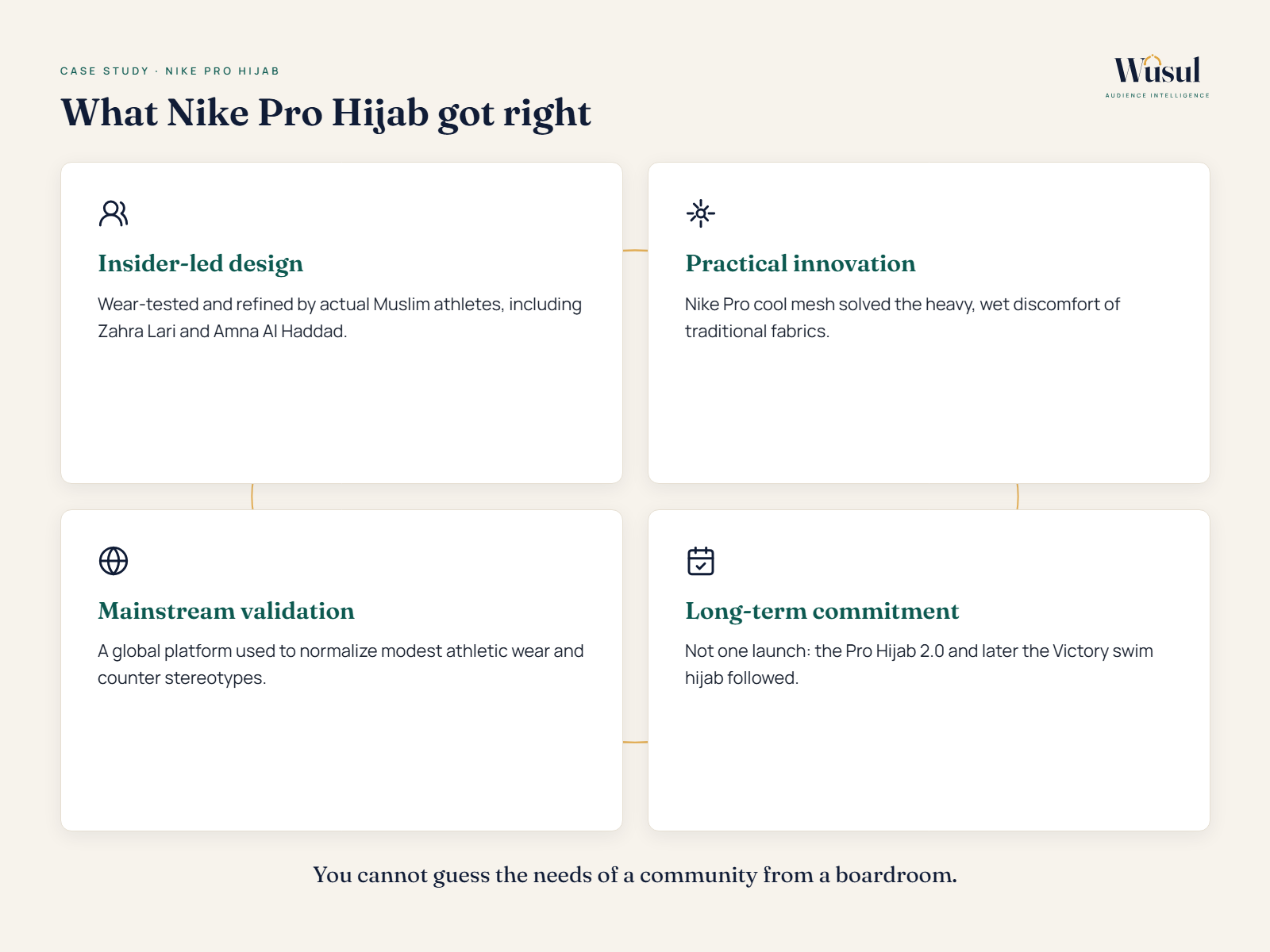
- Insider-led design: The product was wear-tested and actively refined by actual Muslim athletes like Zahra Lari and Amna Al Haddad.
- Practical product innovation: Utilizing Nike Pro cool mesh solved the heavy, wet discomfort of traditional fabrics, addressing a tangible friction point.
- Mainstream validation: Nike leveraged its immense global platform to normalize modest athletic wear, countering societal stereotypes.
- Long-term commitment: Nike didn't stop at a single launch; they continued to develop inclusive products like the Nike Victory swim hijab.
For Islamic charities & social impact organizations
- Listen to the community: Nike's success came from actively listening to the specific physical constraints faced by athletes. Organizations has the option to similarly identify and listen to the real, everyday friction points in their communities to offer genuine help.
- Solve real problems: The pull-on, breathable mesh addressed a tangible need. Donors and organizations should focus on practical solutions besides just symbolic support.
For brands
- Design fora full experience: The Nike Pro Hijab considers fabric, cut, safety, and physical performance, not just basic religious act.
- Empower through visibility: Showing Muslim women as fierce, capable athletes in mainstream campaigns shifts perceptions and builds immense, lasting brand loyalty.
For cultural intelligence practitioners
- Insider-led authenticity is essential: You cannot guess the needs of a community from a boardroom. Brands embedded Muslim athletes directly into the prototyping and wear-testing process.
- Product & messaging equality: True inclusivity isn't just a marketing slogan; it requires tangible changes to products and technology to serve marginalized groups.
At Wusul, we believe that communicating authentically with Muslim audiences requires self-creativity, product innovation, and sustained commitment; not performative act. Nike Pro Hijabi collection demonstrates that when brands invest in cultural intelligence, they build trust that lasts.