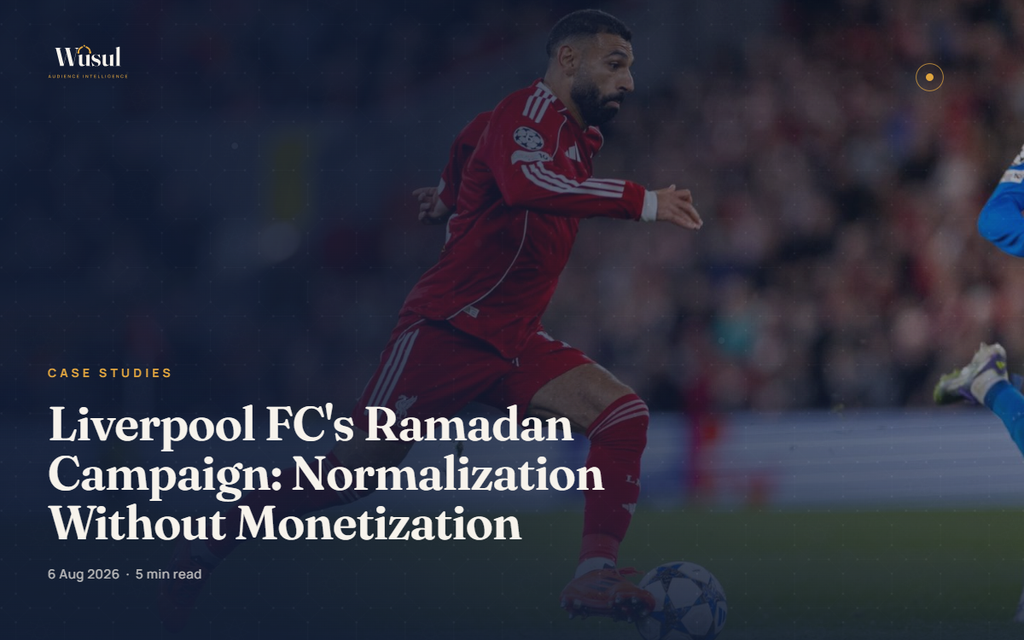
On a Champions League night in 2019, cameras captured a moment that transcended football. Liverpool's Mohamed Salah, having just finished a match, reached for a bottle of water and drank; not just to rehydrate, but to break his fast at the precise moment of sunset, as millions of Muslims around the world were doing the same. The image was unscripted, unsponsored, and utterly authentic.
This moment encapsulates Liverpool Football Club's approach to engaging Muslim audiences: normalization without monetization. At a time when brands scramble to overlay crescent moons on their logos for Ramadan campaigns, Liverpool has built something more enduring; a relationship built on respect, consistency, and genuine cultural intelligence.
The club has evolved from simply having Muslim players (Mo Salah, Sadio Mané) to actively creating spaces where Muslim identity is celebrated as part of the club's fabric.
The Foundation: Players as Cultural Bridges
Mohamed Salah: The Accidental Ambassador
Mo Salah is not just Liverpool's star player. He is arguably the most visible Muslim athlete in the Western world. His public observance of Ramadan (including training at 2:40 AM before Suhoor and breaking his fast on live television) has normalized Muslim religious practice in the global sporting arena.
Cultural Intelligence Analysis: Salah didn't set out to be an ambassador. He simply lived his faith publicly. Liverpool's genius recognized this authenticity and not commercialised it.
What Liverpool Got Right:
From Individual Players to Institutional Commitment
2021: The Social Media Greeting Era
By 2021, Liverpool (alongside rivals like Manchester United) had begun formally acknowledging Ramadan on social media, posting Ramadan greetings to their global Muslim fanbase.
This was the "easy" step. A social media post is low-risk, low-effort. But Liverpool didn't stop there.
2024-2026: The Anfield iftar initiative
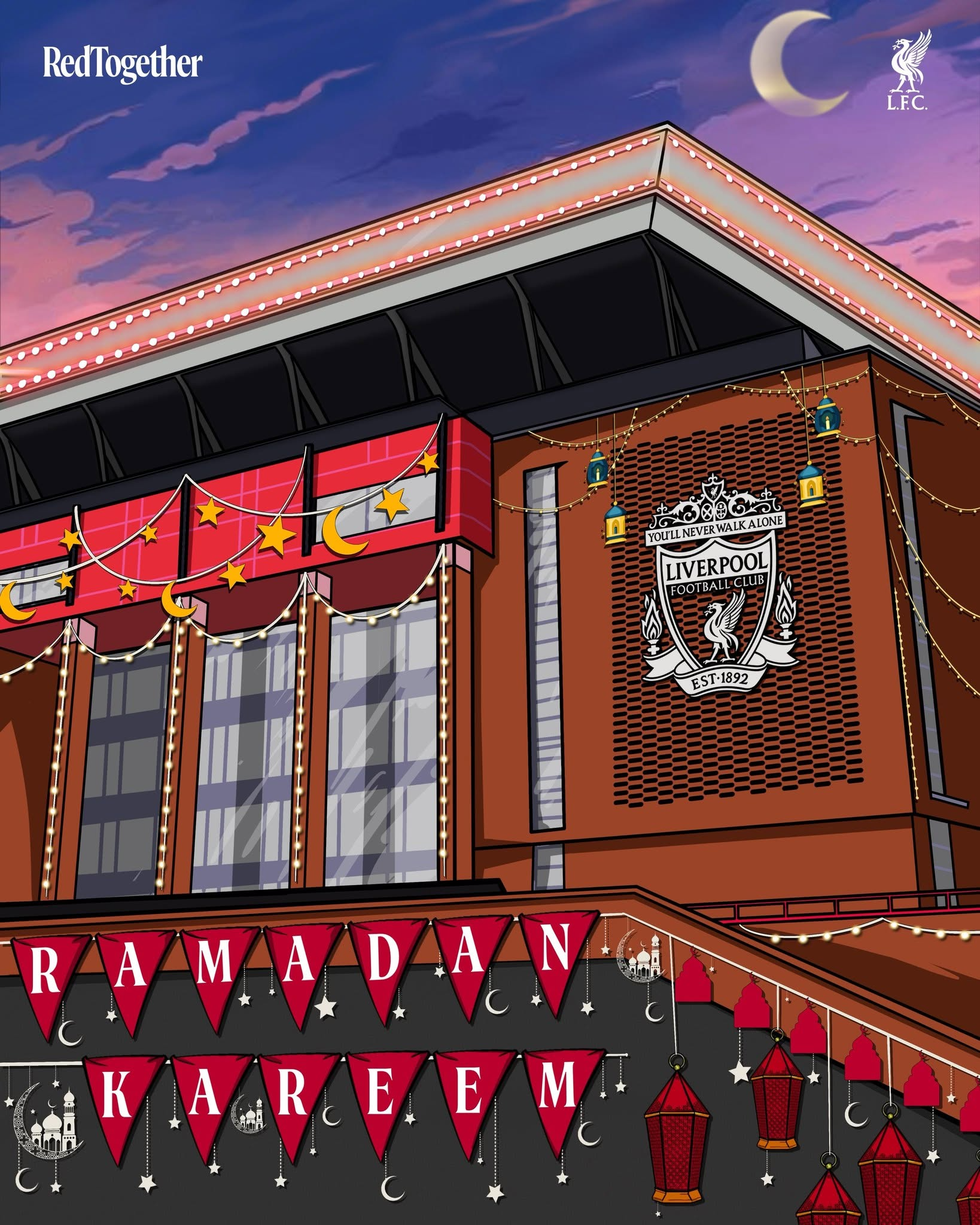
Liverpool FC’s Ramadan initiative is called “Share Ramadan;”a free community event at Anfield that normalizes Ramadan for Muslim fans without selling any products. The campaign is part of the club’s Red Together equality, diversity and inclusion program, run by the LFC Foundation in collaboration with the Liverpool Region Mosque Network.
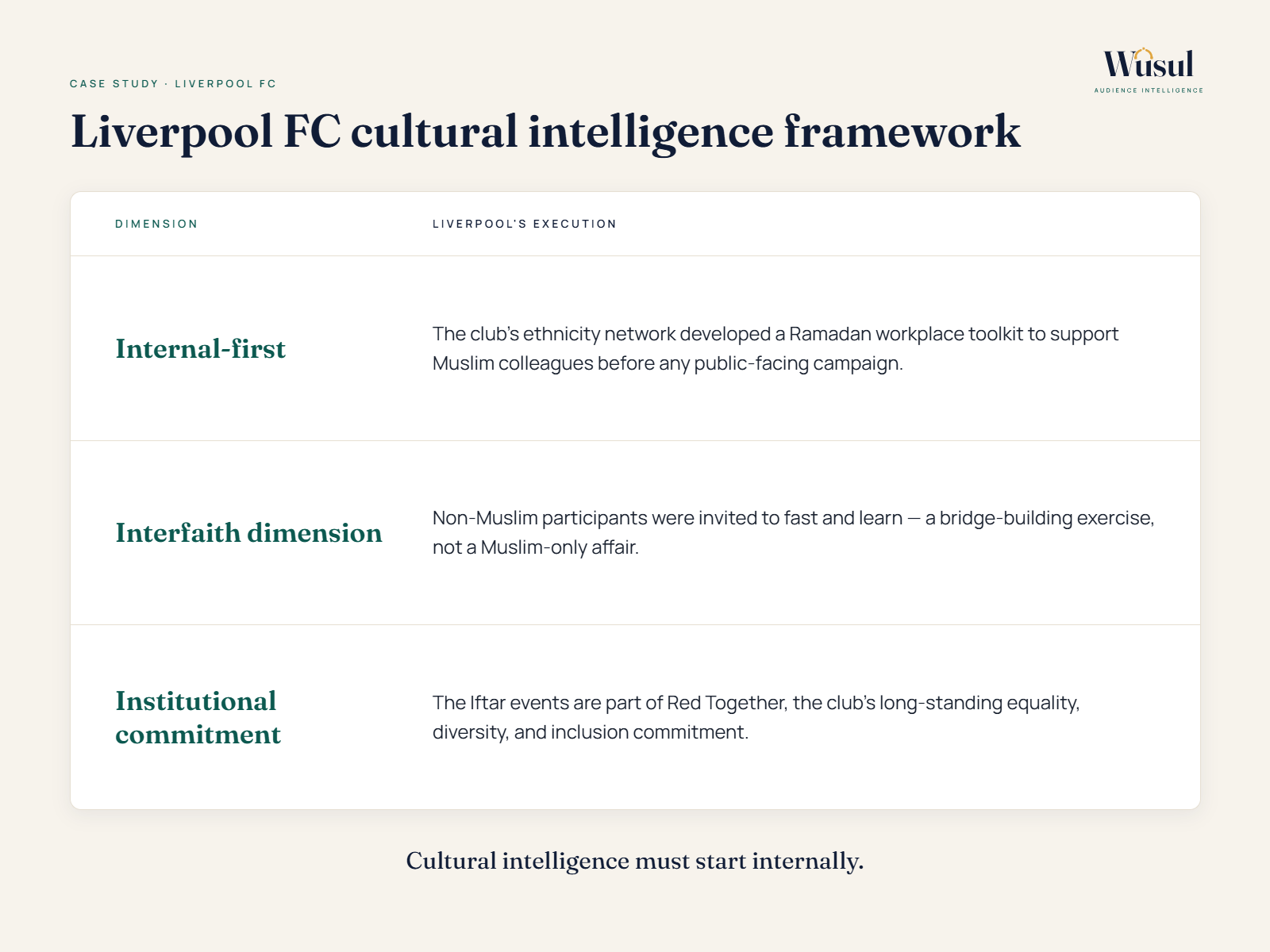
The events bring together staff, community members, and even non-Muslim participants who are invited to fast during the day before joining the Iftar and collective prayer.
The Cultural Intelligence Framework:
Quote from Rishi Jain, LFC's Director of Impact:
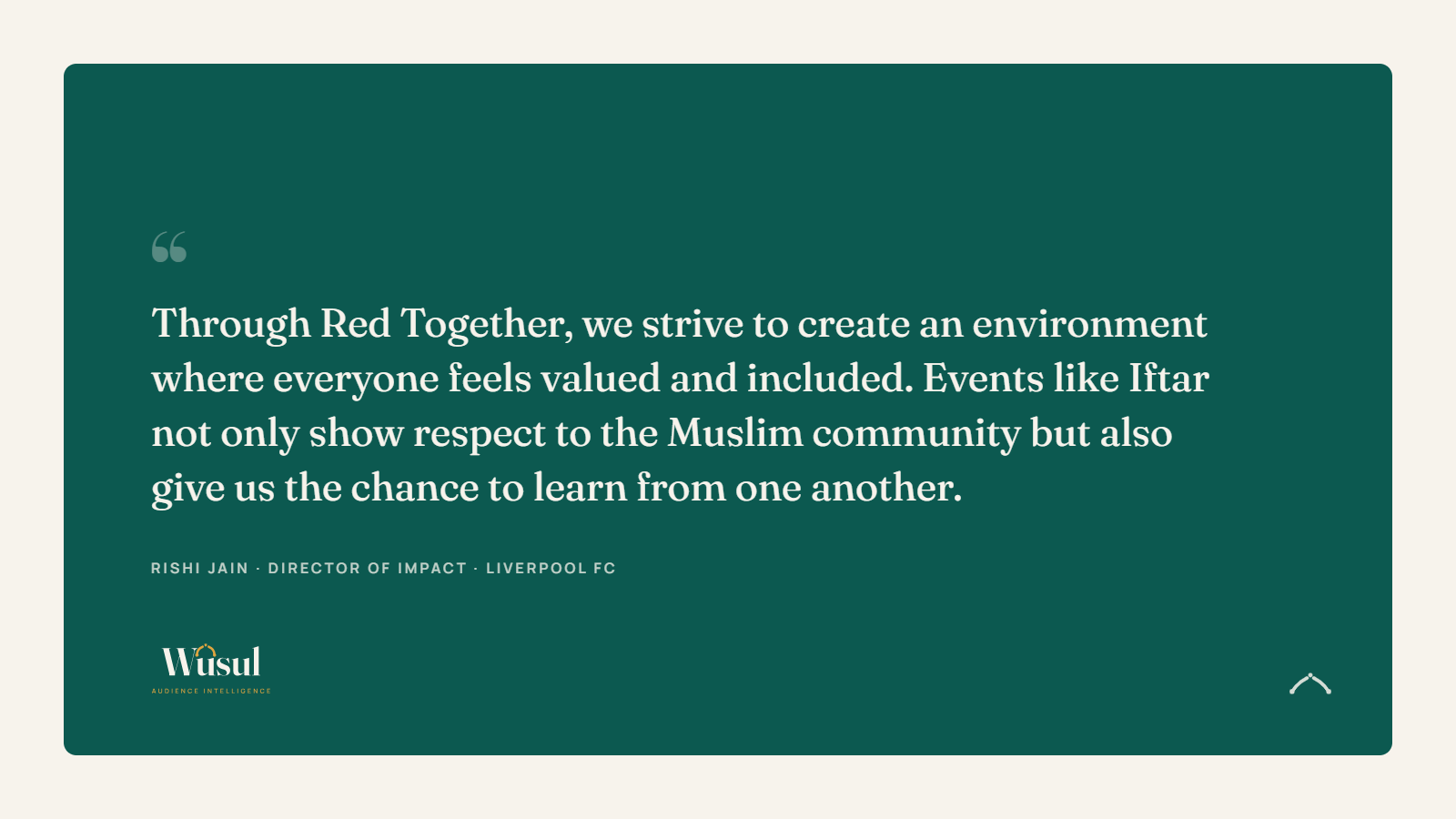
"Ramadan is a time of reflection, compassion and unity and it was inspiring to see those values come to life here at the club. Through Red Together, we strive to create an environment where everyone feels valued and included. Events like Iftar not only show respect to the Muslim community but also give us the chance to learn from one another and strengthen the inclusive culture at LFC."
What Liverpool Does Differently?
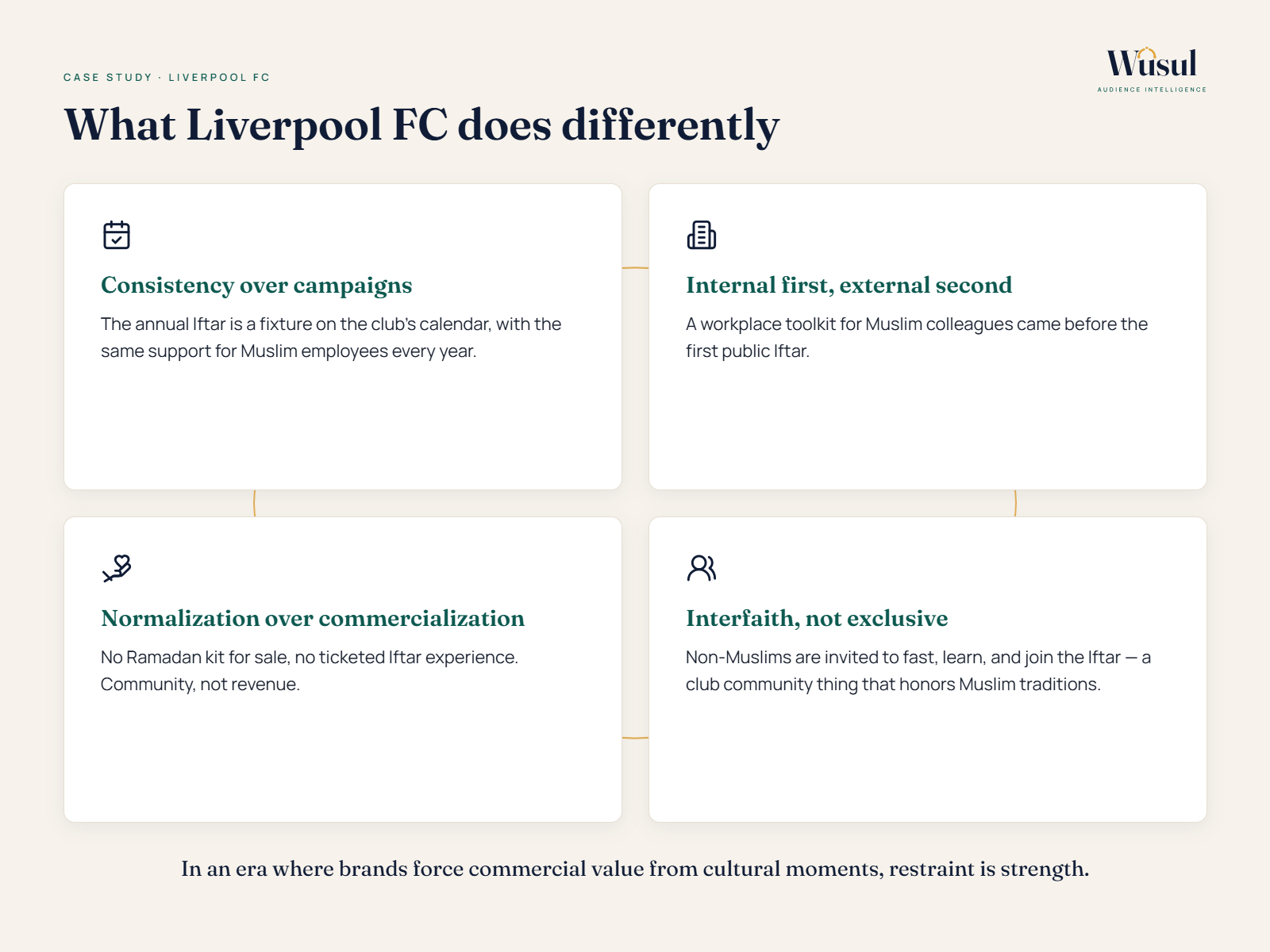
1. Consistency Over Campaigns
Liverpool doesn't just "do Ramadan" once. The annual Iftar has become a fixture on the club's calendar. The same attention is given to supporting Muslim employees during Ramadan every year.
2. Internal First, External Second
Before the first public Iftar, Liverpool's ethnicity network developed a workplace toolkit for Muslim colleagues observing Ramadan. This is a critical insight: cultural intelligence must start internally.
3. Normalization Over Commercialization
Liverpool has not monetized Ramadan. There is no "Ramadan Kit" for sale. No "Iftar at Anfield" ticketed experience. The events are about community, not revenue.
Strategic Insight: In an era where brands often force commercial value from cultural moments, Liverpool's restraint is its strength.
4. Interfaith, Not Exclusive
Non-Muslims are invited to participate, to fast, to learn, to join the Iftar. This transforms the event from "a Muslim thing" into a "club community thing" that happens to honor Muslim traditions.
Why this is “Normalization Without Monetization”:
- No halal merchandise, no Ramadan-themed products, no paid tickets; pure community service
- Built on 5-year partnership with Liverpool Region Mosque Network tackling food poverty
- Aligns with the club’s long-standing community and inclusion commitment
This approach resonates deeply with Muslim fans because it treats Ramadan as worthy of celebration itself, not as a marketing opportunity.
Part 4: What Liverpool Still Misses
Areas of Concern
Key insight: The power of presence
Liverpool FC's Ramadan campaign is in fact not a campaign at all; it is a practice. It is presence. It is consistency. It is a club saying, "Muslims belong here, not as a marketing segment, but as part of our community."
Food for thought
The key takeaway from the Liverpool case study (and one that Wusul consistently reinforces with our partners) is deceptively straightforward, yet profoundly transformative in its application: the goal is not to sell to Muslims, but to genuinely welcome them. This distinction is not semantic; it is strategic.
Rather than reducing Muslim consumers to a segmented demographic to be targeted with siloed campaigns, brands must recognize them as integral, valued participants in their broader customer community. Inclusion cannot be an afterthought or a seasonal initiative; it must be embedded into the very fabric of brand identity, customer experience, and corporate values.
This means moving beyond transactional engagement. It means showing up consistently, in ways that demonstrate cultural fluency, respect, and authentic commitment. It means listening before speaking and serving before selling.
When brands approach Muslim audiences with this mindset, the commercial outcomes are not forced; they follow naturally. Revenue, in this context, becomes a byproduct of trust, not its precursor.