Every event marketing strategy starts with one question: who is the ticket for? Most event campaigns sell a ticket to people who came last year. MAC Convention had no last year. We launched it from zero, and sold eight different reasons to come.
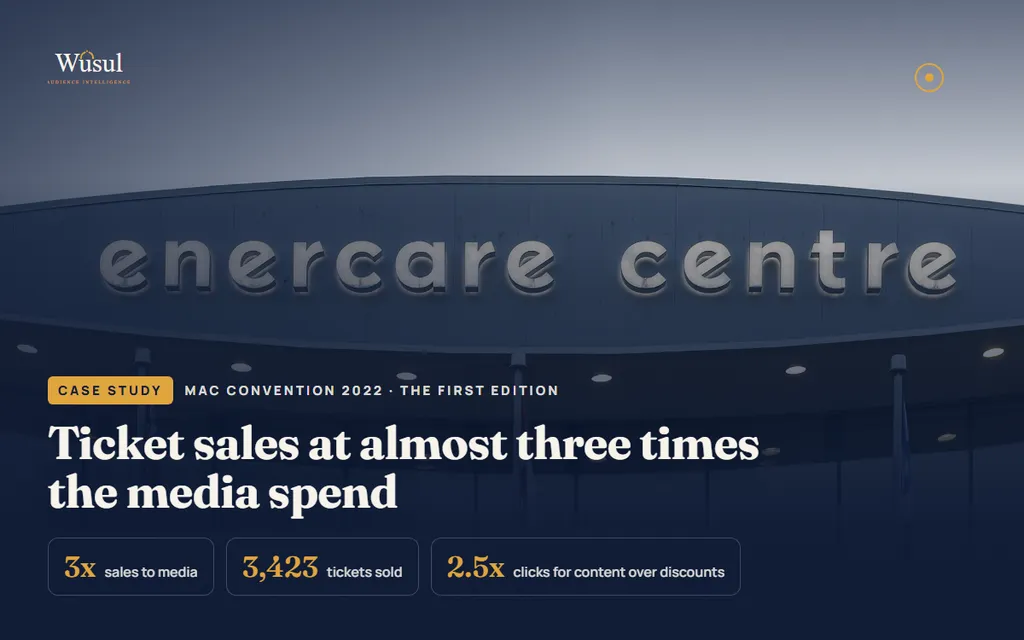
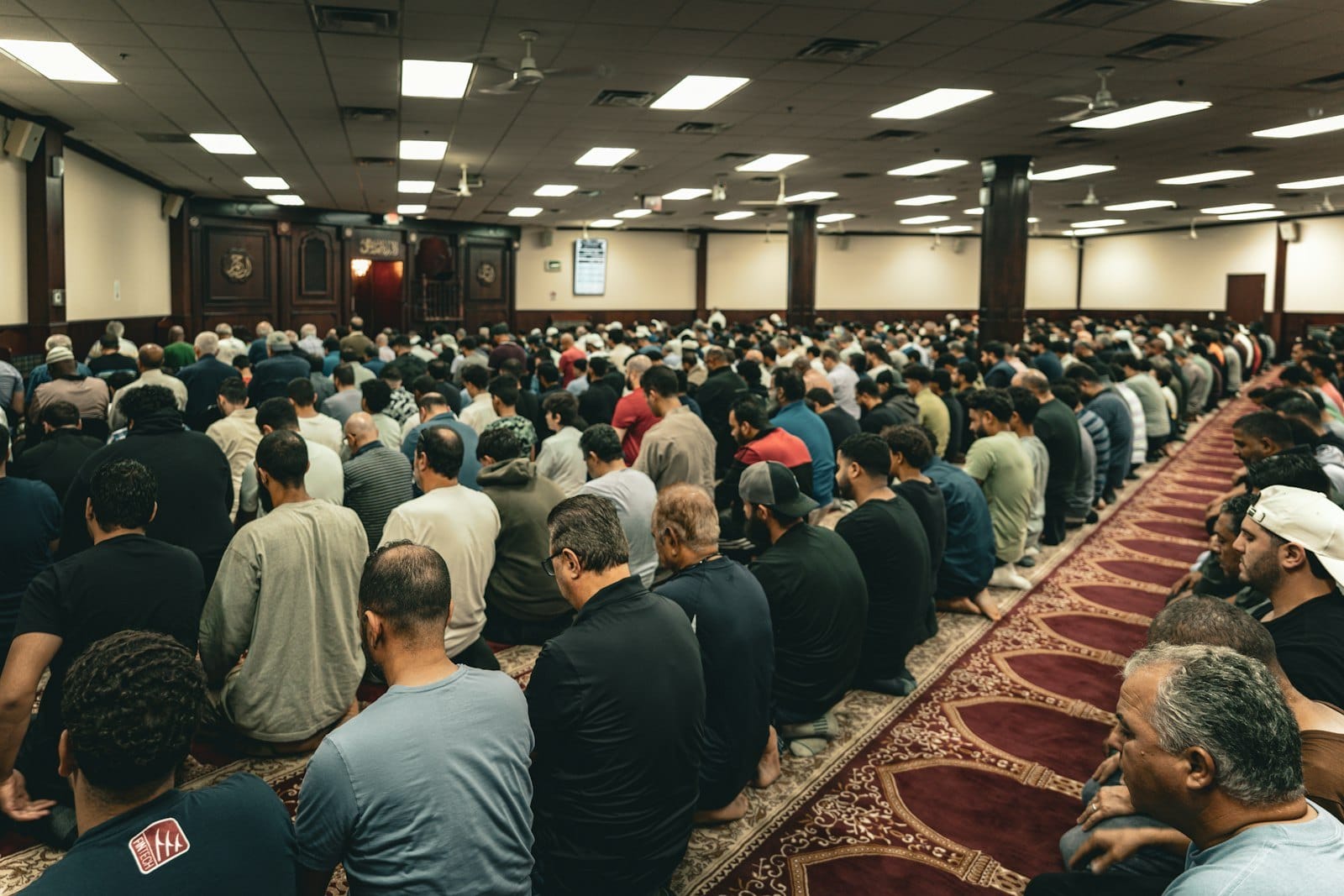
The Muslim Association of Canada is the largest grassroots Muslim organisation in Canada, with chapters in 13 cities, 23 community centres and 11 full-time Islamic schools serving more than 55,000 people every week, according to MAC. In 2022 it launched something new: MAC Convention, its first national convention, three days of talks, a bazaar, programmes for children and young people, networking and more, held from 1 to 3 July at the Enercare Centre in Toronto under the theme “Thriving in the Path of Allah”. MAC asked our team to sell it. We owned the paid digital strategy end to end, from audience architecture and creative direction to media buying, tracking and reporting.
The result: in its very first year, ticket sales reached almost three times the media spend, 3,423 tickets were sold, and the convention left with something no first edition starts with: a map of what its community actually responds to. MAC describes the convention today as one of Canada’s largest Muslim conventions.
MAC Convention 2022 · Results
Ticketing, Google Analytics and ad platform data, 1 April to 5 July 2022. Ticket sales count every sale in the period, from every channel.
The event marketing strategy in five moves
- Architect the audience. Eight segments, each with its own campaign, message and creative.
- Own the calendar. Launch at Eid, when the community is together and planning its summer.
- Build the full funnel. Vertical video to reach, in-feed and Gmail ads to persuade, search and remarketing to sell.
- Test the message, not just the media. Programme against price, deadline against discount, measured in tickets.
- Let the budget follow the results. Two budget scenarios before launch, then money moved week by week to what was selling.
The challenge: one ticket, many motivations
A first edition is the hardest event to sell. There is no list of past attendees to email, no reviews, no photos of a packed hall, no benchmark for what a ticket should cost to sell. Every audience had to be found, and every message proven, for the first time. And a three-day convention is not one product: a university student, a mother of three, a young professional and a family coming for the bazaar all buy the same ticket for completely different reasons. A single “come to the convention” message speaks to none of them well. That was the strategic problem we set out to solve.
We agreed four objectives with MAC before a single ad was made:
- Maximise ticket sales.
- Raise awareness of the convention across the community.
- Monitor and report daily, weekly and monthly, so every decision rested on data.
- Build a data-driven audience strategy the convention could keep using long after its first year.
The strategy: built around the Islamic calendar
We designed the campaign in four phases and anchored the launch to the moment the community is most together. Eid al-Fitr fell on 2 May 2022, so our full launch landed when families were gathered, generous and planning their summer. Everyone who engaged in those weeks went into remarketing lists, so the later phases could bring them back at the moment of purchase.
- Access to every platform
- Campaign structure and tracking tags
- Ad content prepared
- Reach pushed hard around Eid
- Visitor data captured for remarketing lists
- Return on ad spend tracked against KPIs
- Campaign experiments
- Cost per sale pushed down
- Engagement campaign for attendees
- Full report on every channel
Audience architecture: eight audiences, eight campaigns
Our biggest strategic call was to stop selling “the convention” and start selling what each person would get from it. We broke the audience into eight segments and gave each one its own campaign, its own message and its own creative.
StudentsStudent tickets, with their own campaigns on Meta and Google.
FamiliesA family discount and a children’s programme, so parents could see a weekend for the whole family.
YouthA youth programme campaign on YouTube and Google.
LearnersSpeaker videos and a “40+ speakers” message for people who come for the talks.
ShoppersThe bazaar, promoted on its own to people who come to browse and buy.
ProfessionalsA networking programme for people building careers and businesses.
Marriage seekersThe matrimonial programme, with its own search campaign.
Day visitorsDay passes and parking passes for people who could not come for all three days.
That architecture is why the campaign grew to 51 campaigns and 258 ads on Facebook and Instagram alone. Every campaign answered one question for one group of people, so every one could be measured, cut or scaled on its own merits. This is the discipline that turns a media budget into an intelligence system.
The segments held. Today MAC describes its audience as individuals, families, high school and college students, seniors, new Muslims, educators and children: the same many-audience convention our first-year architecture was built to sell.
The insight: people buy the programme, not the price
Running the segments side by side gave us an answer most organisers only guess at. Our speaker videos drove the highest unique click-through rate of any large campaign, 4.68%. The 10% discount carousel, running for the same goal, reached 1.88%. Content about what happens inside the convention outperformed the price cut by two and a half times.
Meta Ads, 1 April to 30 June 2022. The early bird campaign ran with an awareness objective, the rest for sales or visits.
The audience-specific messages followed close behind: day passes (4.22%), student tickets (3.55%) and the children’s programme (3.16%). Generic messages trailed. The pattern is unambiguous: the more precisely a message spoke to one audience, the harder it worked.
The conversion engine: remarketing and urgency
Clicks tell you what interests people. Tickets tell you what moves them. So we went one level deeper, to the individual ads, and ranked them by the ticket orders each one recorded. The answer sharpened the strategy again.
Meta Ads, ads level overview, 1 April to 30 June 2022. Ticket orders are purchases recorded by the Meta pixel on each ad.
The discount ads sold tickets, but they were the least efficient message we ran. A simple “two weeks to go” countdown sold almost four times as many tickets per unit of spend. Early-bird deadlines, day and parking passes, the speakers and the student and children’s programmes all beat the price cut. People were not waiting for a lower price. They were waiting for a reason to decide now, and a reason to come.
Meta Ads, ads level overview, 1 April to 30 June 2022. Two of the 14 ads do not show their audience type in the report and are not counted as remarketing.
This is the engine behind the result. The awareness phase did not have to sell; it had to build an audience. Remarketing then spoke to that audience with the message most likely to close: the speakers they had already seen, the programme for their children, the deadline that was about to pass. Capture first, convert second.
A funnel engineered for the phone
We built a three-stage funnel with a different format at every stage, and we built it mobile first. The data proved the call: 79.3% of all website traffic came from a phone.
AwarenessVertical video to reach as many potential attendees as possible.Facebook · Instagram · YouTube
ConsiderationIn-feed photo ads and Gmail ads showing the speakers, testimonies and entertainment, and re-engaging people who already knew about the convention.Facebook · Gmail · Google Display · AdRoll
Ticket salesSearch ads and conversion ads ready for the moment someone decided to buy.Google Search · remarketing
20% from desktop.
Google Analytics, 1 April to 5 July 2022.
From first impression to ticket
Across the campaign our ads were seen 3,852,788 times, and Facebook and Instagram alone reached 295,693 people. 39,264 people came to the convention website, many of them more than once, and 3,423 tickets were sold in 2,109 orders. At about 1.6 tickets an order, families and groups were buying together, exactly the audiences we had designed for.
Ad platforms, Google Analytics and ticketing, 1 April to 5 July 2022.
Ticket sales reached almost three times the media spend, and the media cost per ticket landed inside the range we planned at the start. We measure against every ticket sold in the period, not only the sales an ad platform claims for itself. It is the harder standard, and the honest one.
Budget where the audience was
Two thirds of the budget went to Facebook and Instagram, where our audience segments and video lived. Google captured intent, catching people who had already decided and were searching for tickets, and extended reach through YouTube and display. AdRoll followed visitors across the web and brought them back.
Ad platforms, 1 April to 5 July 2022. Media only, management not included.
Before launch we gave MAC two budget scenarios, each with its own cost-per-ticket target, so the convention could choose its level of ambition with the trade-offs in plain sight. Once the campaign was live, the plan became a starting point, not a cage. As the audience segments and remarketing on Facebook and Instagram proved they could sell, the budget moved towards them.
MAC Convention digital strategy proposal (budget scenario 2) and ad platform spend, 1 April to 5 July 2022.
Every channel kept a clear job. On Google, the early-bird search campaign recorded the large majority of Google’s conversions, while YouTube, Display and Performance Max did the reaching that fed the remarketing lists.
Brand lift: from an unknown name to a searched one
A first edition has no brand. In early 2022, too few people in Canada searched for “mac convention” for Google to even register it. By convention week, the name had its busiest week of search in Canada of the five years from 2019 to 2023. People were not just seeing the ads. They were looking for the convention by name.
Google Trends via DataForSEO, Canada, web search, weekly, pulled November 2026. Weeks with too little search volume show as zero. Frequency, click rates and visits: ad platforms and Google Analytics, 1 April to 5 July 2022. No controlled brand-lift study was run, so no brand-lift percentage is claimed.
The other brand signals point the same way. Each person reached on Facebook and Instagram saw the convention about 8 times across the campaign, enough repetition for a new name to stick. When people searched for MAC by name, almost one in four clicked, about 16 times the rate of the Google campaign as a whole. And visitors came back: 1.8 visits per person before the tickets were bought. Awareness turned into recognition, and recognition into sales.
Search as audience research
We read search data as intelligence, not just as a cost report. Our campaigns appeared on 8,352 different searches, and the largest by volume were not about events at all. They were about daily faith: the Quran, the call to prayer, prayer times, and life as a Muslim in Canada.
Google Ads search terms report, 1 April to 30 June 2022. Numbers next to each search are impressions.
Those faith searches rarely clicked and cost almost nothing, but they told us exactly how this community uses the internet: faith first. Searches for the organiser by name did the opposite, small in number and ready to act, with almost one in four clicking through. That is the kind of insight that shapes the next campaign before it starts.
Measured every single day
We joined ticketing, website and ad data in one live dashboard. Delivery, cost and pacing were checked daily; conversions and cost per sale weekly; audiences, creative, placements and devices monthly. Every budget decision we made rested on ticket sales, not clicks.
What this means for your charity or event
A convention is not a donation appeal, but the strategy travels. Ramadan appeals, Qurbani, fundraising dinners and community events all sell something that means different things to different people, to an audience that lives on its phone and plans its life around the Islamic calendar. These are the principles we bring to every one of them.
Planning a convention, a Ramadan appeal or a community event? Book a call and we will show you how we would build it for your audience.
About this case study: our team ran this campaign from April to July 2022, before Wusul was founded in 2026. Figures come from the campaign’s reporting dashboard (Meta Ads, Google Ads, AdRoll, Google Analytics and ticketing data) for 1 April to 5 July 2022, with campaign-level tables for 1 April to 30 June 2022. Results are shown as rates and multiples.