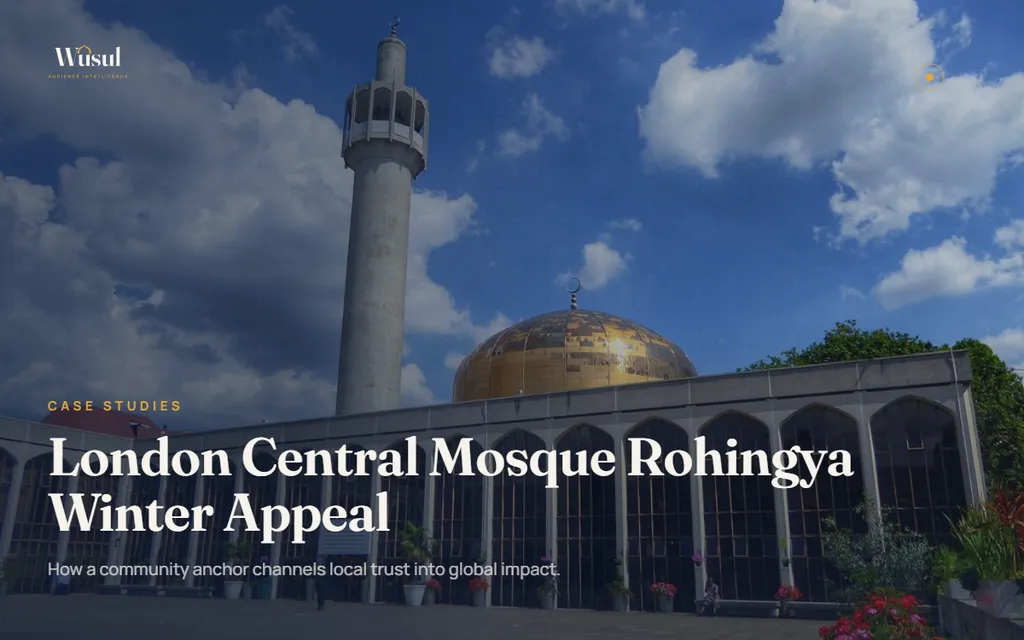
The London Central Mosque does not need to introduce itself. Its golden dome in Regent's Park is one of the most recognizable symbols of Islam in Britain; a building that has stood at the heart of the Muslim community in London for decades, hosting thousands of worshippers weekly, running educational programs, and serving as a bridge between the Muslim community and wider British society.
But what happens inside that building, and what it chooses to do with its charitable funds, reveals something important about how diaspora institutions translate local trust into global impact.
The mosque's Winter Appeal for Rohingya refugees, run in partnership with the Bangladesh-based charity Novo Jibon (New Life), is a case study in what happens when a trusted community anchor decides to extend its reach beyond its own walls; and why that extension is not always straightforward.
The partnership: a relationship, not a transaction
The London Central Mosque has been supporting Novo Jibon for several years. The relationship is not a one-off campaign. It is a sustained partnership that has included orphan sponsorships, Qurbani distributions, Iftar programs for Rohingya refugees, and medical aid.
This matters. The Winter Appeal is not a standalone fundraising push. It is the latest expression of an ongoing relationship between a UK mosque and a Bangladeshi charity that works directly with displaced Rohingya communities in Cox's Bazar.
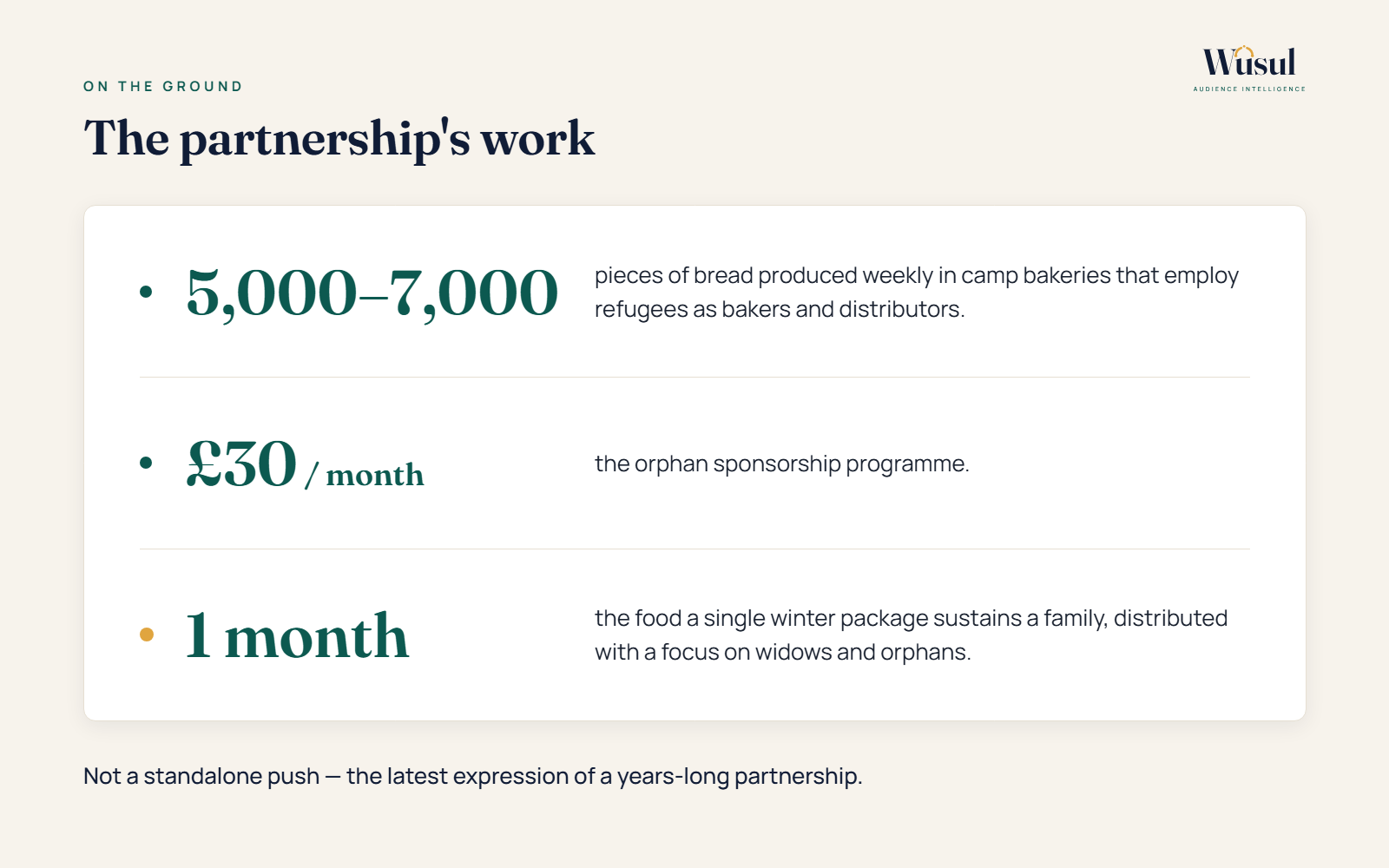
Novo Jibon describes its work as "where your mercy meets their need" . Its projects include daily bread bakeries inside the camps, each producing 5,000 to 7,000 pieces of bread weekly, employing refugees as bakers and distributors, and prioritizing orphanages, widows, and families with no income . It runs orphan sponsorship programs at £30 per month. It provides clean water, livelihood tools, and Ramadan food packs.
The Winter Appeal, as described by the London Central Mosque, provided packages that "not only contained enough food to sustain a family for 1 entire month but also contained safety kits including sanitizer and masks to tackle the spread of Covid19 amongst the refugees" .
The distribution was not random. "The packages were distributed to all, but the focus was on widows and orphan children" .
That sentence is the campaign's moral center. Widows and orphans are not just vulnerable categories. In Islamic tradition, they are explicitly named as among those deserving of care and protection. The Prophet Muhammad (PBUH) said: "The one who looks after a widow or a poor person is like a warrior who fights for the cause of Allah" (Sahih al-Bukhari).
The London Central Mosque did not need to explain this to its donors. It is part of the shared language of the community. The appeal assumes that its audience understands why widows and orphans' matter. That shared understanding is the foundation of trust.
The context: A crisis that has not ended
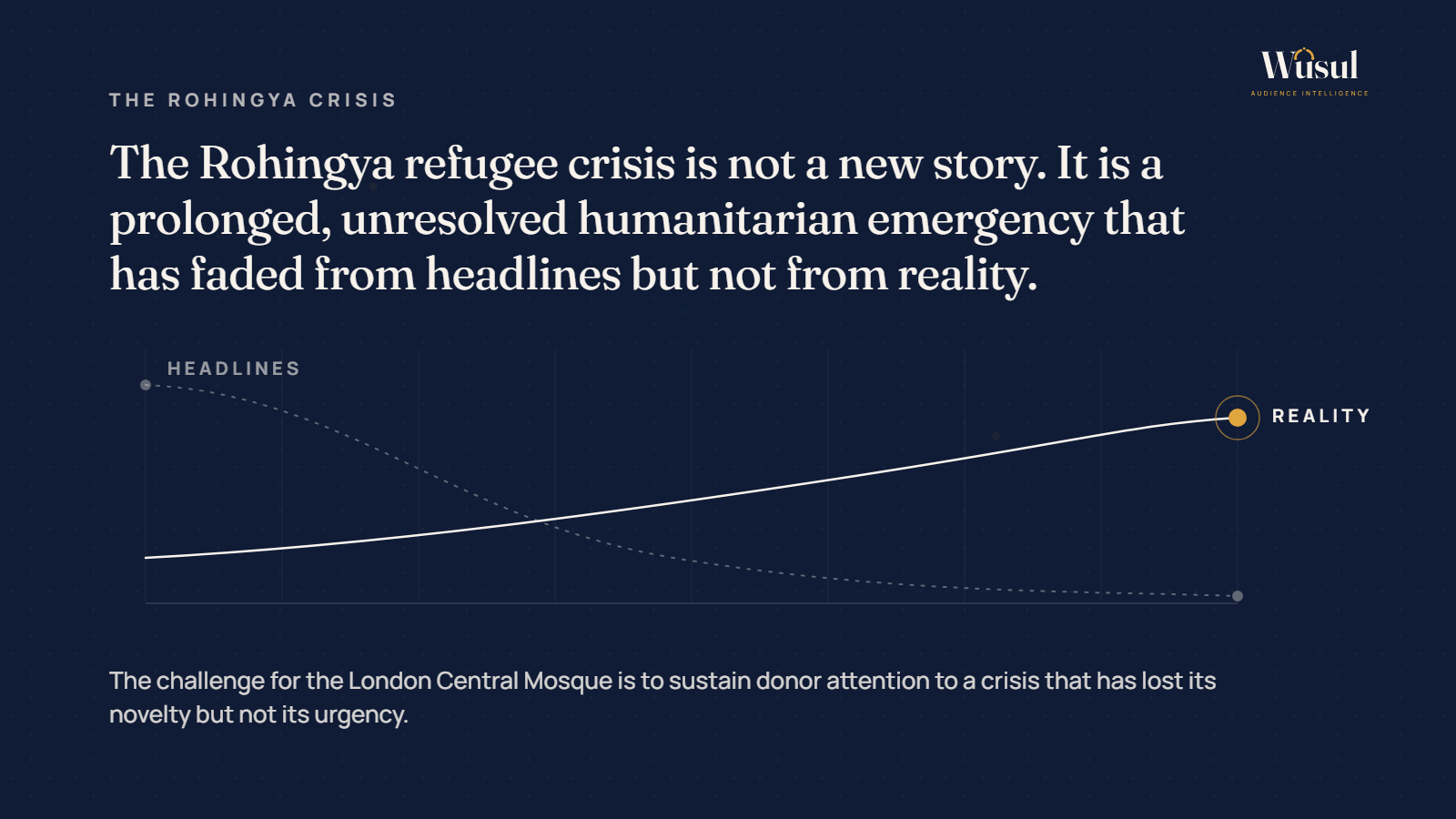
The Rohingya refugee crisis is not a new story. It is a prolonged, unresolved humanitarian emergency that has faded from headlines but not from reality.
The London Central Mosque's appeal acknowledges this bluntly: "The situation of the refugees is getting worse, many are at high risk and in need of long-term aid" .
The camps in Cox's Bazar, where hundreds of thousands of Rohingya have sought shelter after fleeing persecution in Myanmar, remain overcrowded, under-resourced, and exposed to the elements. Winter brings additional hardship: biting cold, inadequate shelter, and insufficient warm clothing.
The appeal's focus on food packages that last a full month is a recognition that this is not a short-term emergency. A family that needs a month's worth of food is not a family that will be self-sufficient next week. The winter package is a stopgap in a crisis that has no end in sight.
This is a difficult reality for diaspora donors to sit with. The impulse to give is often triggered by a crisis; a new disaster, a new wave of violence, a new headline. The Rohingya crisis has been ongoing for years. The challenge for the London Central Mosque is to sustain donor attention to a crisis that has lost its novelty but not its urgency.
The diaspora dynamic: local trust, global reach
The London Central Mosque occupies a unique position in the British Muslim landscape. It is not a charity in the traditional sense. It is a mosque, a cultural center, a library, an educational institution, and a community anchor.
Its charitable work is an extension of its religious mission. The Winter Appeal is framed not as a marketing campaign but as an act of faith, a fulfilment of the Islamic obligation to care for the vulnerable, regardless of where they are.
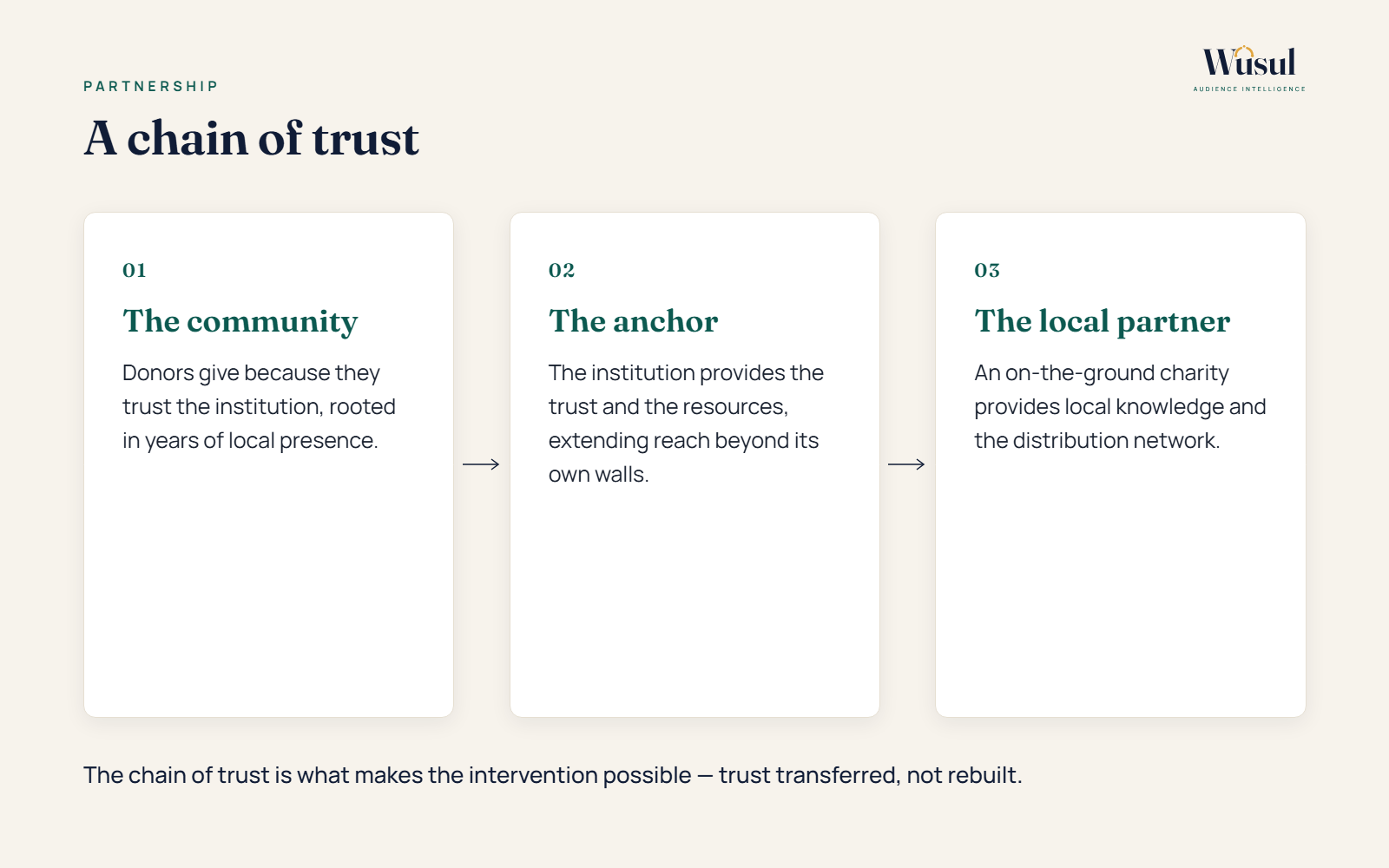
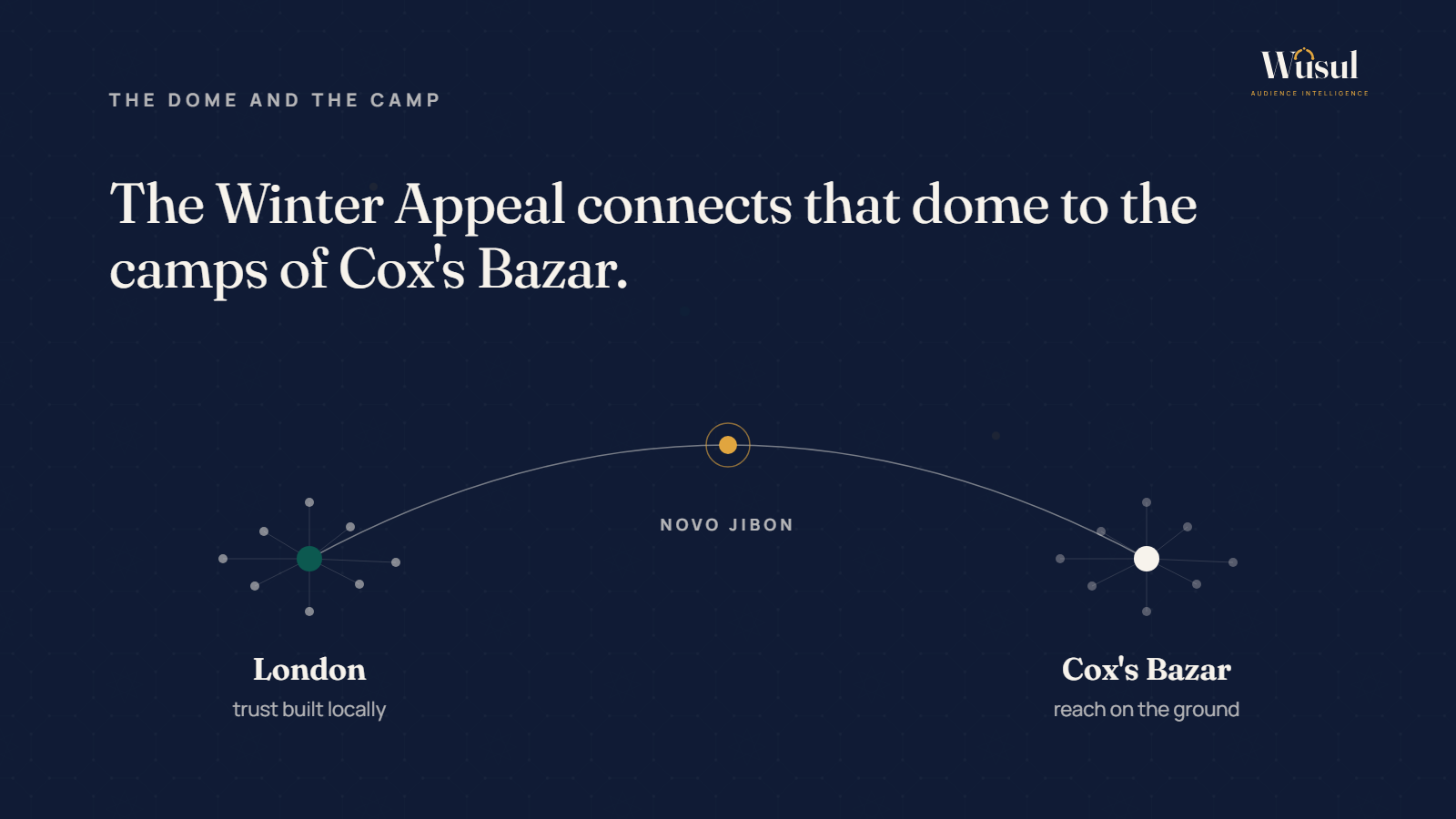
This is the diaspora dynamic at its best. A mosque in London, rooted in the trust of its local community, acts as a conduit for resources to reach displaced Muslims in Bangladesh. The credit that the mosque has built locally is transferred to its international partnerships. Donors give because they trust the mosque. The mosque partners with Novo Jibon because it trusts the charity's work on the ground. The chain of trust is what makes the intervention possible.
For organizations seeking to engage Muslim audiences, this is a critical insight. Trust is not built through advertising. It is built through consistency, relationship, and a shared understanding of what matters. The London Central Mosque did not need to explain why widows and orphans are a priority. Its donors already knew. The appeal worked because it spoke a language the community already understood.
The critique: what the appeal does not do
The Winter Appeal is a genuine expression of solidarity and a practical intervention in a prolonged crisis. But it is not without limitations.
The digital presence is minimal. The appeal is described in a short article on the mosque's website. There is no interactive tool to show donors where their money goes, no way to track the journey of a package from donation to distribution, no follow-up journey for donors who want to stay connected. In an era where trust is increasingly built through digital transparency, the appeal relies on the mosque's institutional reputation rather than its digital infrastructure.
The communication is retrospective. The appeal describes what was done ("one of our most recent projects was the Winter Appeal which provided winter packages") rather than inviting donors into an ongoing action. The tone is grateful but passive. A more dynamic approach would invite donors to participate in the next phase of the work, not just celebrate what has already happened.
The crisis framing is underdeveloped. The appeal notes that "the situation of the refugees is getting worse" but does not explain why, how, or what the specific needs are . It relies on the donor's existing knowledge of the Rohingya crisis rather than building a case for why this intervention matters now.
The "Covid19" reference feels dated. The safety kits include "sanitizer and masks to tackle the spread of Covid19 amongst the refugees" . In a post-pandemic context, this framing may feel out of step with current priorities. The appeal could have been updated to reflect the current needs of the camps (clean water, sanitation, livelihoods, education) rather than the needs of the pandemic era.
Lessons to learn from this campaign
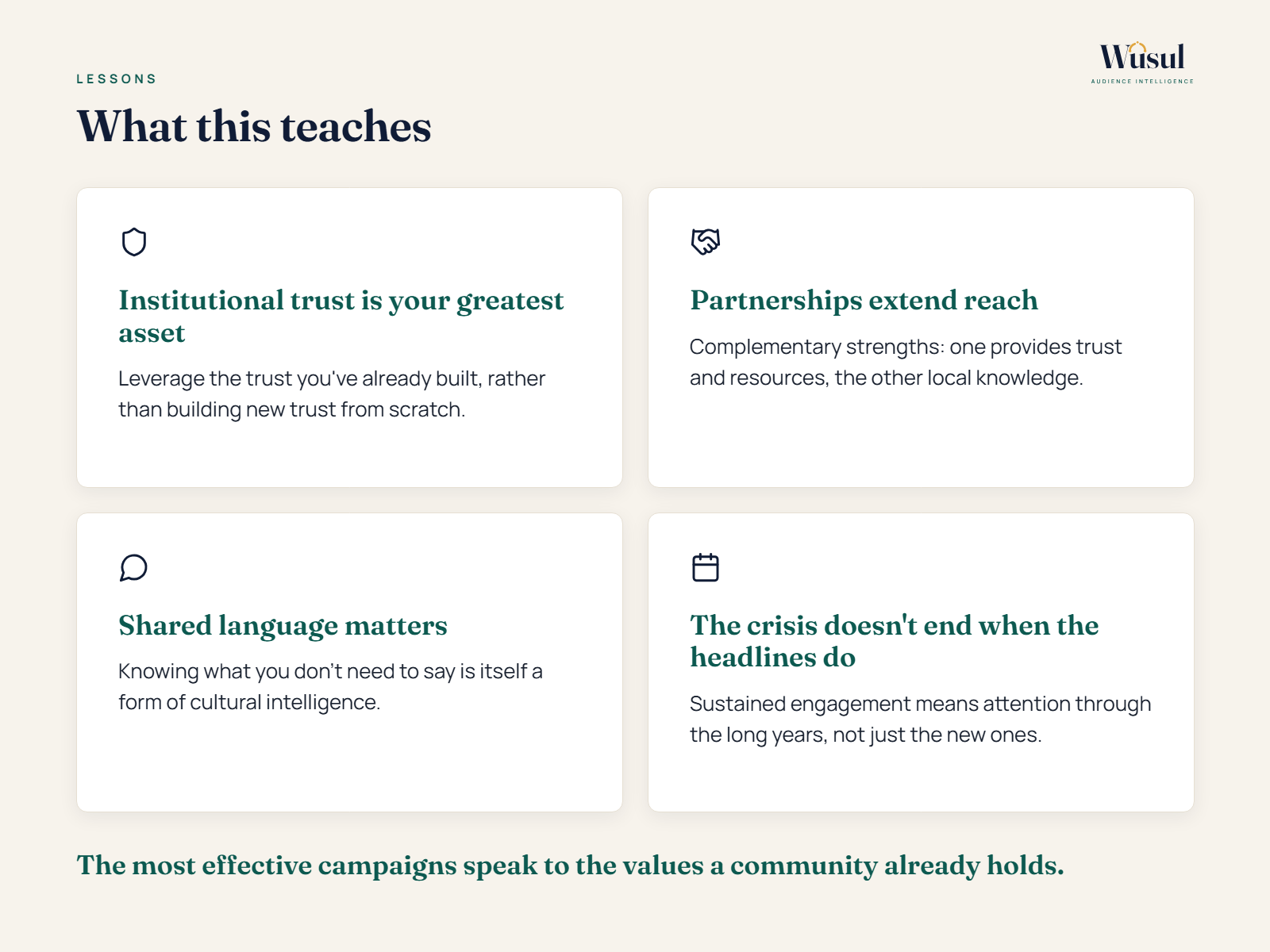
1. Institutional trust is your greatest asset. The London Central Mosque did not need to build trust for this appeal. It already had it. Organizations serving Muslim communities should ask: what trust have we already built? How can we leverage it for impact, rather than trying to build new trust from scratch?
2. Partnerships extend reach without diluting identity. The mosque's partnership with Novo Jibon allows it to reach communities it could not reach directly. The mosque provides the trust and the resources. Novo Jibon provides the local knowledge and the distribution network. This is a model of complementary strengths.
3. Shared language matters. The appeal did not explain why widows and orphans are a priority. It assumed its donors understood. This is a form of cultural intelligence: knowing what you do not need to say. For organizations engaging Muslim audiences, the question is: what shared language do you have? What can you assume, and what must you explain?
4. The crisis does not end when the headlines do. The Rohingya crisis has been ongoing for years. The Winter Appeal is a reminder that sustained engagement requires sustained attention, not just to the moments when a crisis is new, but to the long years when it is old.
5. Digital infrastructure is a gap. The appeal relies on institutional reputation. It does not use digital tools to build transparency, track impact, or nurture donor relationships. This is a missed opportunity. The most culturally intelligent campaigns use every tool available to build trust.
The dome and the camp
The London Central Mosque's golden dome is visible from across Regent's Park. It is a symbol of presence, of belonging, of the long history of Islam in Britain .
The Winter Appeal connects that dome to the camps of Cox's Bazar. It takes the trust that has been built in London and channels it to a place where trust has been broken, where people have been displaced, persecuted, and abandoned.
The appeal is not perfect. It is small, its digital presence is minimal, and its communication is retrospective. But it is rooted in something that many larger campaigns lack: a genuine, sustained relationship with a partner on the ground, and a shared understanding with its donors of what matters and why.
For organizations serving Muslim communities, the lesson is not about the specifics of the Rohingya crisis. It is about the model. Trust is built locally. Partnerships extend reach. Shared language is a form of cultural intelligence. And the most effective campaigns are those that speak to the values a community already holds, not those that try to teach new ones.
At Wusul, we believe that cultural intelligence means understanding not just what a community gives to, but why. The London Central Mosque's Winter Appeal is a case study in what happens when an institution trusts its community to understand what matters and channels that understanding into action.