HHUGS charity serves a community that is by definition invisible and requires extraordinary cultural intelligence to overcome a trust deficit. HHUGS (Helping Households Under Great Stress) was founded in 2004 and describes itself as "the only UK charity dedicated to supporting families affected by national security legislation." Its mission is to "banish the 'guilty by association' label experienced by the wives and children of terror suspects."
The need for such NGO is substantial. Since 9/11, 2,710 families have been impacted by a terrorism-related arrest in the UK, of which 54% result in the detainee being released without charge. Some individuals are subjected to Terrorism Preventative Investigative Measures (T-PIMs); a regime of house arrest and severe restrictions on freedom of association, movement, and communication, despite never being charged with any criminal offence.
For every arrest and detention, a home has been raided and ravaged, and a family has suffered the loss of a loved one, a breadwinner, a dear husband, a much-loved son. These are homes where life will never be the same.
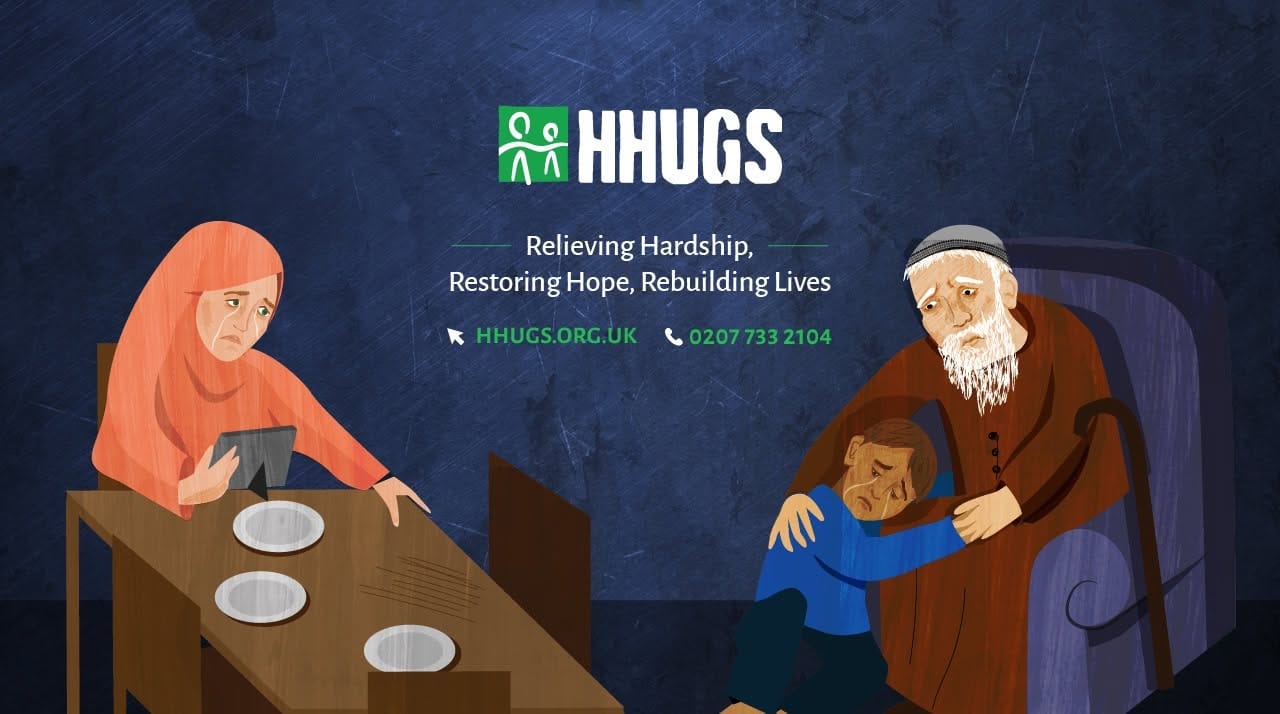
HHUGS serves a community that is, by definition, invisible. As one beneficiary explained: "HHUGS helps a community that is very restricted and frightened to ask for help. The restrictions that are placed on them make it harder to find them. There are often court orders placed on people, which makes it harder for them to reach out too."
This is an extreme example of the cultural intelligence gap: an audience that is both underserved and systematically invisible to mainstream services.
The problem: guilty by association
The charity's core insight is that families of detainees are penalized for association alone. As HHUGS states: "We believe that they should not be penalized and discriminated against on the basis that their loved ones are accused of involvement in criminal activity."
This creates a trust deficit that requires extraordinary cultural intelligence to overcome. The audience has learned not to trust institutions. Due to the nature of the crimes for which their loved ones are accused, these families find themselves ostracized and marginalized by both the religious and ethnic communities that they belong to as well as the wider society.
One beneficiary described the experience of receiving support: "You don't have to be someone else or disguise yourself. You can be transparent about what you've gone through and not get judged. You feel accepted and supported." Another said: "HHUGS for me is like water for the fish, I really can NOT survive without their help and support."
This is cultural intelligence in its most fundamental form: creating safety for a community that has been systematically marginalized.
Beyond bandaging: how HHUGS empowers families
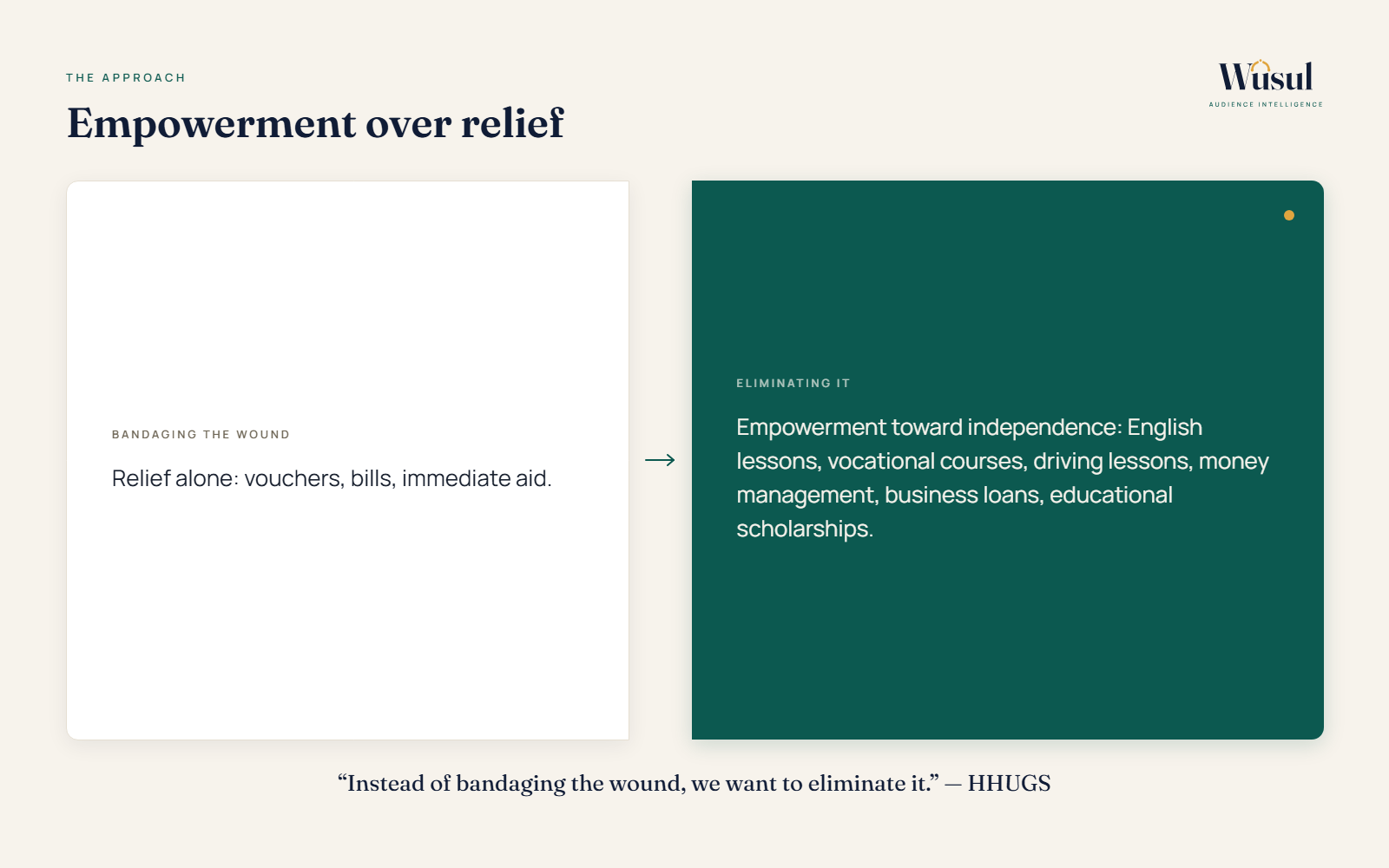
HHUGS explicitly rejects a purely relief-based model. As they explain: "Instead of bandaging the wound, we want to eliminate it and strive to do so by offering services that will empower individuals to become self-serving and independent families."
Their services include English lessons, educational and vocational courses, driving lessons, and money management courses. Financial support is tailored and bespoke: food and clothing vouchers, direct payments for utility bills and rent, furniture and appliances, bedding, phone bills, transportation costs, and debt relief.
In the year ending March 2023, HHUGS delivered: £467,263 in food and clothing vouchers, £60,712 in utilities support, £122,852 in rent assistance, £32,503 in empowerment services, £13,892 in debt relief, and £5,994 in therapy.
The charity's approach to resettlement and reintegration is particularly significant. After release from detention, former detainees face "no job, in some cases a criminal record, few qualifications, a strained marriage and family relations and the unforgiving stigma of having been detained as a terror suspect." HHUGS offers business loans to those with viable business plans, educational scholarships, family or anger management counselling, housing advice, rental contributions, and counselling schemes.
One ex-detainee described how HHUGS "helped re-integrate me into the wider community and also helped me normalize my daily life."
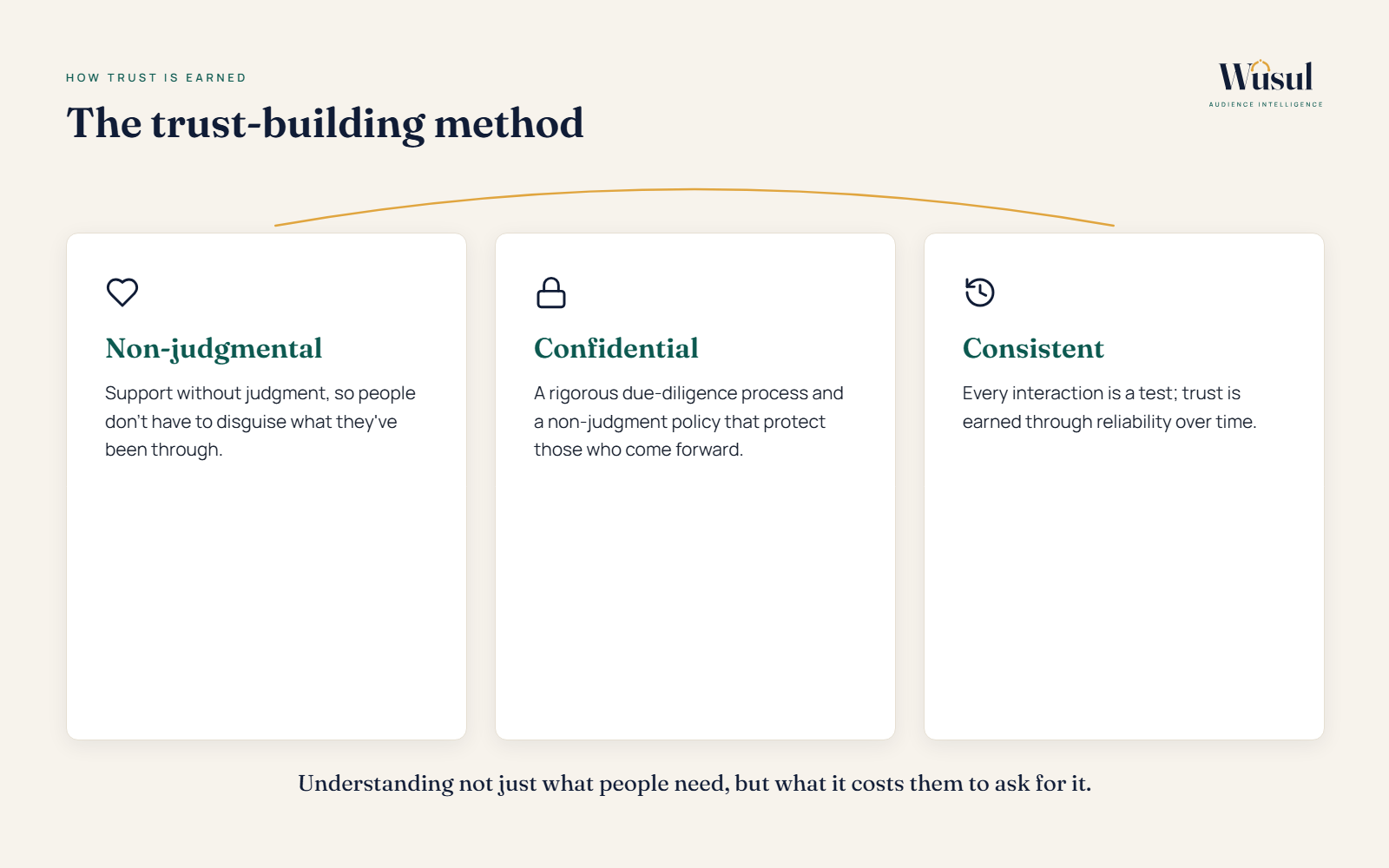
The trust-building method: non-judgmental, confidential, consistent
HHUGS provides something rare: non-judgmental, confidential support. The charity has a "non-judgment policy" and conducts "a rigorous due diligence process to ensure the right support is provided for families and individuals."
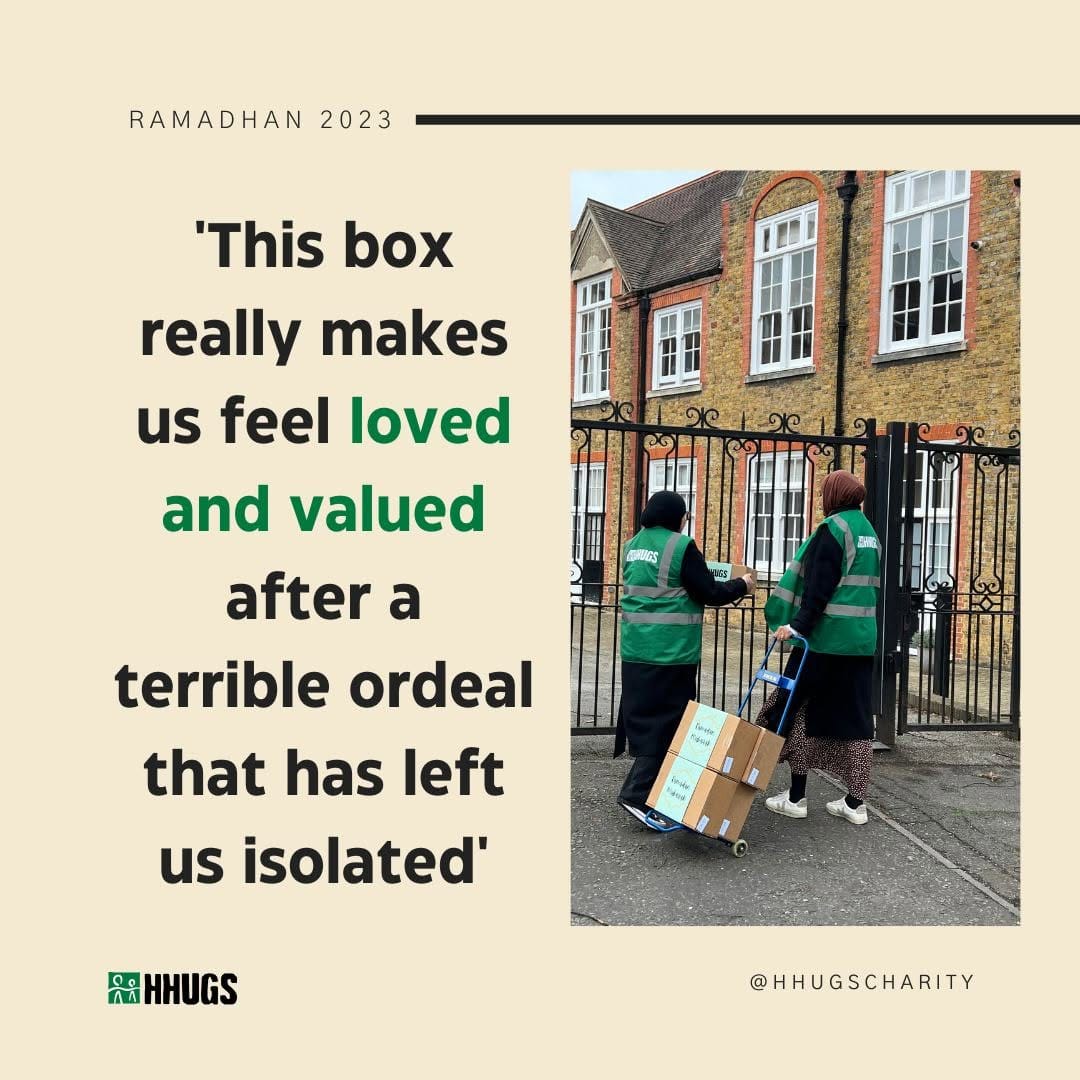
The impact of this approach is evident in the feedback from beneficiaries. During Ramadan, HHUGS distributed 188 gift boxes to 485 adults and 326 children across the UK, with beneficiaries describing them as "like a hug in a box" and noting that "clearly someone made efforts to tailor gifts sets for every particular family."
The charity also facilitates prison visits, which are "one of the most traumatic experiences that our families endure." Volunteers collect families from their doorstep and drive them to and from prison or cover the costs of taxi or train fares. As one beneficiary noted: "We often take it for granted that we can see our loved ones on Eid... Even if it was the weekend after Eid that day would feel like Eid. Alhamdulillah we were able to see our relatives and spend time with them even for only about 90 mins."
This is cultural intelligence operationalized: understanding not just what people need, but what it costs them emotionally and spiritually to ask for it and removing every barrier to access.
The complication: a contested reputation
A 2018 report by the Henry Jackson Society, titled "Wolves in Sheep's Clothing: How Islamist Extremists Exploit the UK Charitable Sector," described HHUGS as "an institutionally problematic charity, with extreme and illiberal individuals involved at all levels, from trustees to supporters, speakers and beneficiaries". The report said the charity had been supported by individuals "known to be popular among violent extremists, including Ahmad Jibril", a US-based cleric who recorded a message of support used by HHUGS and appeared by video link at a 2013 HHUGS fundraising event. It also described "individuals involved in HHUGS openly defending and supporting Aafia Siddiqui", a Pakistani scientist convicted in the US of attempting to kill US military personnel.
The same report recommended that the Charity Commission exercise new powers under the Charities Act 2016 to direct the winding up of such charities. HHUGS' bank accounts were reportedly "closed or suspended on three occasions."
However, HHUGS has remained operational. Its 2025 Charity Commission filing shows total income of £1,019,768, with £903,390 spent on charitable activities and £289,970 on raising funds. It has three trustees, eight employees, and a database of over 1,600 volunteers.
The charity operates with a comprehensive set of governance policies, including safeguarding, complaints handling, and serious incident reporting. It is registered with the Charity Commission and recognized by HMRC for Gift Aid.
Lessons from the HHUGS charity case study
1. Trust cannot be assumed, it must be earned. HHUGS works with an audience that has learned not to trust institutions. Every interaction is a test. The charity earns trust through confidentiality, non-judgment, and consistency.
2. The "guilty by association" problem is a cultural intelligence problem. It requires understanding how stigma operates, how communities' close ranks, and how to create safety without requiring people to expose themselves.
3. Empowerment > relief. The most culturally intelligent intervention is one that restores agency, not just provides aid. HHUGS' focus on reintegration, business loans, and vocational training reflects this understanding.
4. Serving the most stigmatized audience requires extraordinary cultural intelligence. The audience is invisible by design. The charity must find them, reach them, and earn their trust, without making them feel further exposed.
5. Controversy is part of the story. HHUGS operates in a contested space. Its reputation is disputed. Allegations against it exist. A responsible case study must acknowledge this complexity rather than pretend it doesn't exist.
Beyond the numbers
HHUGS's mission to "banish the 'guilty by association' label" is, at its core, a cultural intelligence mission: to see people not as their associations, but as individuals deserving of dignity, support, and the opportunity to rebuild.
At Wusul, we believe that cultural intelligence means understanding not just who an audience is, but what it has cost them to remain visible. HHUGS demonstrates that serving the most stigmatized communities requires a depth of cultural understanding that no demographic profile can capture. The lesson is clear: to reach the unreachable, you must first understand why they hide.