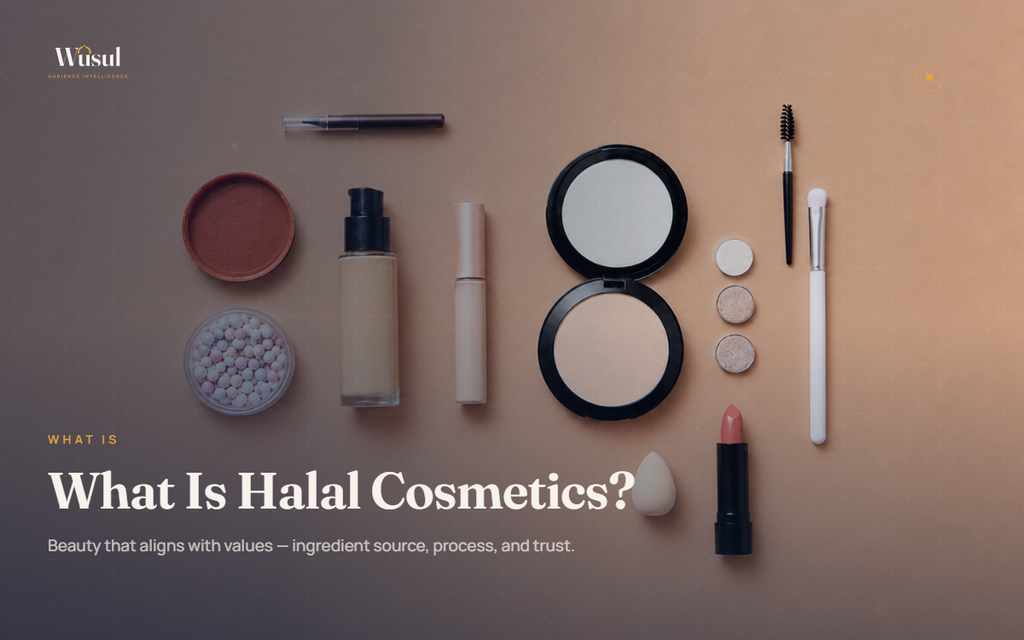
The global beauty industry is changing. Today, many consumers want more than products that simply make them look good; they want products that align with their values. For millions of Muslims around the world, this means choosing cosmetics that are halal.
But what exactly makes a cosmetic product halal? Does it have to be certified? And is halal beauty only for Muslims?
Here's what you need to know.
What makes cosmetics halal?
Although standards may vary slightly between certification bodies, halal cosmetics generally meet several key criteria.
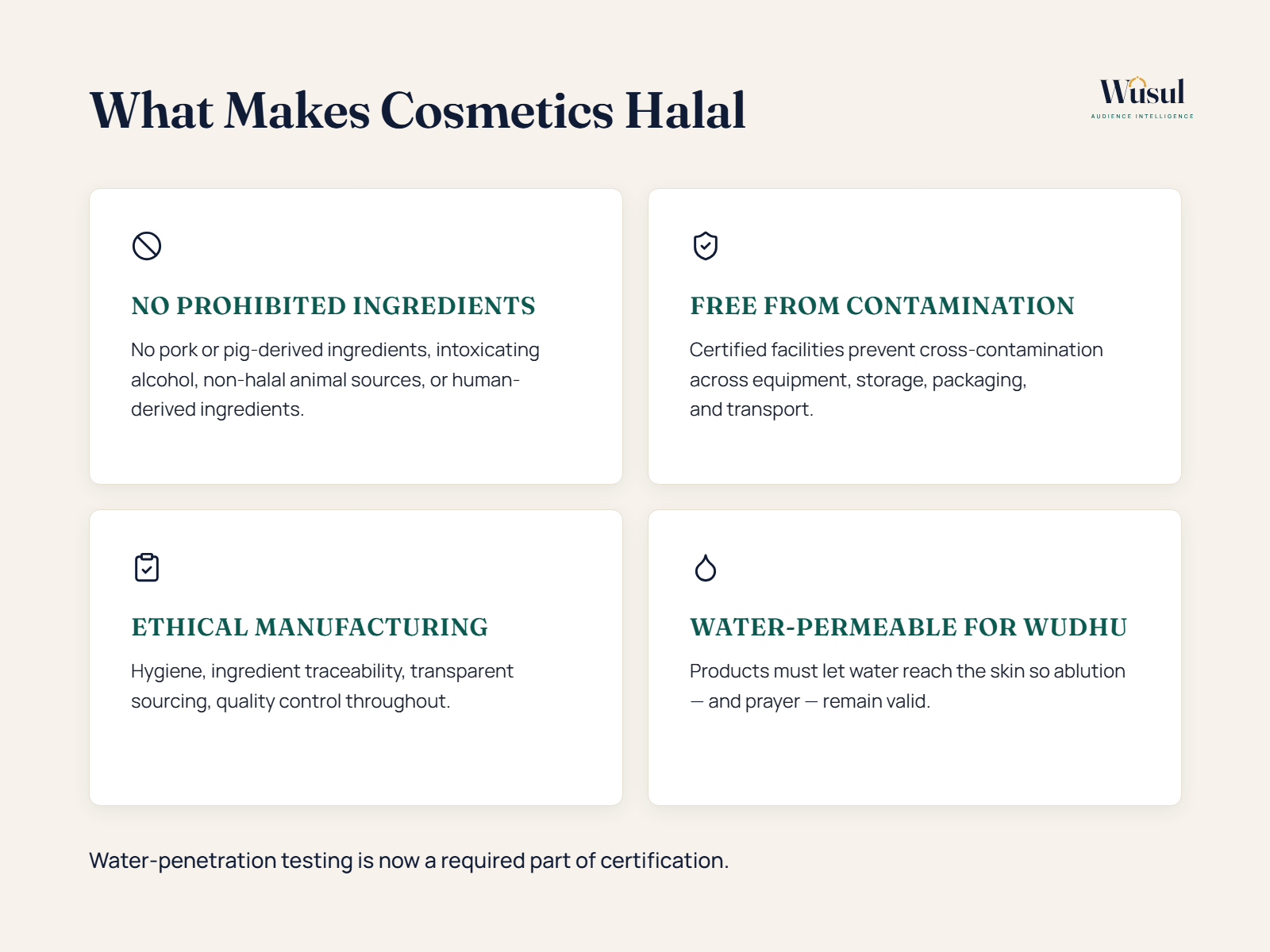
1. They do not contain prohibited ingredients
Halal cosmetics exclude ingredients derived from substances prohibited in Islam, such as:
- Pork or pig-derived ingredients (including porcine collagen or gelatin).
- Alcohol intended for intoxication or ingredients considered impermissible under halal standards.
- Ingredients sourced from animals that were not slaughtered according to Islamic requirements.
- Human-derived ingredients.
Instead, manufacturers use halal-compliant plants, minerals, marine, or properly sourced animal ingredients.
2. They are free from contamination
A product may contain halal ingredients but still fail to qualify as halal if it becomes contaminated during manufacturing.
Halal-certified facilities follow strict procedures to prevent cross-contamination with non-halal substances. Equipment, storage, packaging, and transportation are also carefully managed.
3. They follow ethical manufacturing standards
Many halal cosmetic brands also emphasize:
- High hygiene standards
- Ingredient traceability
- Transparent sourcing
- Quality control throughout production
While these practices are not unique to halal products, they are often central to halal certification requirements.
4. They let water reach the skin for wudhu
A requirement specific to halal cosmetics is water permeability. Muslims perform wudhu (ablution) before prayer, and most scholars hold that water must reach the skin and nails for it to be valid. Many cosmetics are designed to be water-resistant or waterproof so they last longer, and a product that forms a waterproof layer, such as conventional nail polish, has to be removed before wudhu.
Some halal certifiers therefore test whether a product lets water through. In Indonesia, the LPPOM MUI laboratory, accredited to ISO 17025, offers this water permeability testing for cosmetics.
This is why "halal" or breathable nail polish, sold as letting water through to the nail, is one of the most searched halal beauty products: about 2,900 searches a month in the US and 2,400 in the UK, far more than "halal cosmetics" itself. Scholars differ on whether these products let enough water through.
Common ingredients consumers look for
Many everyday cosmetic ingredients may come from multiple sources, making it difficult to know whether they are halal without proper disclosure.
Examples include:
- Gelatin
- Collagen
- Glycerin
- Keratin
- Stearic acid
- Lanolin
- Carmine (a red pigment derived from insects)
These ingredients may be plant-based, synthetic, or animal-derived. Halal certification helps consumers identify products that meet halal requirements.
The Indonesian Council of Ulama's Fatwa No. 26 of 2013 specifies that cosmetics are permissible provided they comprise halal and pure ingredients, are used for Sharia-compliant purposes, and are not hazardous. The fatwa forbids internal cosmetics (like lipstick) containing najis or haram ingredients, while permitting external cosmetics with such ingredients provided they are not pork products and the user washes afterward.
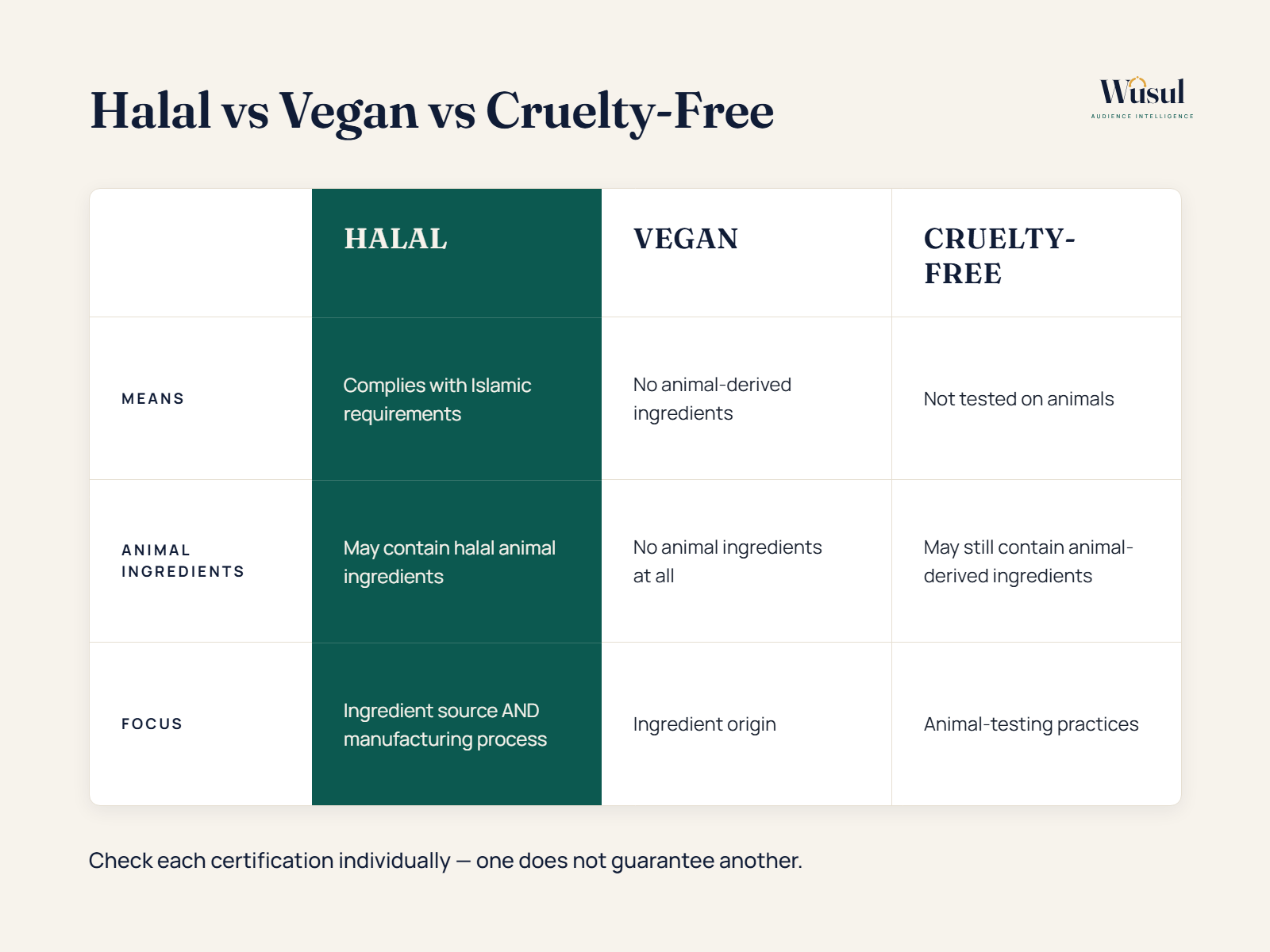
Is halal the same as vegan or cruelty-free?
Not necessarily.
Although there is often overlap, these terms mean different things.
A product can be:
- Halal but not vegan
- Vegan but not halal-certified
- Cruelty-free without being halal
- All three at the same time
Consumers should check each certification individually rather than assuming one guarantees another.
Do halal cosmetics need certification?
Certification is not always legally required, but it provides reassurance that an independent organization has verified both the ingredients and manufacturing process.
Many consumers actively look for halal certification logos because ingredient lists alone often cannot reveal how ingredients were sourced or processed.
The certification landscape
Halal certification for cosmetics is a rigorous process that verifies every aspect of production. In Indonesia, the Halal Product Assurance Organizing Body (BPJPH) oversees certification, with LPPOM MUI serving as the Halal Audit Quality Board. The certification process examines:
- Raw materials and auxiliary ingredients
- Production facilities and equipment
- Manufacturing processes
- Packaging and storage
- Distribution and transportation
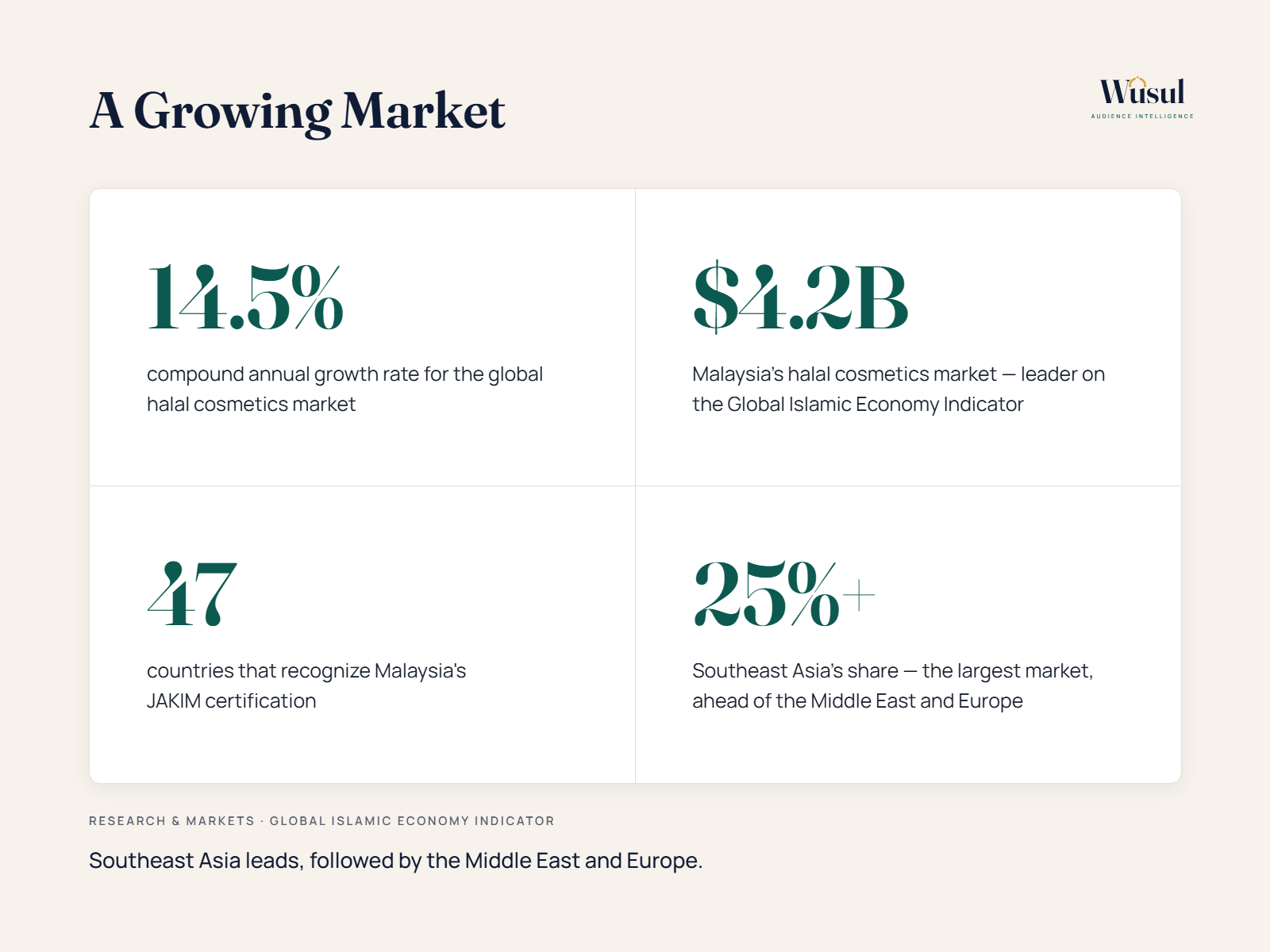
Indonesia requires halal certification for cosmetic products by October 17, 2026, under Law No. 33 of 2014 on Halal Product Assurance. In Malaysia, JAKIM recognizes foreign halal certification bodies in 49 countries (as of October 2024), which makes its standard one of the most widely accepted in the world.
The global halal cosmetics market was worth an estimated $46.85 billion in 2025 and is forecast to reach $92.75 billion by 2030, a compound annual growth rate of 14.5%, according to Research and Markets. Asia-Pacific was the largest region in 2025, and North America is expected to grow fastest. In the State of the Global Islamic Economy Report 2025/26, Malaysia ranks first for halal pharmaceuticals and cosmetics.
Why is demand for halal cosmetics growing?
The halal cosmetics market has expanded rapidly in recent years, driven by several factors:
- A growing global Muslim population
- Greater consumer awareness about ingredients
- Increased demand for ethical and transparent products
- Rising interest in clean beauty and responsible sourcing
- Alignment with vegan and cruelty-free trends
Today, halal beauty products are available across skincare, makeup, hair care, fragrances, and personal care, with both dedicated halal brands and international manufacturers entering the market.
Halal cosmetics' trust challenge
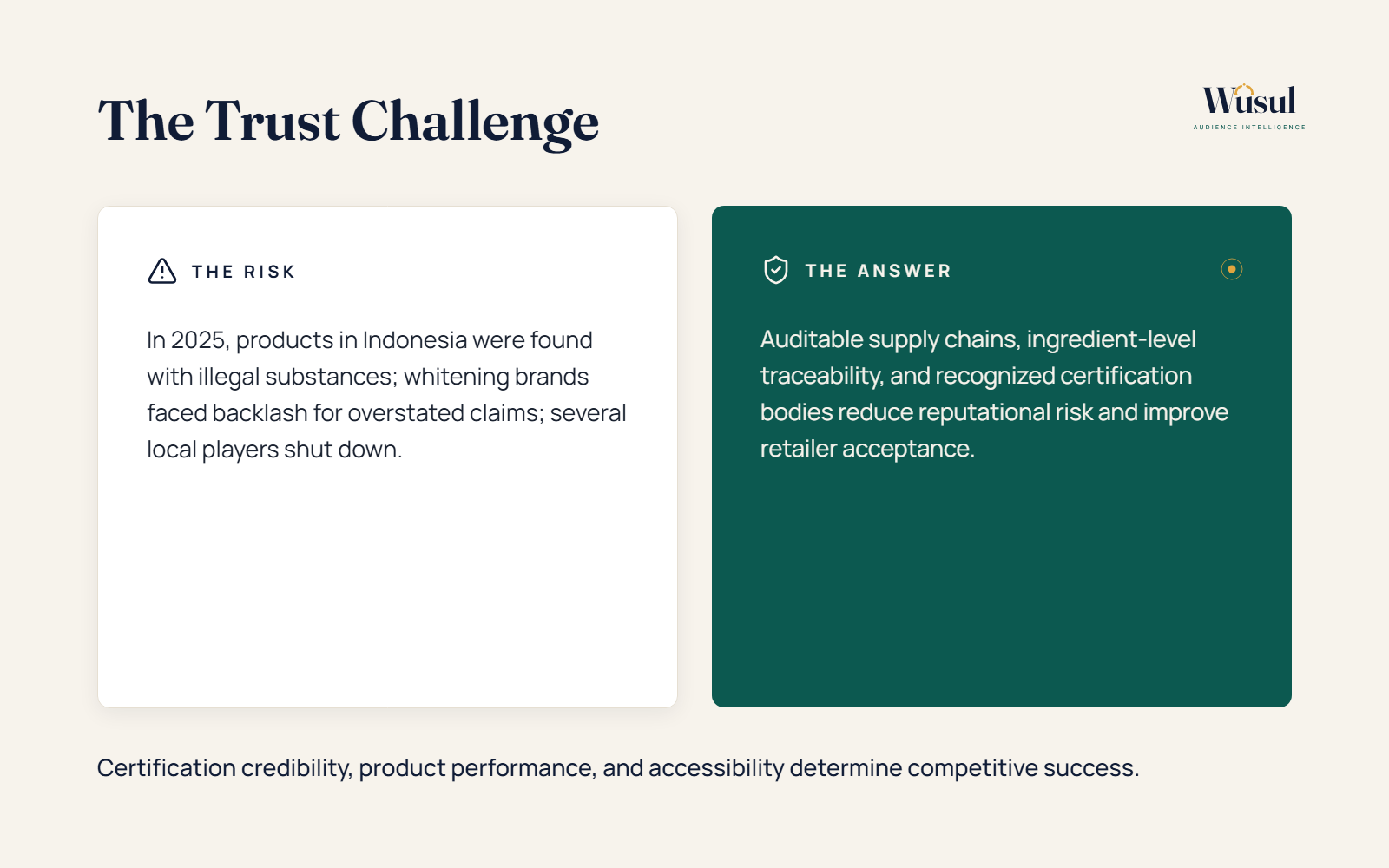
The halal cosmetics market faces a significant challenge: trust. Shoppers are wary of overstated claims, and in a crowded market, brands without a credible promise struggle. In Indonesia, the largest Muslim market, several young local beauty brands closed in 2024 as competition intensified.
This is why credible certification matters. Brands that build auditable supply chains, keep ingredient-level traceability and work with recognized halal certification bodies reduce reputational risk and win retailers' confidence more easily.
Are halal cosmetics only for Muslims?
No.
While halal cosmetics are designed to meet the needs of Muslim consumers, many non-Muslims also choose them because they appreciate:
- Transparent ingredient sourcing
- High manufacturing standards
- Ethical production practices
- Clearly defined certification processes
For many consumers, halal certification offers an additional layer of confidence in product quality and traceability.
The market's growth is driven by several factors that resonate with diverse demographics:
Clean beauty alignment. Halal cosmetics often align with "clean beauty" trends; free from certain chemicals, ethically sourced, and transparently produced.
Ethical consumption. Non-Muslim consumers are drawn to halal-certified products for their association with ethical sourcing, cruelty-free practices, and environmental responsibility.
Safety perception. Halal certification is perceived by many consumers as a guarantee of safety and quality, regardless of religious affiliation.
Vegan and cruelty-free crossover. Many halal brands also carry vegan certifications and cruelty-free labeling, appealing to consumers with those values.
Combined with transparent sustainability and safety claims, halal certification can broaden a brand's appeal well beyond Muslim shoppers.
The competitive landscape
Research and Markets names Amara Beauty, INIKA Organic, Martha Tilaar Group, Wardah Cosmetics and OnePure International Group among the key players in a moderately competitive market.
Indonesia's beauty market is large and fast-moving, but local brands face pressure on scale, speed and price from international competitors.
The bottom line
Halal cosmetics are beauty and personal care products made in accordance with Islamic principles. They exclude prohibited ingredients, avoid contamination during production, allow water to penetrate for wudhu validity, and often follow rigorous standards for sourcing, hygiene, and quality assurance.
Whether someone chooses halal cosmetics for religious reasons or because they value transparency and ethical manufacturing, understanding what halal means helps consumers make more informed decisions about the products they use every day.
At Wusul, we believe that cultural intelligence means understanding not just what an audience buys, but why they buy it; and designing for the values that shape their decisions. Halal cosmetics are a case study in what happens when an industry takes those values seriously.
Frequently asked questions
What are halal cosmetics?
Halal cosmetics are products that exclude ingredients prohibited in Islam, such as pork-derived substances or alcohol intended for intoxication. They must be free from contamination during manufacturing and often require water permeability to allow for wudhu. These products emphasize ethical manufacturing, ingredient traceability, and quality control to ensure they align with Islamic requirements.
Are halal cosmetics vegan?
Halal cosmetics are not necessarily vegan. While there is often overlap, the terms have different meanings. Halal focuses on Islamic requirements and may include halal-compliant animal ingredients, whereas vegan products contain no animal-derived ingredients at all. A product can be halal but not vegan, or vegan without being halal-certified. Consumers should check each certification individually.
Is halal certification required for cosmetics?
Certification is not always legally required, but it provides independent verification of ingredients and manufacturing processes. However, some regions have specific mandates, such as Indonesia, which requires full halal certification for all cosmetic products by October 17, 2026. Many consumers look for certification logos because ingredient lists alone often cannot reveal how items were sourced.