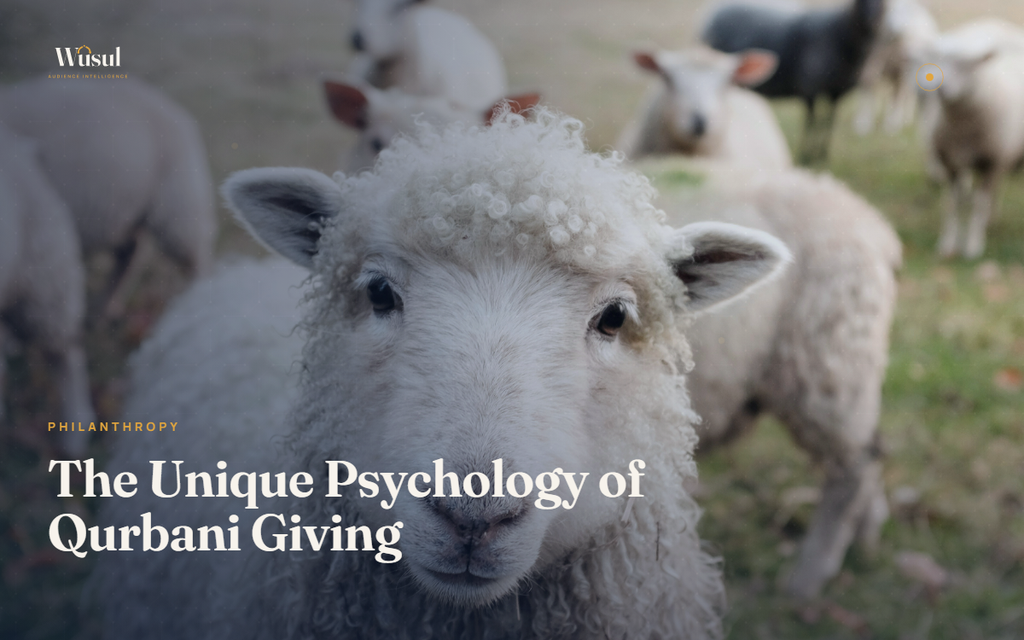
The meaning of Qurbani is an act done for the pleasure of Allah through the ritual sacrifice of livestock during Eid al-Adha. Every year, as the month of Dhul-Hijjah approaches, a remarkable phenomenon unfolds across the Muslim world. Donations surge, not for general relief or ongoing programs, but for a specific, time-bound act: Qurbani, the ritual sacrifice of livestock during Eid al-Adha. The figures are not simply the result of effective marketing. They reflect a distinct psychological and spiritual dynamic that separates Qurbani giving from general donations or even Ramadan campaigns. Qurbani campaigns require fundamentally different strategies because the donor motivation, emotional experience, and perceived impact are qualitatively different.
Understanding the Qurbani Meaning versus Sadaqah and Zakat
To understand Qurbani psychology, one must first recognize its unique position in Islamic giving. Sadaqah is a voluntary charity driven by empathy and compassion. Zakat is an obligatory annual wealth tax with fixed rates and specific categories of recipients. Qurbani, however, is a ritual act of sacrifice performed during the days of Eid al-Adha, commemorating Prophet Ibrahim's willingness to sacrifice his son in obedience to Allah (SWT).
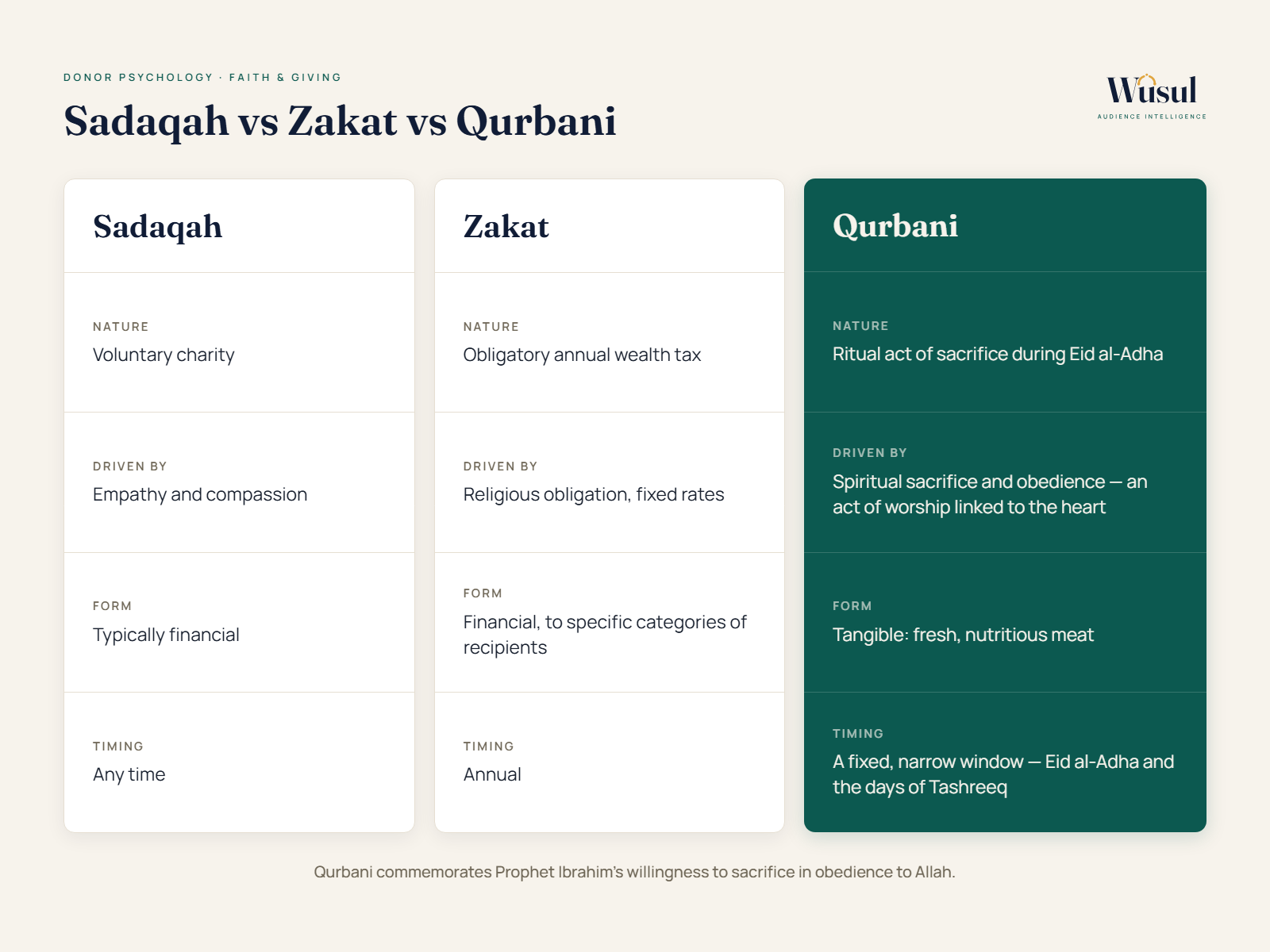
Unlike Zakat, which is a financial obligation tied to wealth, Qurbani is an act of worship linked to the heart. As an Islamic Relief USA donor report explains, "Udhiyah is an Arabic word, and Qurbani is an Urdu/Persian word derived from Arabic. They both connote the meaning of sacrifice, or an act done for the pleasure of Allah (SWT). By doing so, donors commemorate the sacrifice of Ibrahim (AS) and Ismail (AS) while providing nutritious food for hungry families." This connection to Prophetic legacy imbues the act with profound spiritual weight.
The tangibility of the gift
A critical difference between Qurbani and general giving lies in the nature of the donation. Zakat and Sadaqah are typically financial; Qurbani delivers tangible, fresh meat.
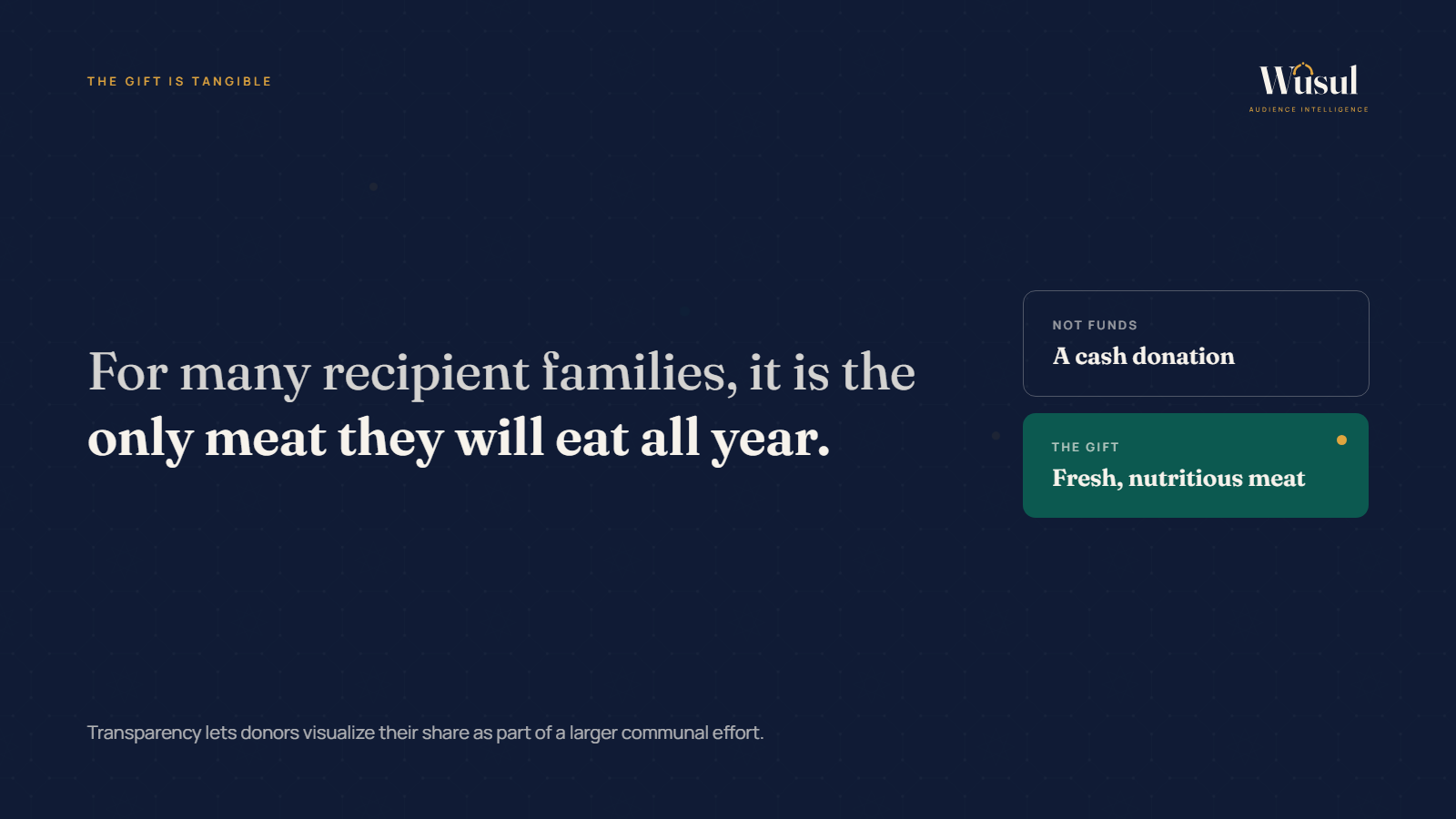
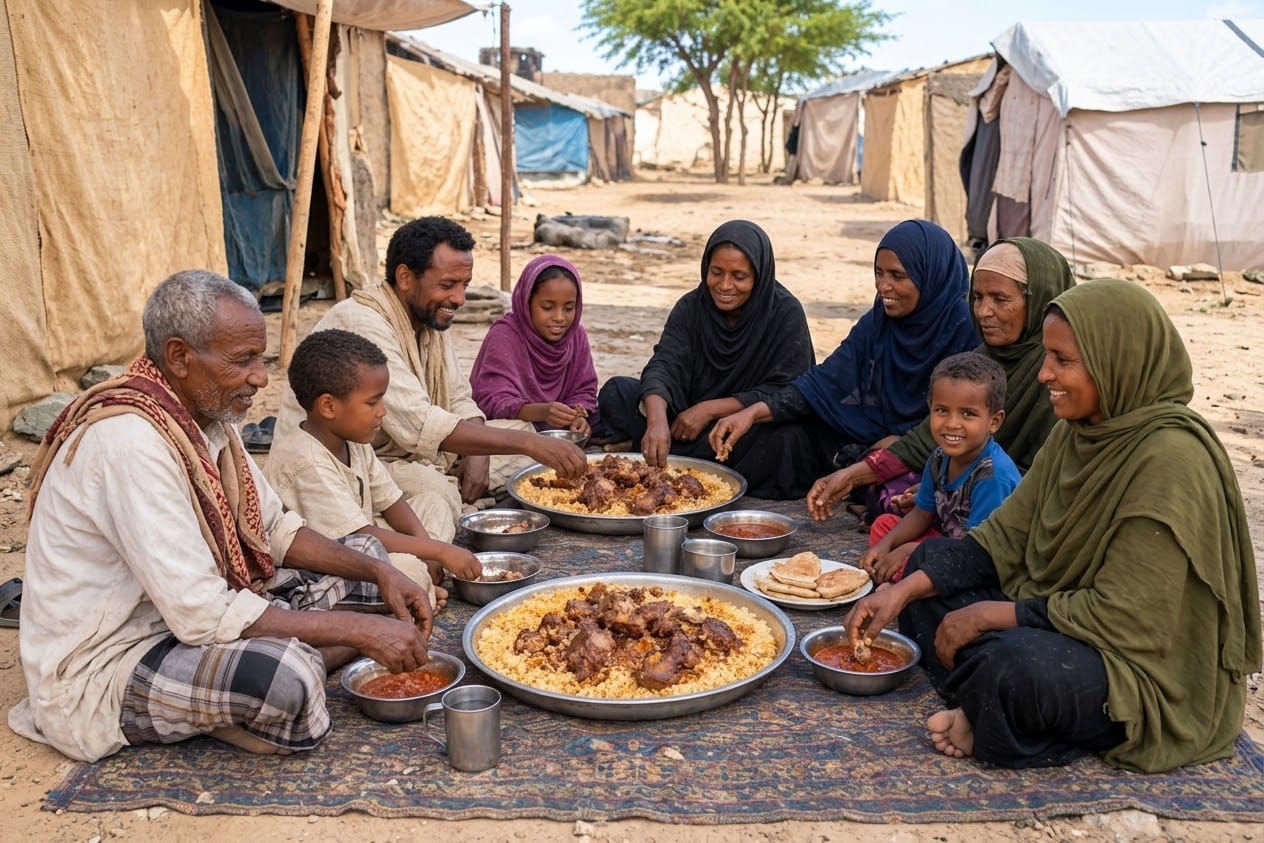
This distinction matters psychologically. A donor in London knows their £220 share will provide fresh meat for a family who otherwise may not taste meat for the entire year. Islamic Relief USA notes that "for many people who receive this gift, it's the only meat they'll eat all year". Human Appeal similarly emphasizes that their Qurbani distributions provide "fresh, nutritious meat" to vulnerable people during Eid, allowing them to celebrate with dignity.
For beneficiaries, the difference is almost life changing. Salimata, a widow and mother of eight from Mali, told Islamic Relief: "This meat pack is a blessing for me and my family. It will help to enjoy our Eid, as we cannot afford to buy Qurbani... It's been so long since we've had meat, I know this will put a smile on my children and grandchildren's faces" . For donors, the immediacy of this impact, feeding a family, allowing them to celebrate Eid, is deeply satisfying.
Timing: the unique campaign dynamics of Qurbani
The holy period of Dhul-Hijjah creates a heightened intention to donate (which in fact starts a few weeks before it actually) due to its great significance in Islam. Islamic Relief USA's donor materials explain that the sacrifice must occur "during the day of Eid al-Adha and the ensuing three days of Tashreeq" . This time-bound nature creates a sense of urgency that general appeals simply do not have.
For Human Appeal, the window is similarly narrow: "the slaughter must take place between the Eid al-Adha prayer (10 Dhul Hijjah) and sunset on the final day of Tashreeq (13 Dhul Hijjah)" . This creates a concentrated period of giving that demands precision and preparedness. Campaigns must be executed with care, procurement completed well in advance, and distribution networks mobilized for a narrow window of time .
For donors, this time-bound nature signals that their contribution must be made now, not tomorrow or next week, reinforcing the psychological importance of the act.
The meaning of "one share"
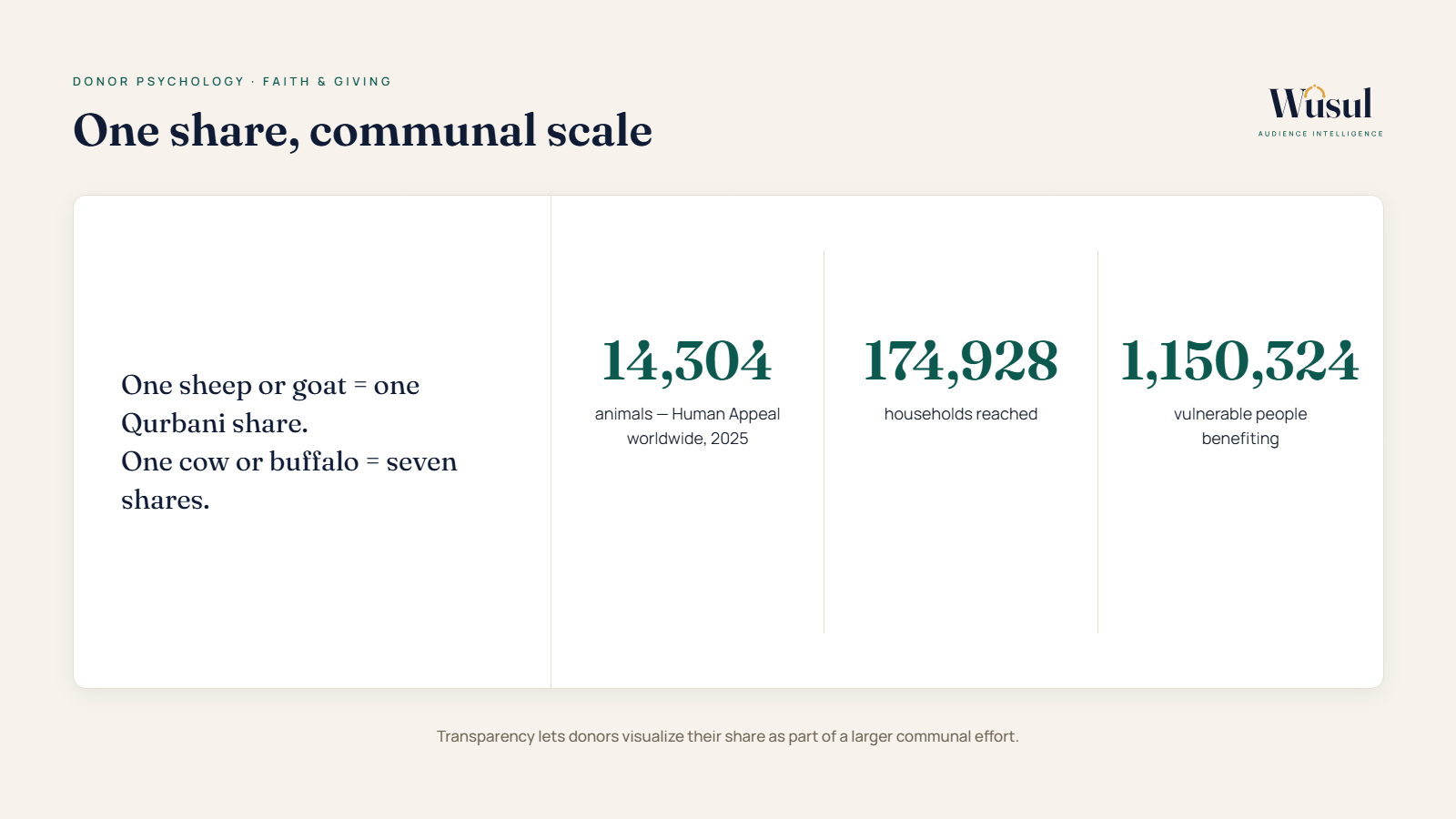
The Qurbani donation model is structured around "shares." One sheep or goat equals one Qurbani donation; one cow or buffalo equals seven shares. This share-based structure has psychological implications: donors can participate at a level that is financially accessible, while understanding exactly how many people their share will feed.
Human Appeal USA's goat Qurbani offering provides donors with clear metrics: in 2025, the organization slaughtered 14,304 animals worldwide, reaching 174,928 households and benefiting 1,150,324 vulnerable people. This transparency enables donors to visualize their contribution as part of a larger communal effort.
The "Wikalah" agreement
When giving Qurbani through organizations like Human Appeal, donors enter a "wikalah;" an authorized agreement between the donor and the organization. The donor pays the value of one or more Qurbani shares, and the organization acts on their behalf: sourcing the animal, performing the slaughter during the days of Eid al-Adha, and delivering the meat to families in need; all in line with Islamic conditions.
This contractual dimension adds a layer of psychological assurance: the donor knows their religious obligation is being fulfilled correctly. As Human Appeal assures donors, "You receive its full reward, by Allah's permission. It is not a separate Sadaqah; it is the Qurbani itself."
Why Qurbani impact seems transformative
For many beneficiaries, Qurbani is not just charity; it is a lifeline. Islamic Relief USA's 2023 Qurbani report told the story of Salimata, a widow from Mali who described eating meat as "a rare occasion" . For her, the meat pack provided by donors would allow her family to "enjoy our Eid" and "put a smile on my children and grandchildren's faces" .
In Yemen, where 2 million children are at risk of starvation, Human Appeal distributed 6 kilograms of nutritious meat per family. In Gaza, where refrigeration is difficult due to power cuts, the organization adapted by distributing smaller portions to avoid the risk of spoilage. These tailored distributions demonstrate the depth of need, and the care taken to honor donor intentions.
For donors, the immediacy of this impact (feeding a family for days, allowing them to celebrate Eid) is deeply satisfying. This contrasts with general donations, which may support long-term programs where the impact is less immediate or visible.
Practical implications for Qurbani campaigns
The psychology of Qurbani suggests a different campaign approach than general giving.
Timing is a critical differentiator. General donations are flexible and year-round. Qurbani operates within a fixed, narrow window during Dhul-Hijjah, creating urgency and requiring precise execution. Islamic Relief USA's Qurbani program, described as "our biggest single food-sharing program," requires months of preparation to ensure that distribution happens during the Eid period.
Donor motivation operates differently. General giving is often driven by empathy, duty, or social influence. Qurbani is motivated by spiritual sacrifice, obedience to God, and participation in a sacred ritual. As Islamic Relief USA frames it, donors are "performing the Qurbani" and "receiving its full reward" .
The emotional experience as it provides participation in a Prophetic tradition that transcends the individual donor. The act of sacrifice, the adherence to Islamic conditions, and the knowledge that one is enabling a family to celebrate Eid, all these elements create a deeper psychological reward.
Final Reflections
Qurbani is not a campaign season to be exploited; it is a sacred transaction between the donor and God, facilitated by the charity. The psychological drivers are fundamentally different from general giving. While Zakat and Sadaqah may be motivated by empathy, social influence, or the desire for reward, Qurbani is primarily motivated by the spiritual need to participate in a Prophetic tradition, to sacrifice, and to obey.
Charities that understand this distinction succeed. By offering affordable shares, transparent distribution, and clear impact reporting, they honor the psychological and spiritual needs of the donor. Islamic Relief USA and Human Appeal demonstrate this understanding through their rigorous attention to Islamic conditions, local sourcing, and culturally sensitive distribution.
At Wusul, we find the lesson crystal-clear: Cultural intelligence means understanding not just what Muslims do, but why they do it. Qurbani is not a donation; it is a pilgrimage of the heart. By recognizing this, organizations can build campaigns that honor the donor's faith and deliver meaningful impact.
Frequently asked questions
What is Qurbani?
Qurbani is a ritual act of sacrifice performed by Muslims during the days of Eid al-Adha. It commemorates the willingness of Prophet Ibrahim to sacrifice his son in obedience to Allah. Unlike general charity, it is a specific act of worship that provides fresh, nutritious meat to vulnerable families in need.
How does Qurbani work?
Donors pay for one or more shares of an animal through an organization. This creates a wikalah, or authorized agreement, where the organization acts on the donor's behalf. The organization sources the animal, performs the ritual slaughter during the specified days of Eid al-Adha, and delivers the meat to families in need.
What is a Qurbani share?
A Qurbani share is a unit of the donation model that makes participation financially accessible. One sheep or goat counts as one full Qurbani share. Alternatively, one cow or buffalo is divided into seven equal shares. This structure allows donors to understand their contribution and visualize how many people their specific share will feed.