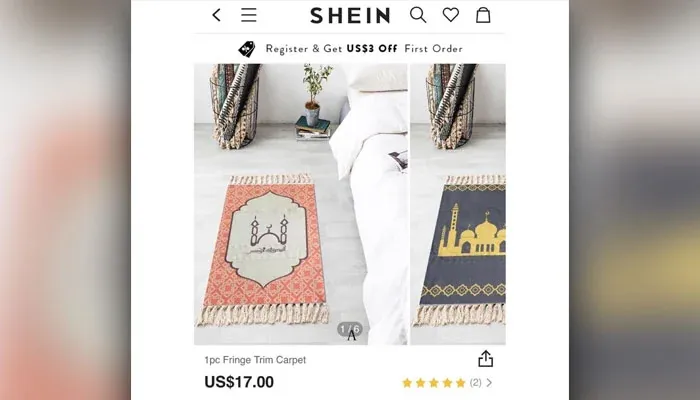
In July 2020, global online fashion retailer Shein found itself at the centre of a social media storm that would expose the consequences of cultural blindness in global commerce. The company had been selling Islamic prayer mats, complete with depictions of the Kaaba, mosques, and the mihrab design used to indicate the direction of prayer, as decorative home items labelled "frilled Greek carpets" and "fringe trim carpets" . The mats were priced between £8 and £17 .
The backlash was swift and fierce. A 24-year-old journalism student at the University of Salford named Khadija Rizvi discovered the listings and immediately took to social media, writing: "I am disgusted. I am livid. Shein is profiting off Muslim prayer mats by selling them as 'fringe trim carpets' for people to use casually around the house" . Rizvi's post went viral, sparking outrage across Muslim communities worldwide and forcing Shein into a defensive apology.
This case study examines what went wrong, how Shein responded, and what the incident teaches us about cultural intelligence in global marketing.
What went wrong: the anatomy of a cultural blind spot
- The Offence: Sacred Objects Commodified
The prayer mats sold by Shein were not generic rugs; some featured the Kaaba and others bore amihrab!
For Muslims, a prayer mat (known as sajadah or janemaz) is a sacred object. It is "an important piece of fabric, used by Muslims, placed between the ground and the worshipper during their five daily prayers" . It must be treated with respect, placed in a clean space, never stepped on with shoes, and never used casually as a decorative item.
Rizvi explained: "We don't wear our shoes on it. We put it in a clean place, a place for regular use where we connect with God" . The commodification of such an object (particularly when it bore sacred imagery) was perceived as deeply disrespectful.
- The labelling: erasing cultural and religious identity
Compounding the offence was the labelling. Shein described the mats as "frilled Greek carpets," "fringe trim carpets," and "Greek fret carpets", with no mention of Islam, Muslims, or prayer . Critics accused the company of "renaming and stealing credit from a whole faith" and engaging in cultural appropriation .
Bangladeshi-American beauty influencer Nabela Noor, who amplified Rizvi's message to millions of followers, tweeted: "My culture and religion is not a trend or something to rebrand and sell."
The erasure was not just disrespectful, it was dangerous. By removing religious context, Shein allowed customers to use the mats for everyday purposes, including for coffee tables and cat feeding areas, as one horrified reviewer discovered. One review showed a buyer using the mat for their pet cat. This meant customers were unknowingly desecrating sacred objects, a fact that added moral weight to the backlash.
- The response: activists force accountability
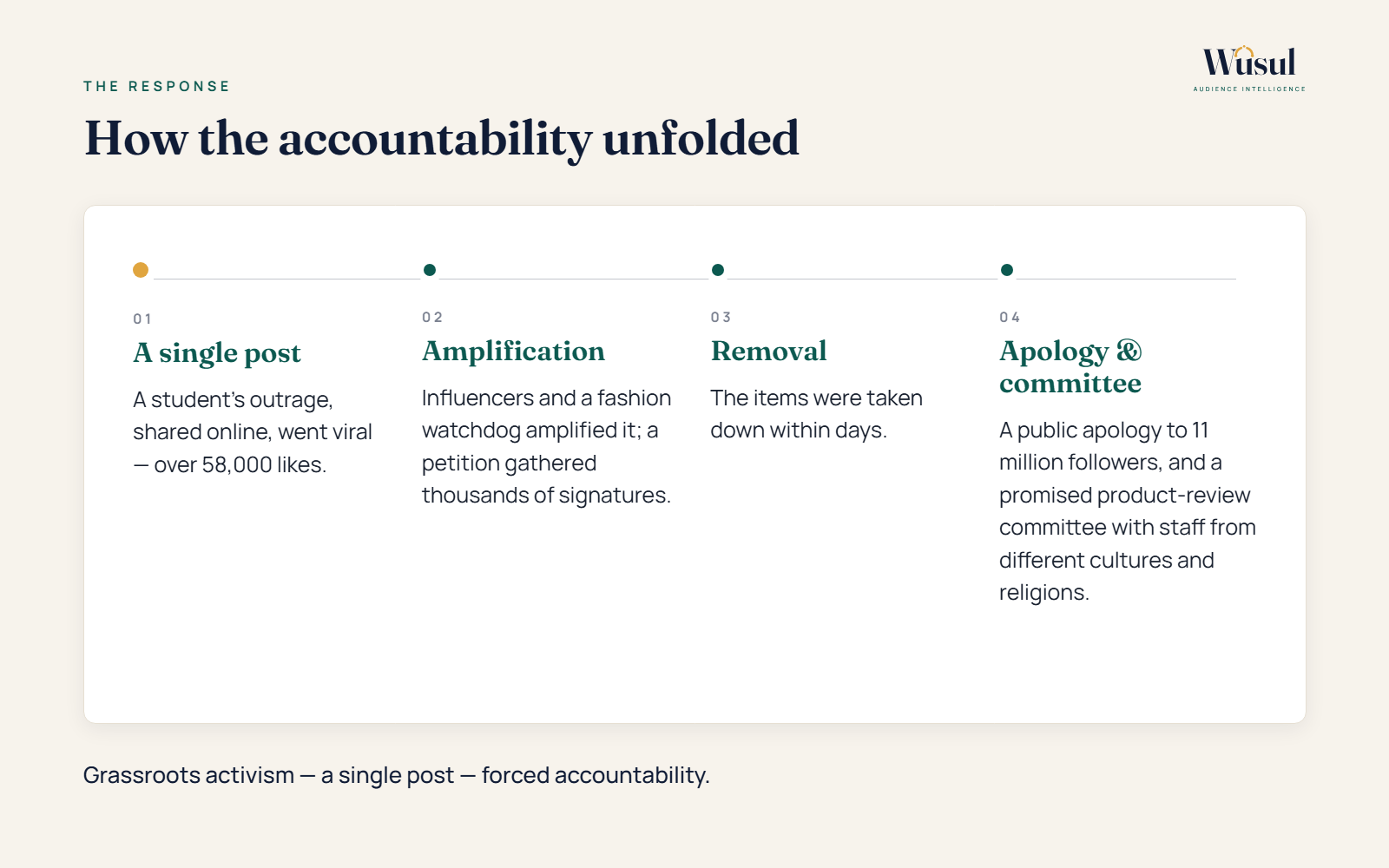
Rizvi's Instagram post quickly went viral, gaining more than 58,000 likes . Others joined the chorus, including fashion watchdog Diet Prada and influencer Nabela Noor, who reached out to Shein directly demanding action . A Change.org petition titled "Put an end to SHEIN profiting off Muslim prayer mats + South Asian garments" gathered thousands of signatures .
Shein's initial response was to remove the items from its site . Two days after the controversy erupted, the company issued a public apology via Instagram to its more than 11 million followers .
The statement read:
"To our community; we made a serious mistake recently by selling prayer mats as decorative rugs on our site. We understand this was a highly offensive oversight and are truly sorry. Since it was brought to our attention, we immediately removed the products from our site and asked our vendor to stop selling to others" .
Shein also announced the formation of a "product review committee with staff from different cultures and religions" to prevent similar mistakes in the future . The brand vowed to "do a much better job in educating ourselves on different cultures, religions, and traditions to ensure our diverse community is respected and honored" .
The cultural intelligence gap: what Shein missed
Lack of Insider-Led Decision-Making
The core failure was Shein's lack of cultural intelligence in its product review process. As critics noted, the company did not have diverse staff reviewing products before they went live. One social media user wrote: "Now you want to hire people with diversity? How long have we told you guys to do that? But now you only do this just because you got backlash?" .
Anthropology Professor Mariam Durrani at Hamilton College, whose research focuses on Pakistani-heritage Muslim youth, race, and migration, explained the deeper issue: when religious symbols are mass-produced, "their religious value is diminished through commodification." The meaning attached to the Kaaba becomes "reduced as an abstract black box in the middle of an 'oriental' carpet without prior knowledge or context" .
Durrani pointed out that Yale University's Center of Material and Visual Studies of Religion studies how prayer rugs have changed as they are commodified and found that the symbols on prayer rugs get overlooked by the politicization of Muslims, which reduces their meaning to outsiders. This reduction happens precisely when decision-makers lack the cultural knowledge to recognize sacred symbols.
The commodification trap
Shein's mistake reflects a broader trend in fast fashion: the appropriation of cultural and religious symbols for aesthetic purposes without understanding their meaning. As Professor Durrani noted, the politicization of Muslims in the West often means that religious symbols get overlooked, "reducing their meaning to outsiders" .
The prayer mats were an aesthetic choice (an "exotic" design element) rather than a recognition of their spiritual significance. This is the hallmark of cultural appropriation: taking from a culture without respect, context, or compensation.
Repeat offender pattern
This was not Shein's first cultural appropriation controversy. The company had previously been criticised for selling traditional South Asian garments as "tribal clothing" or "Scandinavian dresses," and for using white models to sell sleepwear that imitated cultural clothing . As the Change.org petition noted: "Traditional clothing and mats are not 'trends' to be monopolized as a 'Tribal fashion line.' Instead, garments such as Kurtas reflect the history and roots of many South Asians" .
The pattern suggests a systemic issue: a company prioritising speed and aesthetics over cultural sensitivity, with no internal mechanism to flag problematic products before they go live.
Lessons learned:
1. Insider-Led Decision-Making is non-negotiable
Shein's lack of diverse staff in product review directly contributed to the oversight. As Shein's own apology acknowledged, "staff from different cultures and religions" should have been part of the process from the beginning . For any organization serving or communicating with Muslim communities, diverse representation must exist at decision-making tables.
2. Understand the Significance of Religious Symbols
A prayer mat featuring the Kaaba or mihrab is not a generic design element. It is a sacred object with deep religious meaning. Organizations must invest in cultural literacy, understanding not just what symbols are, but what they mean to the communities that hold them sacred.
3. Context Matters: Labelling is Not Neutral
The labelling of the mats as "Greek carpets" was not just inaccurate, it was disrespectful. Labelling cultural and religious objects accurately is not just a matter of accuracy; it is a matter of respect. As Rizvi noted, "failing to label it as a Muslim prayer mat… allows people to use it casually as a decorative mat" .
4. Commodification Without Context is Harmful
Professor Durrani's observation that commodification diminishes religious value is a critical warning. When sacred objects become aesthetic consumer products, their meaning is stripped away. Organizations must consider whether their commercial use of cultural or religious symbols does more harm than good.
5. Social Media Accountability is Here to Stay
The controversy was driven by grassroots activism, a single Instagram post that went viral. Rizvi reflected: "I did not expect my post to blow up the way it did. I shared my outrage and it turns out tens of thousands of people feel the same way" . Organizations serving Muslim communities must recognise that social media gives consumers direct power to hold brands accountable.
A lesson in listening
Shein's apology was swift, and its formation of a product review committee seemed sincere. However, the incident exposed a deeper cultural intelligence deficit: the company's product review process lacked diverse perspectives; its labelling erased cultural and religious identity; and its approach to aesthetics prioritised exoticism over respect.
Malak, a 15-year-old who spoke out against Shein on Twitter, told the Daily Dot that as a Muslim, she was "offended and disappointed" to see religious mats sold that way. She said the mats are sacred "to the point where you cannot step on them without being clean, can't walk in front of someone praying on them, not step on them with shoewear on" . While she was "happy" with Shein's quick response, she still questioned the company's initial intentions: "It still pisses me off since they're obviously mats with mostly mosques drawn on them, so they would've known that it's wrong to be sold" .
Noor framed the lesson positively: "This incident is proof that our voices have power to spark real change. We need to keep using our voice" . Rizvi echoed the sentiment: "We all came together and that is why the items were removed" .
The lesson is clear: cultural intelligence cannot be outsourced or rushed. It requires insider-led decision-making, respect for religious symbols, accurate labelling, and a commitment to listening to the communities you serve.
At Wusul, we believe that cultural intelligence is not a checklist to be completed after a crisis. It is a discipline to be practiced every day. Understanding the significance of sacred objects, investing in diverse decision-making, and listening to community voices are not optional; they are foundational to authentic engagement. Shein's failure is a reminder that when you ignore culture, culture will not ignore you.
Frequently asked questions
What is a sajadah?
A sajadah, also known as a janemaz, is a sacred piece of fabric used by Muslims. It is placed between the ground and the worshipper during their five daily prayers. It must be treated with respect, kept in a clean space, and never used as a casual decorative item.
Why are prayer mats sacred?
Prayer mats are considered sacred because they are used by Muslims to connect with God during their five daily prayers. Because of this spiritual purpose, they must be placed in clean areas and treated with respect, rather than being used for everyday purposes or as decorative household items.