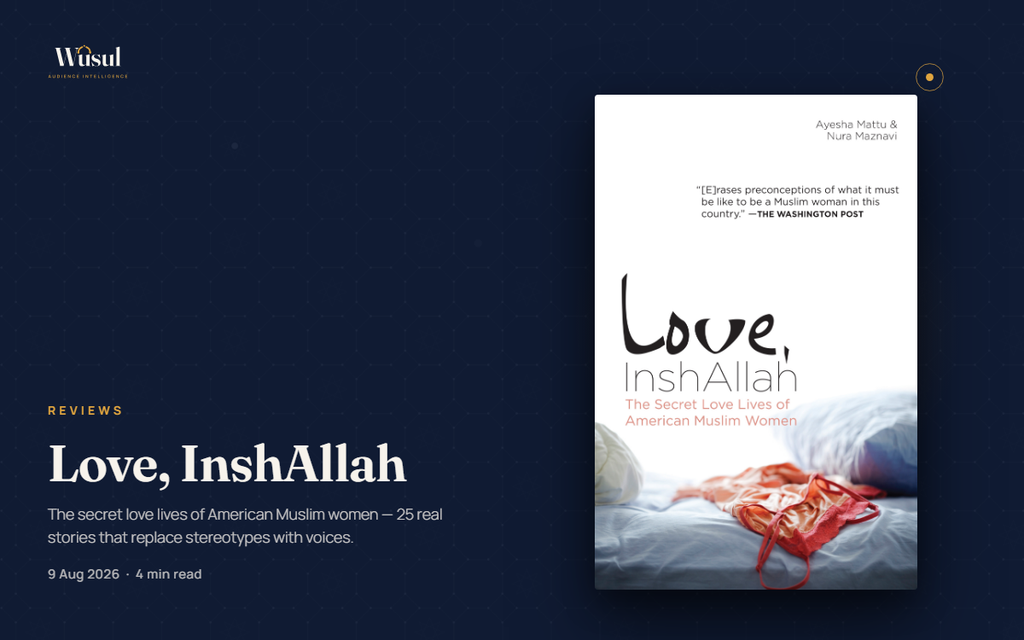
Conversations about Muslim women in mainstream media often revolve around politics, oppression, or identity conflicts. Love, InshAllah: The Secret Love Lives of American Muslim Women offers something refreshingly different: love stories. Not fairy tales or romance novels, but deeply personal accounts of real Muslim women on relationships, faith, family, culture, and self-discovery in contemporary America. In doing so, it directly challenges how Muslim women are represented in mainstream media.
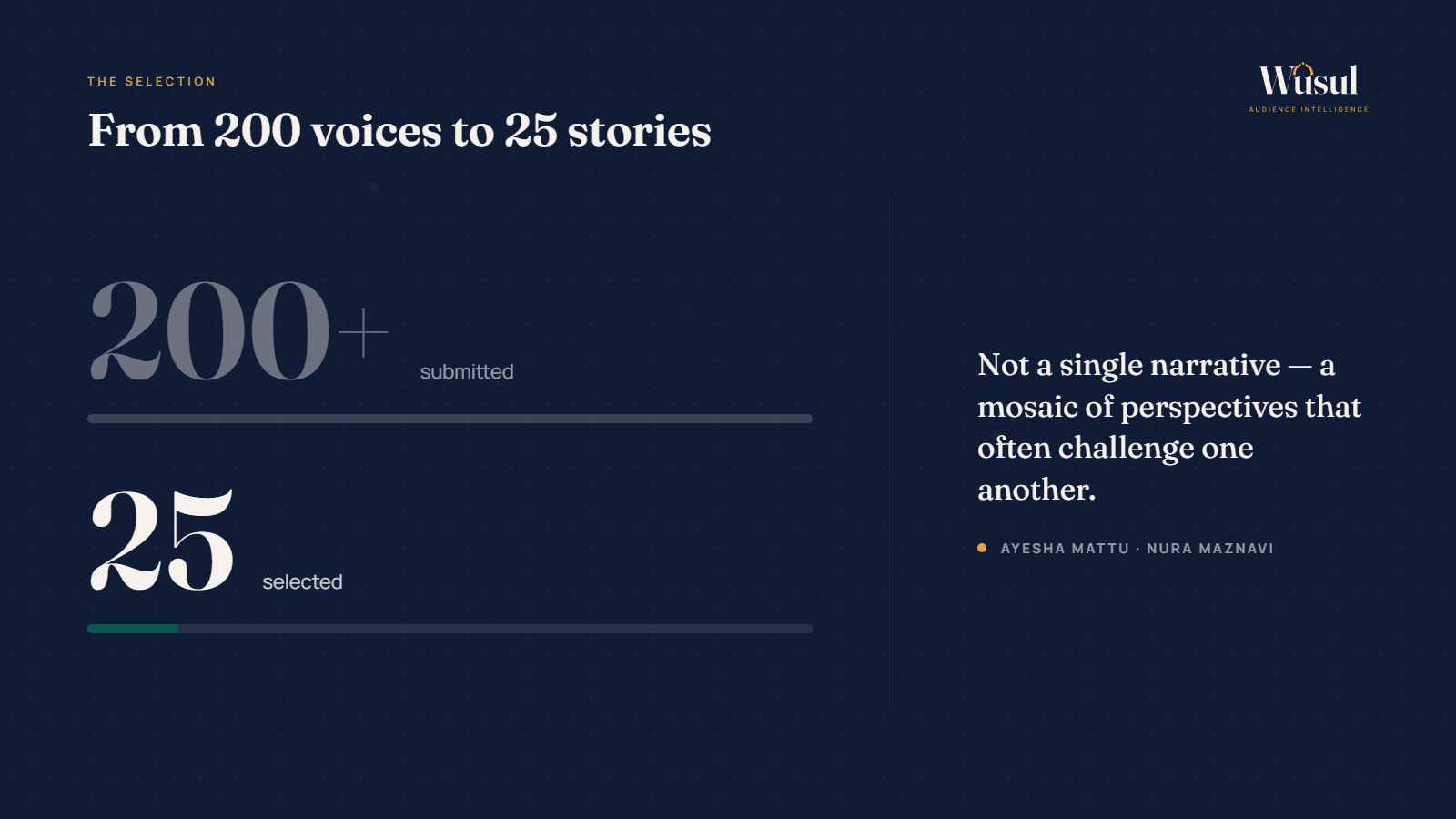
The stories were compiled by two Muslim women: Ayesha Mattu, a civil rights lawyer, and Nura Maznavi, a human rights consultant, who both shared their own stories in the book. They started off the idea while joking about how a Muslim dating movie could be like. They turned to Facebook to ask American Muslim women, of all backgrounds, send in their love stories. And out of more than 200 stories they selected the best 25. The result is not a single narrative about what it means to be a Muslim woman in America, but a mosaic of perspectives that often challenge one another.
What makes the book unique?
Perhaps the book's greatest strength is its honesty.
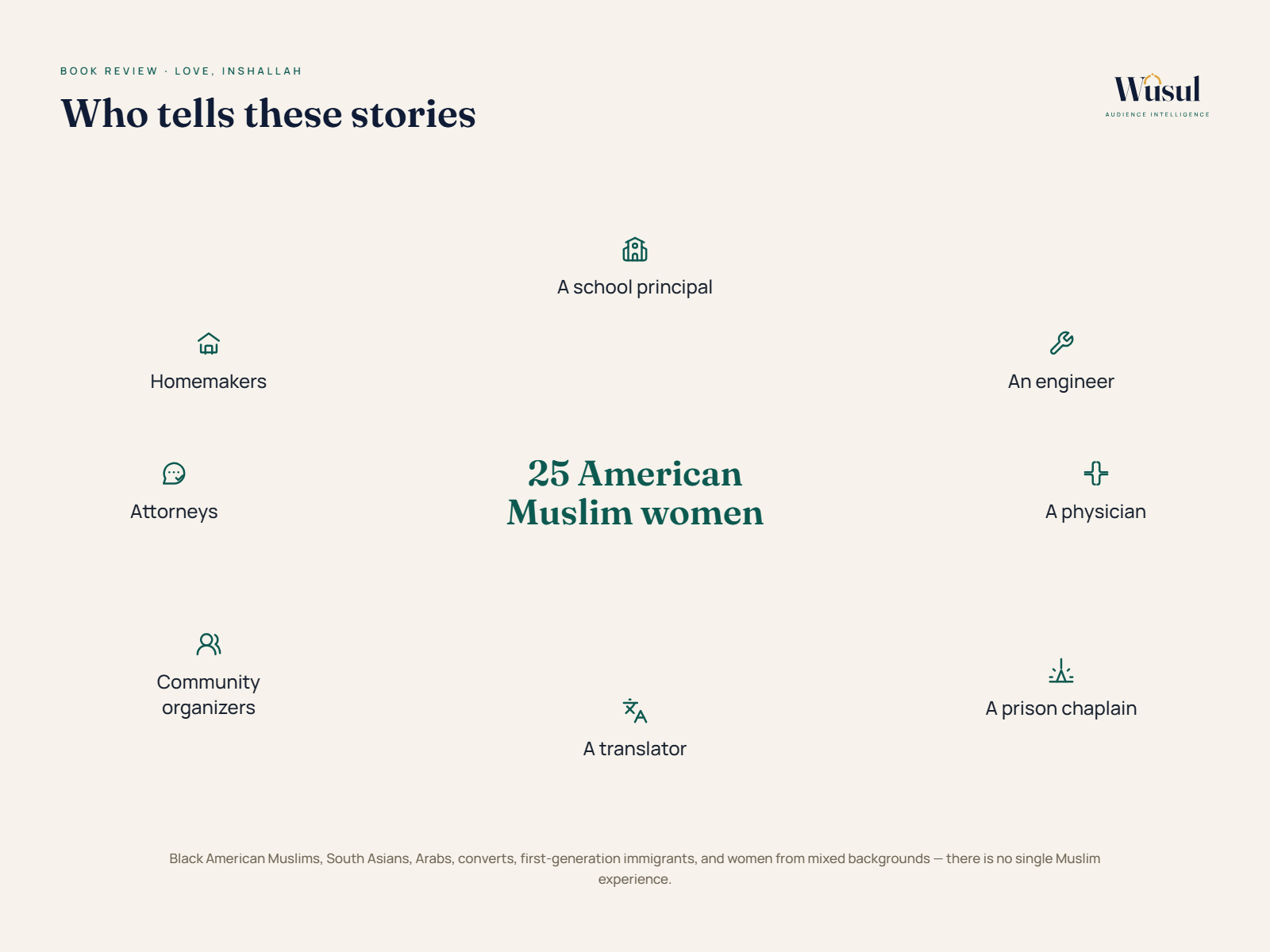
Some of the contributing women used pen names. Some are not professional writers; there is a school principal, an engineer, a physician, a prison chaplain, a translator, community organizers, attorneys, and homemakers. This created a variety in the writing styles, which added more attraction and credibility to the book.
Their stories resist the temptation to present idealized Muslim relationships. Instead, readers encounter awkward first dates, online matchmaking, heartbreak, divorce, interfaith relationships, parental expectations, long-distance love, conversion, and the difficult balance between modern dating culture and Islamic values. Together, they paint a far more realistic picture than the simplistic narratives often found in either popular media or religious discourse.
Muslim women on sexuality
Some stories openly discuss virginity, premarital sex, and homosexuality in a way that can make some practicing Muslims tremble with anger.
But Mattu and Maznavi made it clear in their book’s introduction:
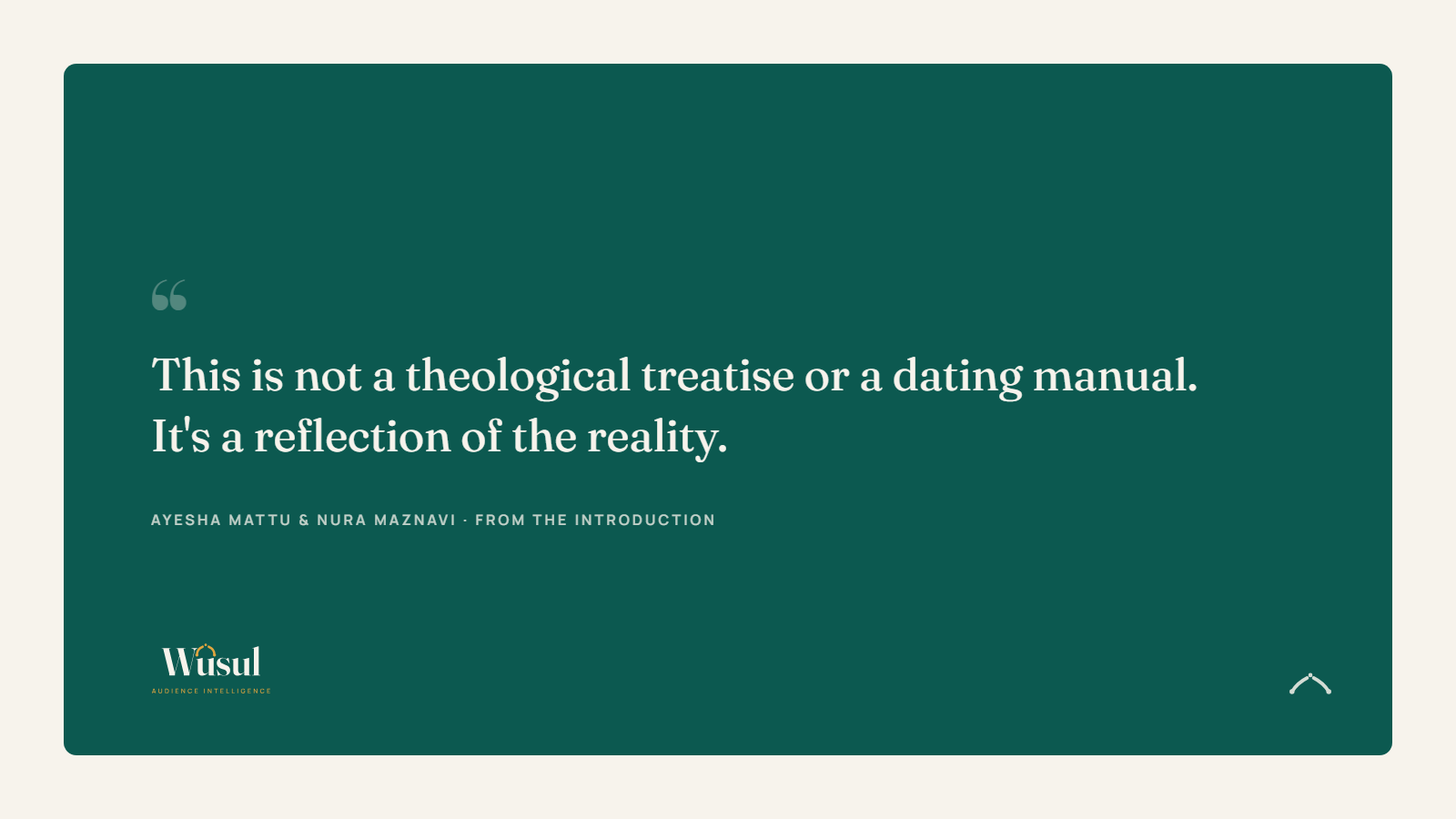
“This is not a theological treatise or a dating manual. It’s a reflection of the reality.. [The contributors] reflect a broad range of religious perspectives, from orthodox to cultural to secular. As such, they reflect the depth, breadth, and diversity of the American experience”
The openness of the book is unusual among Muslims. But Muslims are humans, and humans make mistakes, and on occasion sin. This book portrays Muslims as people going through life experiences anyone of any other faith can go through. Some of the writers involve themselves in acts they say their parents taught them good Muslim girls don’t do, others leave behind the religion of their parents to embrace Islam, devoutly.
This book raises important questions about the Islamic practice and identity. Is a Muslim someone who comes from a Muslim family and considers herself a “cultural” Muslim but neglects the five pillars? Or a Muslim is only the one who strictly adheres to the Shariah?
Beyond romance
Although marketed as a collection of love stories, the book is really about identity.
Many essays explore questions such as:
- How do you stay true to your faith while living in a society with different expectations around dating?
- What happens when cultural traditions conflict with Islamic principles?
- How do race, ethnicity, and immigrant experiences shape marriage choices within Muslim communities?
Cultural diversity within the muslim community
One of the book's most valuable contributions is demonstrating that there is no single "Muslim experience."
Readers meet Black American Muslims, South Asians, Arabs, converts, first-generation immigrants, and women from mixed backgrounds. Their relationships with Islam vary just as much as their relationships with love.
This diversity quietly dismantles stereotypes. Rather than arguing against misconceptions directly, the book simply allows Muslim women to tell their own stories in their own voices.
A humanizing read
For non-Muslim readers, the anthology serves as an accessible window into lives that are often misunderstood. It reveals that hopes, insecurities, excitement, and heartbreak surrounding love are remarkably universal, even when expressed through different cultural or religious lenses.
Love, InshAllah succeeds because it replaces stereotypes with stories.
Rather than defining Muslim women by headlines or assumptions, it allows them to speak for themselves; sometimes confidently, sometimes vulnerably, always authentically.
Blurring the line between literature and social commentary, Love, InshAllah is a portrait of contemporary American Muslim womanhood; complex, diverse, imperfect, and deeply human. It is the kind of book that encourages empathy, invites conversation, and lingers in the reader's mind long after the final essay ends.
If your goal is to better understand Muslims beyond the headlines and statistics, Love, InshAllah is an excellent place to start. This book will help you become more culturally intelligent and gain a more authentic understanding of Muslim experiences.
What this means for your organization
If you assume a single "Muslim woman" profile, this book argues otherwise. Campaigns chasing a single "Muslim consumer" story are working against how this audience understands itself. Multiple authentic voices will always beat one composite.
Most organizations get this wrong not from carelessness, but because one persona is easier to build than five. That's the gap Wusul exists to close, not by saying Muslims are diverse, but by showing you which differences actually matter for your donors, customers, or readers.