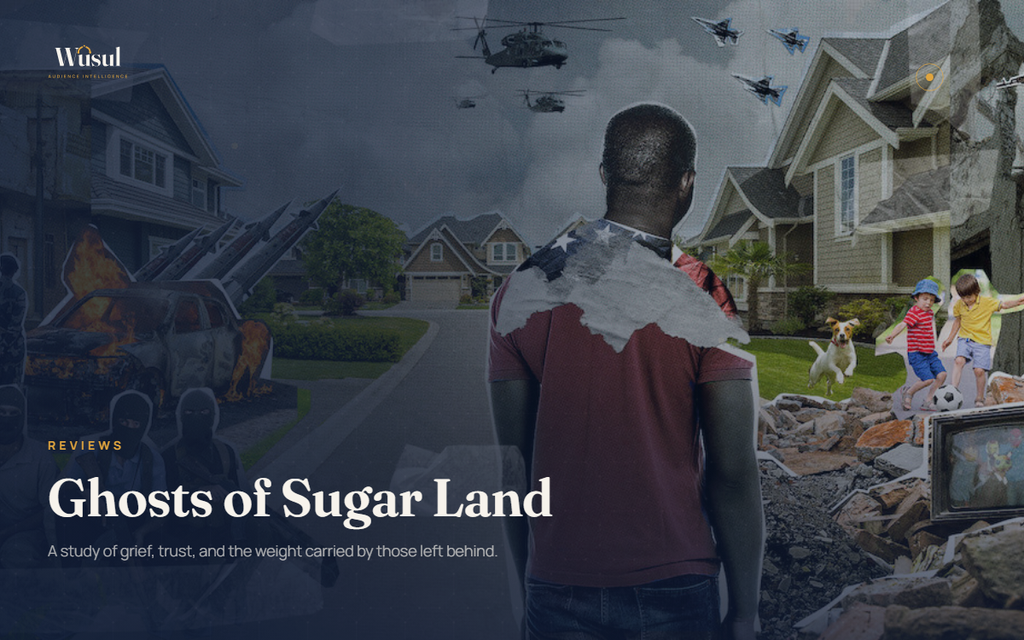
Ghosts of Sugar Land is a 2019 documentary film directed by Bassam Tariq. The Oscar-nominated short documentary follows a group of young Muslim American men from Sugar Land, Texas, as they reflect on the friend Mark (a pseudonym) who converted to Islam and left home to join ISIS. Their recollections reveal a gradual transformation that, in hindsight, seemed filled with overlooked warning signs but few clear explanations.
One of the masked interviewees says something that cuts to the heart of the film: "It's not that we have to wear these masks because of something we did. We're wearing these masks because of something he did."
That sentence contains the entire film. Ghosts of Sugar Land is not about Mark. It is about the people he left behind, a group of young Muslim American men in suburban Texas who must now navigate the wreckage of their friend's choices while carrying the weight of suspicion that those choices have cast upon them.
The setup: a friendship, a conversion, a disappearance
The film opens in Sugar Land, Texas, a suburb of Houston that was, in the 2000s, diversifying rapidly in every way except one. It was full of South and East Asian families, but almost no Black residents. Mark (his real name is Warren Christopher Clark) was the "only black guy in a sea of brown people," as one friend puts it.
Mark was a social misfit. He didn't drink, didn't date, didn't fit in. His Muslim friends, mostly first-generation immigrants, noticed his interest in their faith and encouraged him to convert.
Mark converted, and for a while, he was one of them. Then things changed. He grew a long beard. He got a job in a white, Islamophobic town in Texas. He started posting on Facebook about jihad, about the caliphate, about the obligation to fight.
Then he disappeared.
The masks: a visual language of fear
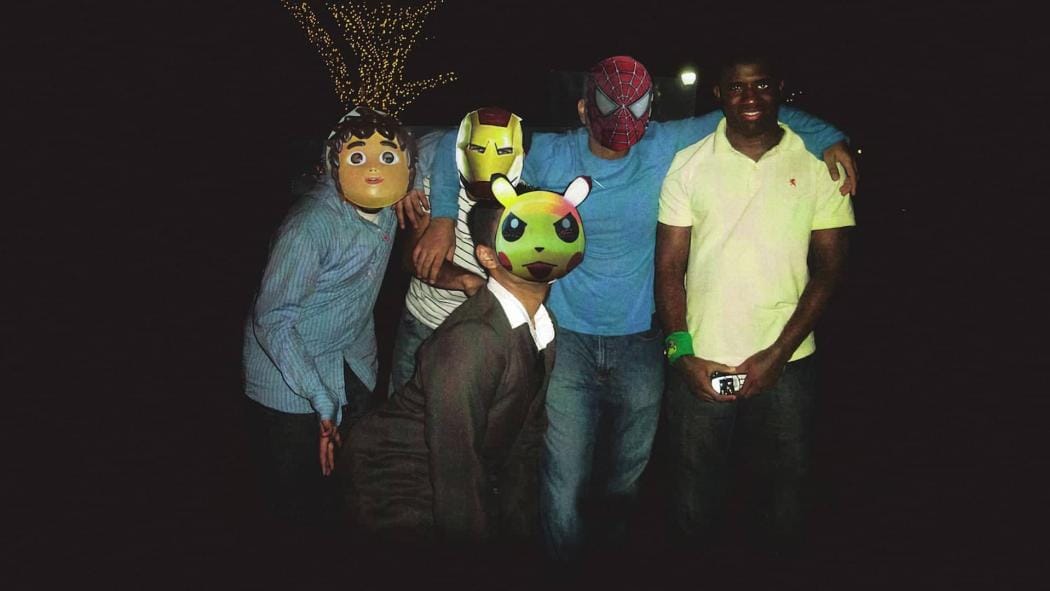
The most striking formal choice in Ghosts of Sugar Land is the masks. The nine interviewees wear party-store masks: Iron Man, Thor, Buzz Lightyear, Darth Vader, Chewbacca, Super Mario.
The masks serve multiple purposes. They protect the men from being identified and associated with Mark. But they also do something more profound: they externalize the absurdity and terror of being a Muslim American in the post-9/11 era. As Vanity Fair noted, "That they can only be open about this whole topic while hiding behind faces of commercialized, capitalist entertainment makes the whole thing even more poignant, a chorus of American voices that appear part of the cultural mainstream but, thanks to their former friend's actions, in part still feel like outsiders".
The masks are also, as Common Sense Media observed, "a mixed message" . They can feel jokey, even parodic. But that discomfort is the point. The masks are what happens when fear and absurdity collide, when you cannot tell your story without hiding your face, so you hide it behind Spider-Man.
Was Mark a terrorist, or an FBI informant?
The film's most disturbing thread is the speculation that Mark might have been an FBI informant. Some of his friends believe it. One says he prefers to believe it, because the alternative (that his friend genuinely embraced jihad) is too painful to accept.
This speculation is not paranoia. It is a rational response to a documented reality: the FBI has a long history of infiltrating Muslim communities, sometimes entrapping vulnerable young men into plots they would not have pursued on their own. The film does not resolve this question. It ends with text on screen: Mark's real name, his capture by Kurdish forces, his pending federal trial in Houston.
But ambiguity is the point. As The New Yorker put it, "Mark's friends cannot tell, however, whether he is a militant or an F.B.I. informant seeking to entrap them." The uncertainty is the condition they live in.
What "Ghosts of Sugar Land" gets right and what it doesn't
Praise
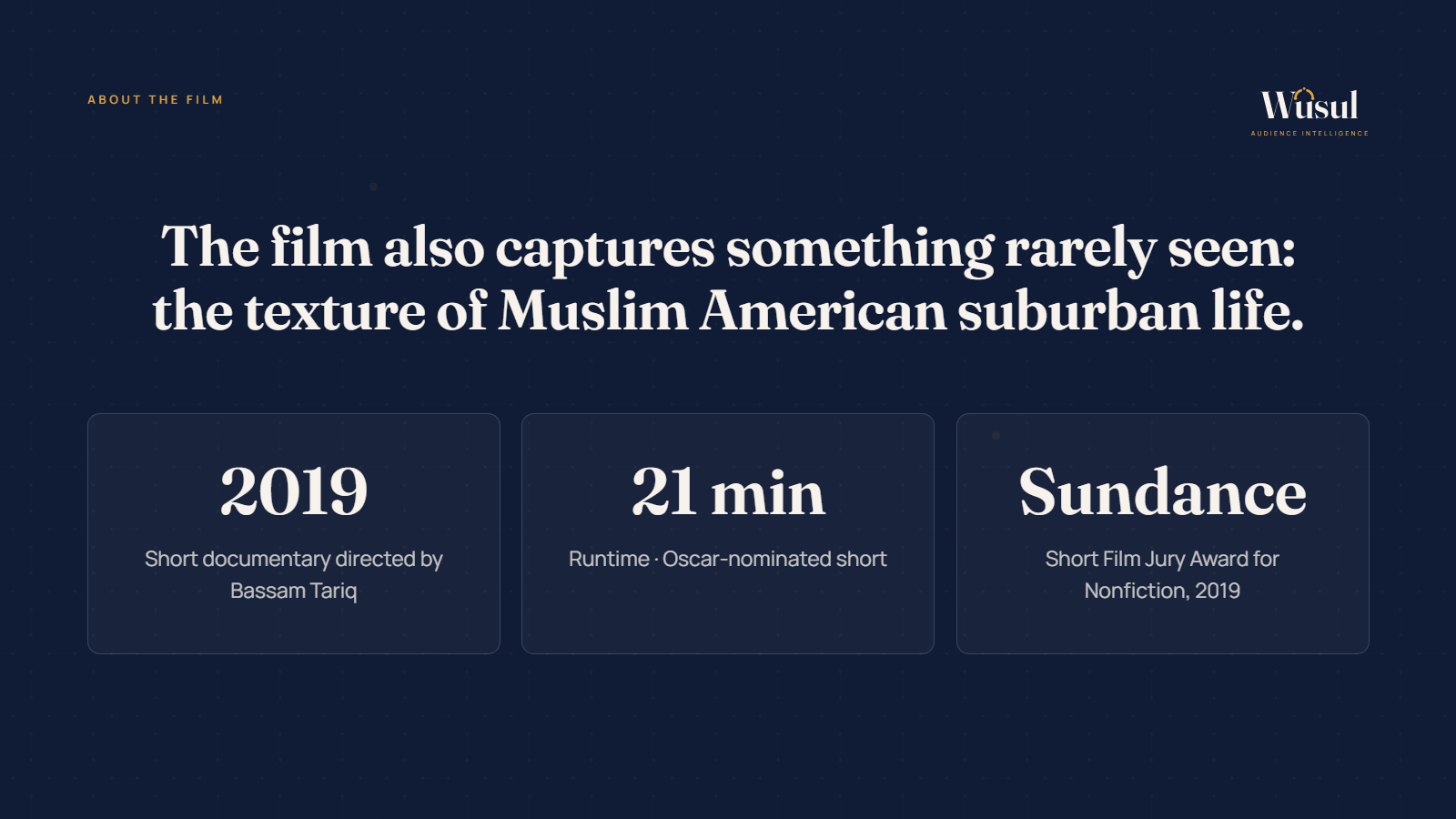
Ghosts of Sugar Land won the Short Film Jury Award for Nonfiction at the 2019 Sundance Film Festival. As of October 2021, it held a 100% rating on Rotten Tomatoes from six critical reviews. Vanity Fair called it "a gripping study of what can happen when a recent American convert to Islam goes rogue, and of what it might mean for his fellow Muslims back home."
The film's greatest strength is its emotional honesty. It is not a true crime documentary. It is a study of grief, guilt, and the impossible position of being Muslim in America when one of your own becomes a headline. As one user reviewer noted, "This documentary is about the hurt that he caused in a community that is already heavily targeted, and how his friends are coping and trying to understand his actions."
The film also captures something rarely seen: the texture of Muslim American suburban life. The friends hang out in parking lots, convenience stores, and living rooms. They argue, they joke, they remember. They are not terrorists. They are not saints. They are young men trying to make sense of a betrayal .
Criticism
The film's briefness (21 minutes) is its most common criticism. Many viewers felt it barely scratched the surface. "This ridiculously short documentary has no substance and explains nothing as to why this man became an extremist," one IMDb reviewer wrote. Another said, "It really did feel like I just read a Wikipedia article and nothing stood up for me."
These critiques are fair. The film does not explain the radicalization in depth. It does not explore the FBI informant theory beyond speculation. It does not interview Mark's family, or other Black residents of Sugar Land, or law enforcement. As one reviewer noted, "Zero point to this "documentary". No information about what he did or what he was saying he believed in. Why would you end it like that? The whole thing was pointless speculation, and it ended with one fact that should've been elaborated on and would've made it good. Totally pointless. Really irritating. I was very interested in knowing what happened."
The Cultural Intelligence Lens
For organizations seeking to understand Muslim communities authentically, Ghosts of Sugar Land offers several lessons.
A. The diversity within Muslim American life is not a footnote. Mark was Black in a community of South and East Asian Muslims. His friends admit they didn't know how to help him fit in. "Even when he became a Muslim," one says, "he was always 'that Black Muslim'" . This is a case study in the failure to see the intersectional reality of Muslim identity, and the consequences of that failure.
B. Trust is fragile. The friends wear masks because they fear being associated with Mark. They fear surveillance. They fear being labeled. In a post-9/11 context, Muslim Americans have learned that visibility can be dangerous. Organizations engaging Muslim communities must understand this fear and must work to earn trust that has been repeatedly broken.
C. The informant question is real. The speculation that Mark was an FBI informant is not conspiracy theory. It reflects a documented history of state surveillance and infiltration of Muslim communities. Any organization seeking to engage Muslim audiences must understand this history and its ongoing impact on trust.
At Wusul, we believe that cultural intelligence means understanding not just what a community does, but why they do it, and what they fear. Ghosts of Sugar Land is a reminder that Muslim American life is not a monolith. It is a collection of individuals, each with their own story, their own struggles, and their own reasons for hiding behind a mask.
Frequently asked questions
WHAT IS GHOSTS OF SUGAR LAND ABOUT?
The film follows a group of young Muslim American men from Sugar Land, Texas, as they reflect on a friend who converted to Islam and left home to join ISIS. It focuses on how these men navigate the aftermath of his choices and the resulting suspicion cast upon them by the public.
WHAT IS GHOSTS OF SUGAR LAND DOCUMENTARY?
Ghosts of Sugar Land is a 2019 short documentary film directed by Bassam Tariq. It features interviews with a group of friends who wear party-store masks to protect their identities while discussing their former friend, Warren Christopher Clark, who left to join ISIS. The film explores themes of grief, guilt, and the Muslim American experience.