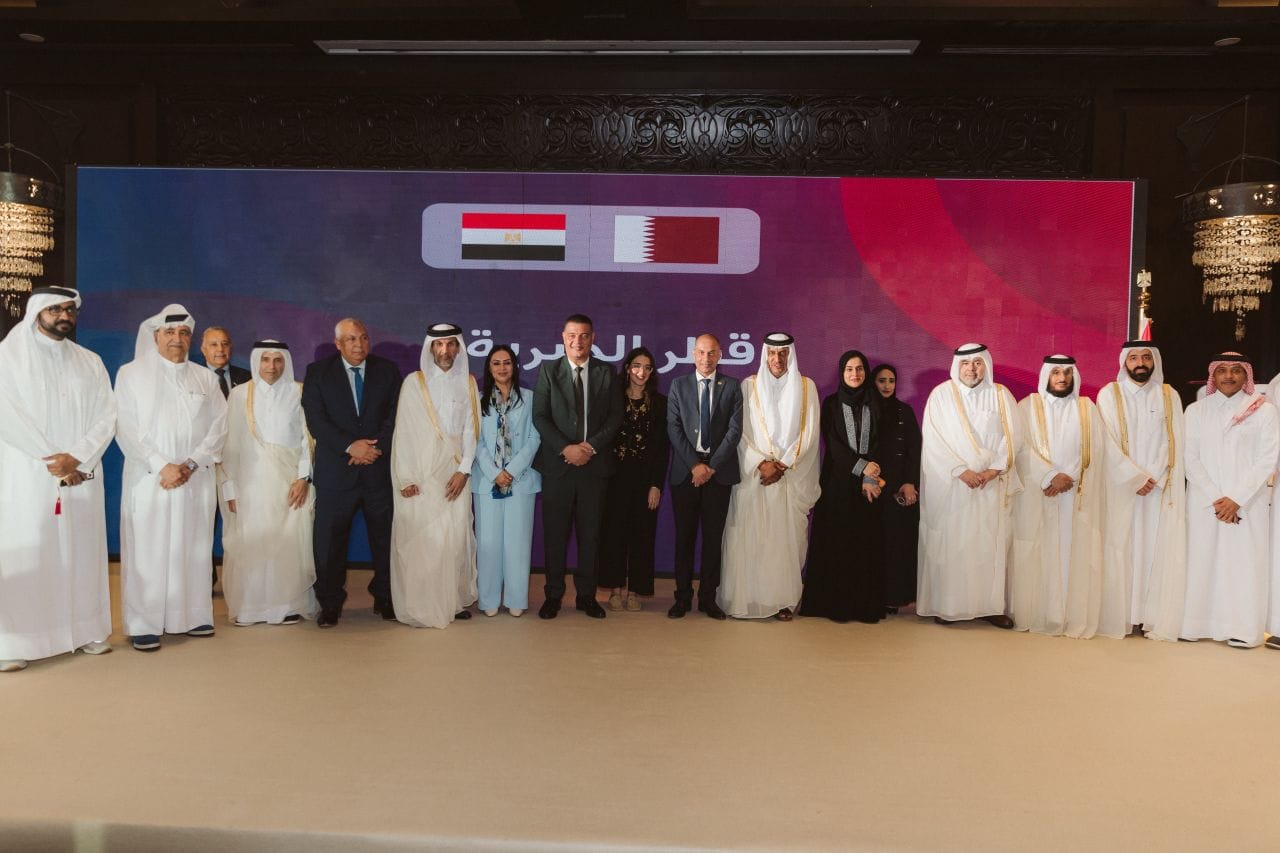
On October 12, 2026, Qatar Charity (QC) officially inaugurated its office in Cairo, Egypt. This milestone marks the 35th international office in Qatar Charity's global network and represents a significant step toward institutionalizing humanitarian and development cooperation between Qatar and Egypt.
The opening ceremony was attended by high-level officials from both nations, including HE Dr. Maya Morsi, Egypt's Minister of Social Solidarity; HE Sheikh Hamad bin Nasser bin Jassim Al-Thani, Chairman of Qatar Charity; HE Sheikh Jassim bin Abdulrahman Al-Thani, Qatar's Ambassador to Egypt and Permanent Representative to the Arab League; and Dr. Ibrahim Saber, Governor of Cairo. Also present were Counselor Amal Ammar, President of the National Council for Women; Ambassador Nabila Makram, Head of the Technical Secretariat of the National Alliance for Civil Development Work; and representatives from the Arab League and various civil society organizations.
First phase: over $10 million in humanitarian and development interventions
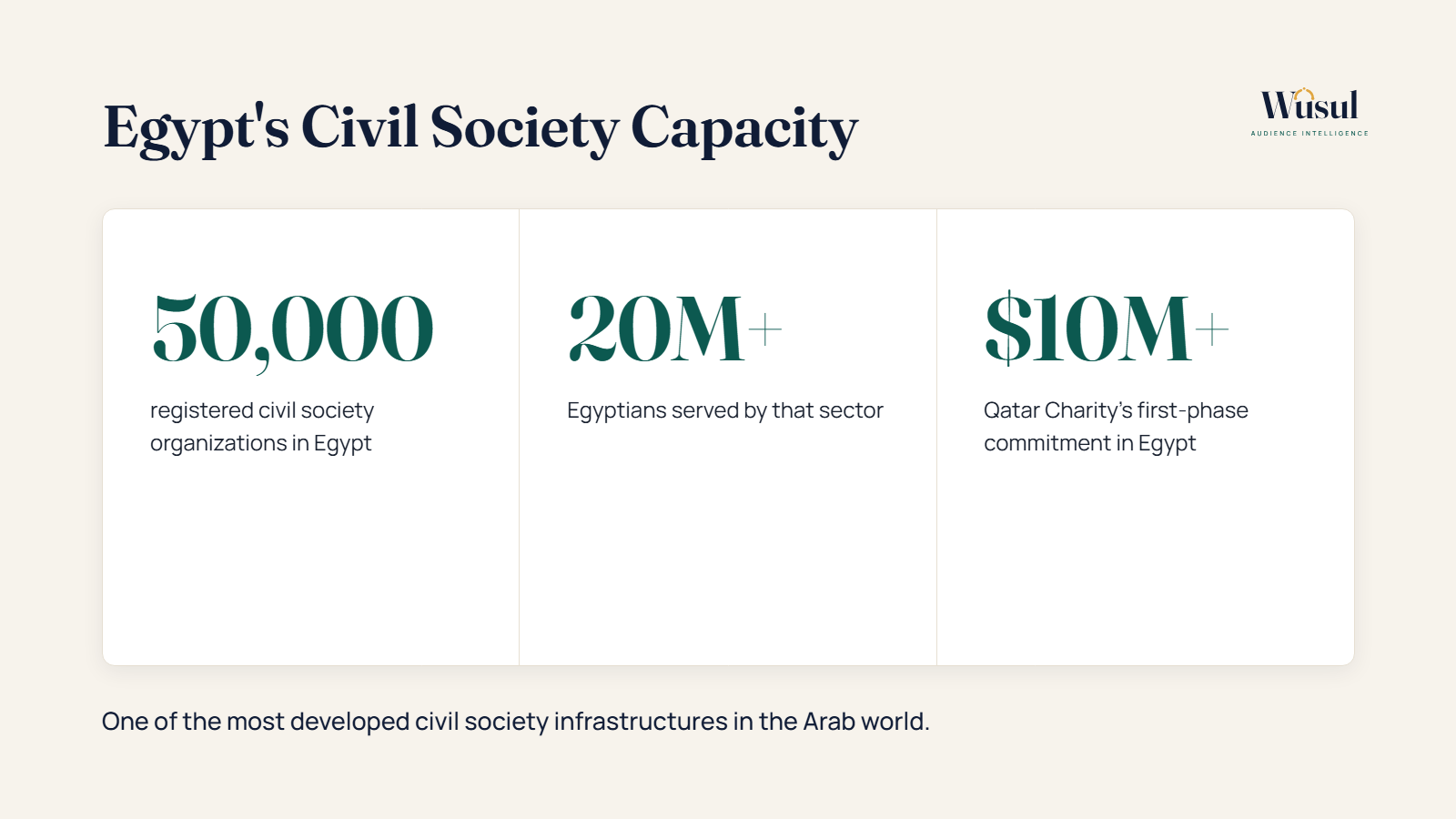
During the ceremony, Sheikh Hamad bin Nasser bin Jassim Al-Thani announced that Qatar Charity seeks to deliver humanitarian and development interventions exceeding USD 10 million in value during the first phase in Egypt.
These projects will focus on health, social development, food security, and social welfare. The Chairman emphasized that the office is not merely a new field presence but "a platform for joint cooperation and a bridge for strengthening humanitarian and developmental partnerships and exchanging expertise."
He noted that Qatar Charity's office in Egypt reflects the organization's belief that "the most impactful humanitarian work is that which remains close to communities and operates alongside national institutions, in alignment with the host country's national strategies."
Egypt's institutional capacity: a mature civil society ecosystem
Egypt's appeal to Qatar Charity extends beyond its geographic proximity or the scale of its humanitarian needs. The country possesses one of the most developed civil society infrastructures in the Arab world, an ecosystem built over decades and supported by a legal framework designed to enable, rather than restrict, charitable work.
Egypt is home to approximately 50,000 registered civil society organizations, serving more than 20 million Egyptians. This is not a marginal sector, it is a substantial infrastructure for social development, with the institutional capacity to absorb and deploy significant humanitarian resources.
Egypt's coordinating mechanism
At the apex of Egypt's civil society ecosystem sits the National Alliance for Civil Development Work (NACDW); a coordinating body that brings together the country's most significant foundations and associations under a unified framework.
The Alliance's membership is not fixed. In September 2026, President Abdel Fattah El-Sisi issued Presidential Decree No. 374 of 2026, adding nine additional civil society organizations and foundations to the NACDW, including the Professional Development Foundation, Education First Foundation, Mostafa El Sallab Charitable Establishment, KAPCI Association, Fahim Foundation for Psychological Support, Mogahed Nassar Foundation, Human Fraternity Foundation, Al Ahly Club for Community Development Foundation, and the Vodafone Egypt Foundation .
This decree reflects the Alliance's role as a dynamic coordinating platform, one that can expand to incorporate new partners as the development landscape evolves. For international organizations like Qatar Charity, the NACDW represents a ready-made mechanism for coordination, partnership, and scale.
A strong partner: Misr El Kheir Foundation
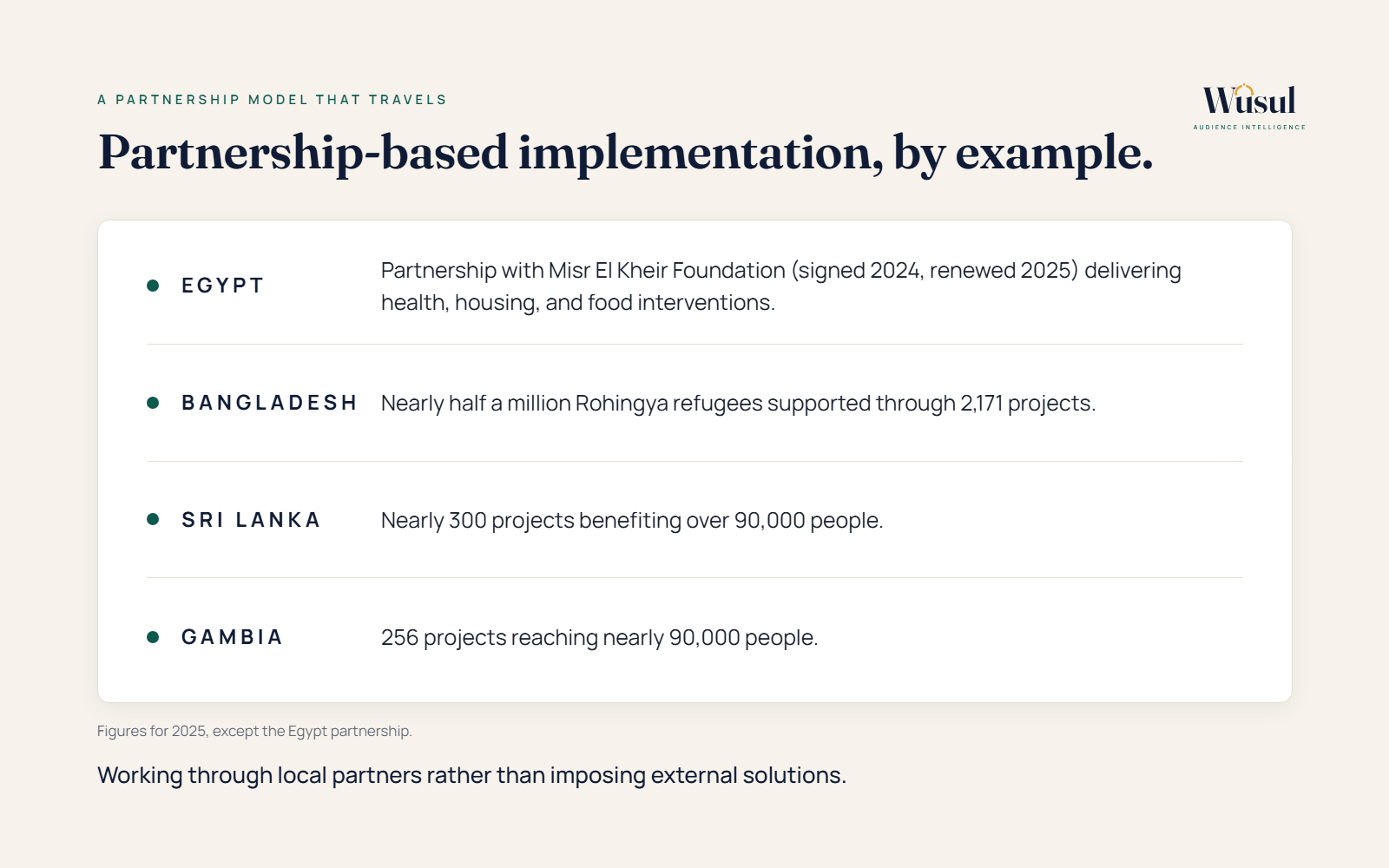
Within this ecosystem, Misr El Kheir Foundation (MEK) stands out as one of Egypt's largest and most experienced charitable organizations. Qatar Charity's partnership with MEK (first signed in 2024 and renewed in September 2025 for an additional two years) demonstrates the value of Egypt's institutional capacity.
The partnership has yielded tangible results in health, housing, and food sectors, with impact extending beyond Egypt to support humanitarian programs for Gaza and assistance to Sudanese and Yemeni refugees residing in Egypt.
According to UN OCHA funding data for Egypt in 2025, Qatar Charity's funded projects through MEK include:
- Provision of food baskets (USD 93,934)
- Spinal Curvature Correction Project Using Surgical Fixation (USD 10,627)
- Treatment of a Breast Cancer Condition (USD 11,623)
These are not abstract commitments; they are implemented interventions with documented outcomes, delivered through an Egyptian partner with the expertise and networks to execute them effectively.
Why this institutional capacity matters
For Qatar Charity, Egypt's institutional capacity offers three distinct advantages.
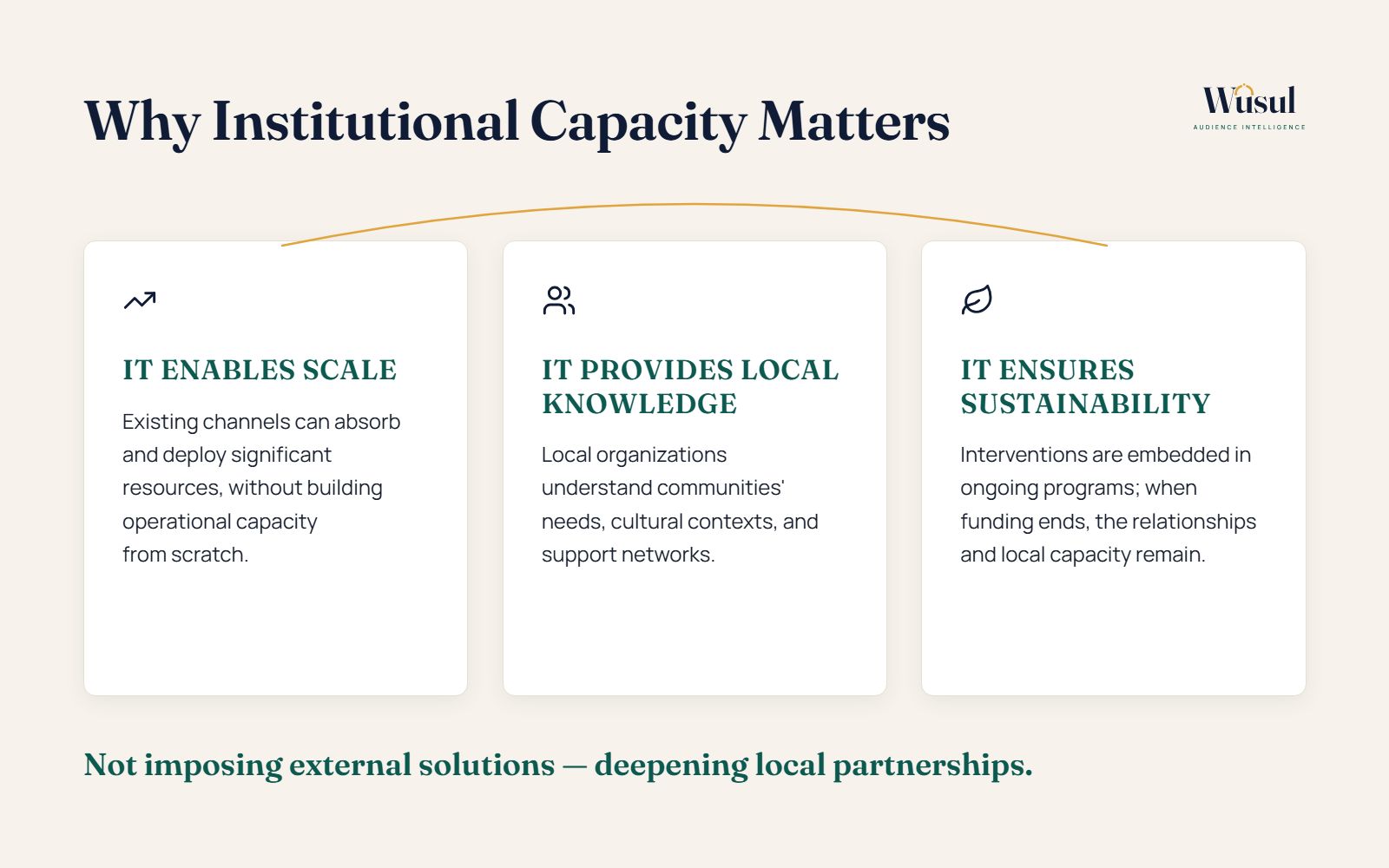
First, it enables scale. With 50,000 organizations and a coordinating Alliance, Egypt possesses the infrastructure to absorb and deploy significant humanitarian resources efficiently. Qatar Charity's $10 million first-phase commitment can be implemented through existing channels rather than requiring the organization to build its own operational capacity from scratch.
Second, it provides local knowledge. Egyptian organizations like MEK understand the communities they serve, their needs, their cultural contexts, and their existing support networks. This local knowledge is invaluable for ensuring that interventions are appropriate, effective, and sustainable.
Third, it ensures sustainability. By partnering with established Egyptian institutions, Qatar Charity's interventions are embedded in ongoing programs and relationships rather than existing as isolated projects. When the funding cycle ends, the institutional relationships and local capacity remain.
Why Egypt? strategic logic
Qatar Charity's decision to establish an office in Egypt reflects several strategic considerations.
Proximity to communities
Qatar Charity explicitly stated that its international office expansion is guided by the belief that "the most impactful humanitarian work is that which remains close to communities." Egypt, as the most populous Arab nation, has significant vulnerable populations and mature civil society institutions, making it an ideal location for large-scale humanitarian implementation.
Egypt's role as a regional humanitarian hub
Egypt's critical role in Gaza humanitarian aid; serving as the primary passage for aid into Gaza, makes Cairo an important base for Qatar Charity's support of Palestinian humanitarian operations. Egypt's Al-Arish port has received multiple Qatari humanitarian aid shipments for Gaza, including a joint Qatari Turkish vessel carrying 1,900 tons of humanitarian, food, and relief aid. A land bridge linking Qatar to Gaza via Egyptian territory has been established as a vital route for humanitarian supplies.
About Qatar Charity: a global humanitarian leader
Qatar Charity is an international humanitarian and development organization established in 1992 and headquartered in Doha. Its mission is to "implement humanitarian and development programs, mobilize support and resources, and build effective partnerships to provide a decent life for all."
Qatar Charity's scale of operations:
In 2024 alone, Qatar Charity:
- Implemented relief, humanitarian, development, and social welfare projects worth approximately QR 1.57 billion.
- Benefited approximately 22 million people across nearly 70 countries.
- Spent QR 528 million on humanitarian interventions in crisis-affected regions, benefiting 11 million people.
- Spent QR 510 million on development and sustainable projects, benefiting 9 million people.
The organization's areas of intervention include education, healthcare, water and sanitation, food security, social welfare, and orphan sponsorship. Qatar Charity implements its global projects through more than 33 field offices and in partnership with local and international organizations, including UN agencies.
The Rofaqa Initiative: Comprehensive Social Care
Qatar Charity's "Rofaqa" ("Companions") initiative provides comprehensive social care, focusing on health, education, psychological support, capacity building, and improved living standards. The initiative sponsors orphans, needy families, people with special needs, students, and teachers, offering monthly financial aid alongside developmental projects.
In 2024, Qatar Charity delivered humanitarian relief, emergency assistance, development, and social welfare projects valued at approximately QAR 1.568 billion that reached around 22 million people in nearly 70 countries. The organization prioritized communities affected by crises and disasters, as well as those facing the greatest need, while continuing to sponsor orphans and other vulnerable groups through its Rofaqaa initiative.
Qatar Charity’s track record of partnerships
Qatar Charity has a demonstrated history of working through local partners rather than imposing external solutions. Its partnership with the Misr El Kheir Foundation in Egypt is one example. Its work in Bangladesh, where it supported nearly half a million Rohingya refugees in 2025 through 2,171 projects, is another. In Sri Lanka, it implemented nearly 300 projects benefiting over 90,000 people in 2025. In Gambia, 256 projects reached nearly 90,000 people.
This track record of partnership-based implementation is precisely what makes Qatar Charity's entry into Egypt significant. The organization is not establishing a presence to build its own operational infrastructure. It is establishing a presence to deepen partnerships with institutions that already possess the capacity to deliver.
At Wusul, we believe that cultural intelligence means understanding not just what organizations do, but why they do it, and how they build trust across cultures. Qatar Charity's expansion into Egypt demonstrates that effective humanitarian work is not about imposing external solutions, but about honoring local knowledge, investing in institutional partnerships, and showing up consistently with respect for the communities you serve.
Frequently asked questions
How does Qatar Charity work with Egyptian foundations?
Qatar Charity works with Egyptian foundations by partnering with established local institutions to implement humanitarian and development projects. By operating alongside national institutions and utilizing existing channels, such as the National Alliance for Civil Development Work and partners like Misr El Kheir Foundation, Qatar Charity leverages local expertise and infrastructure to deliver effective and sustainable aid.
What will Qatar Charity fund in Egypt?
At the opening of its Cairo office on October 12, 2026, Qatar Charity announced humanitarian and development interventions worth more than USD 10 million in the first phase, focused on health, social development, food security and social welfare.
Why did Qatar Charity open an office in Egypt?
Qatar Charity says its most effective work stays close to communities and operates alongside national institutions. In Egypt it already works with partners such as Misr El Kheir Foundation, and Cairo is an important base for its support of humanitarian operations in Gaza and for Sudanese and Yemeni refugees in Egypt.